CTR Recovery and AI Overviews: What SEO Professionals Need to Measure Now
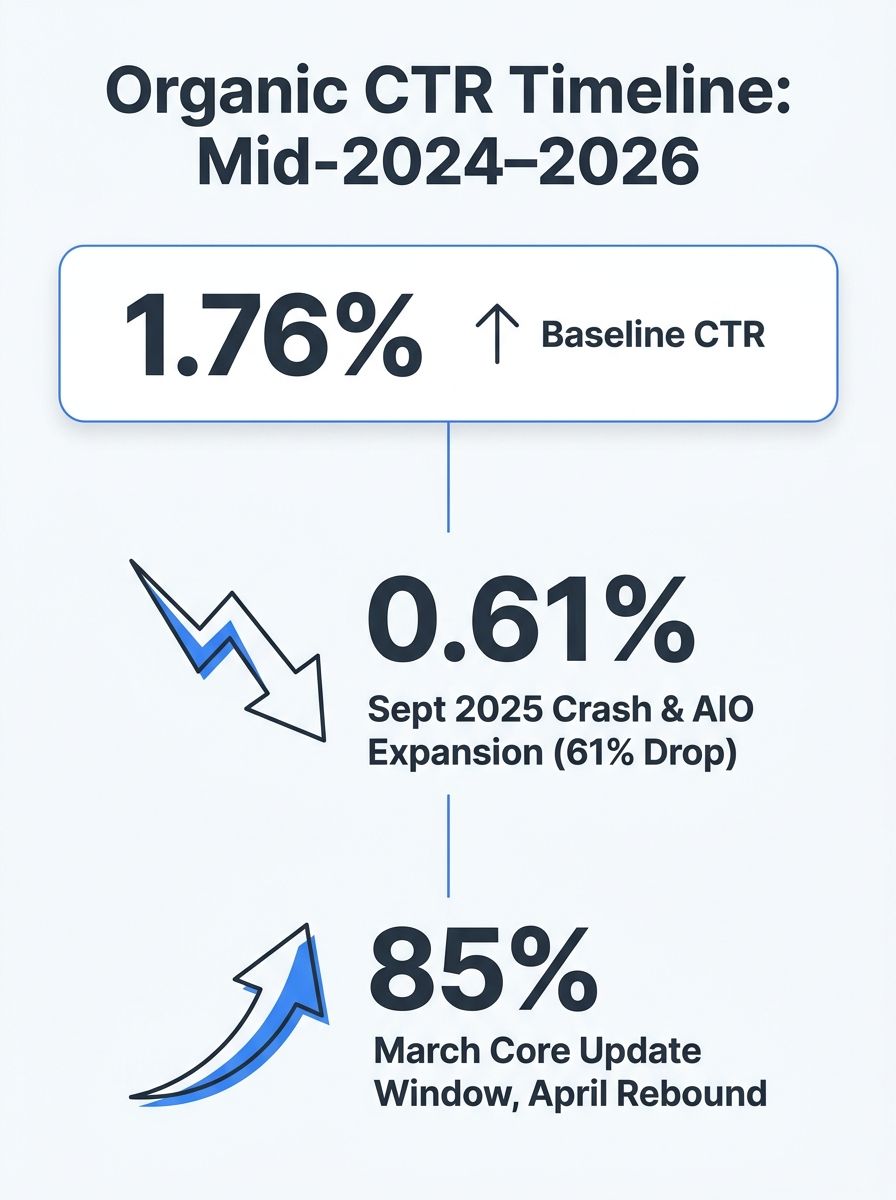
Seer Interactive published its latest AIO impact report yesterday, and the headline number reverses eighteen months of bad news: organic CTR on queries where AI Overviews appear rebounded 85% over a two-month window.
CTR Recovery and AI Overviews: What SEO Professionals Need to Measure Now
Seer Interactive published its latest AIO impact report yesterday, and the headline number reverses eighteen months of bad news: organic CTR on queries where AI Overviews appear rebounded 85% over a two-month window. That's a significant swing after the sustained decline that started in mid-2024, and it raises a question every SEO professional should be grappling with right now: are your measurement frameworks built to detect recovery, or are they still only set up to document losses?
This piece traces the full timeline, from the initial CTR collapse through the latest rebound signals, and lays out exactly what you should be tracking as the SERP landscape recalibrates.
The Baseline Before AI Overviews Took Hold
Before Google started widely deploying AI Overviews, organic click-through rate benchmarking was relatively stable. Position 1 delivered predictable results. Featured snippets claimed their share. The models that SEOs used to forecast traffic from ranking improvements were reliable within a reasonable margin.
Then AI Overviews started appearing on a wider set of queries through 2024 and into 2025. The initial rollout was cautious, limited to certain query types, mostly informational. But each expansion brought new categories of search results under the AIO umbrella, and the click data started moving.
By mid-2025, AI Overviews appeared in roughly 25.8% of all U.S. searches, with a much higher incidence (39.4%) on informational queries. E-commerce queries triggered them in only about 4% of cases. This distribution matters because it means the AI Overviews CTR impact hit some verticals far harder than others. Sites built around informational content bore the brunt while transactional pages remained largely untouched.
When the 61% Number Dropped
Seer Interactive's September 2025 study put hard numbers on what many SEO teams had been feeling in their dashboards. Organic CTR plummeted 61%, falling from 1.76% to 0.61% for queries where AI Overviews appeared. Paid CTR crashed even harder, dropping 68% from 19.7% to 6.34%.
The number that should have gotten more attention: when an AI Overview is present, the CTR of the number-one organic result drops from roughly 28.5% to 11.2%. That's a 60% decline for the single most valuable position on the page. And 92.36% of AI Overview citations pull from pages already ranking in the top 10. So the pages that get cited are the same ones losing clicks to the overview itself. The cannibalization dynamic is real, and it created a paradox for SEO teams: you need top-10 rankings to get cited, but getting cited often means the AI Overview satisfies the query before the user reaches your link.
If you were tracking the right performance KPIs during this period, you could see the divergence clearly: rankings holding steady while traffic fell. If you were relying on position as a proxy for traffic, the dashboards looked confusing at best.
The Wider Erosion Nobody Expected
The September 2025 data contained a second finding that got less coverage but arguably matters more for long-term planning. Even on queries without AI Overviews, organic CTRs fell 41%.
That number tells you this isn't only an AIO story. Users are clicking less across the board. ChatGPT, Perplexity, and other AI platforms are siphoning search behavior before people even reach Google. Social search through TikTok and Reddit is fragmenting where people look for answers. The 60% of all searches that now end without a click on any organic result reflect a structural shift in user behavior, not a reaction to a single SERP feature.
If your SERP feature performance tracking only flags queries where an AI Overview appears, you're measuring the visible problem and missing the ambient one. Search visibility measurement in 2026 has to account for the fact that the entire click economy has contracted, with AIO-affected queries contracting the most but non-AIO queries shrinking meaningfully too.
March 27 Through April 8: The Core Update
Google's March 2026 Core Update rolled out over twelve days. It reshaped ranking signals in ways that intersect directly with CTR recovery patterns. Google continued to favor what it calls "destination sources," meaning authoritative, niche, or institutional sites with demonstrated expertise and original data. Sites with strong E-E-A-T signals saw approximately 23% higher visibility post-update.
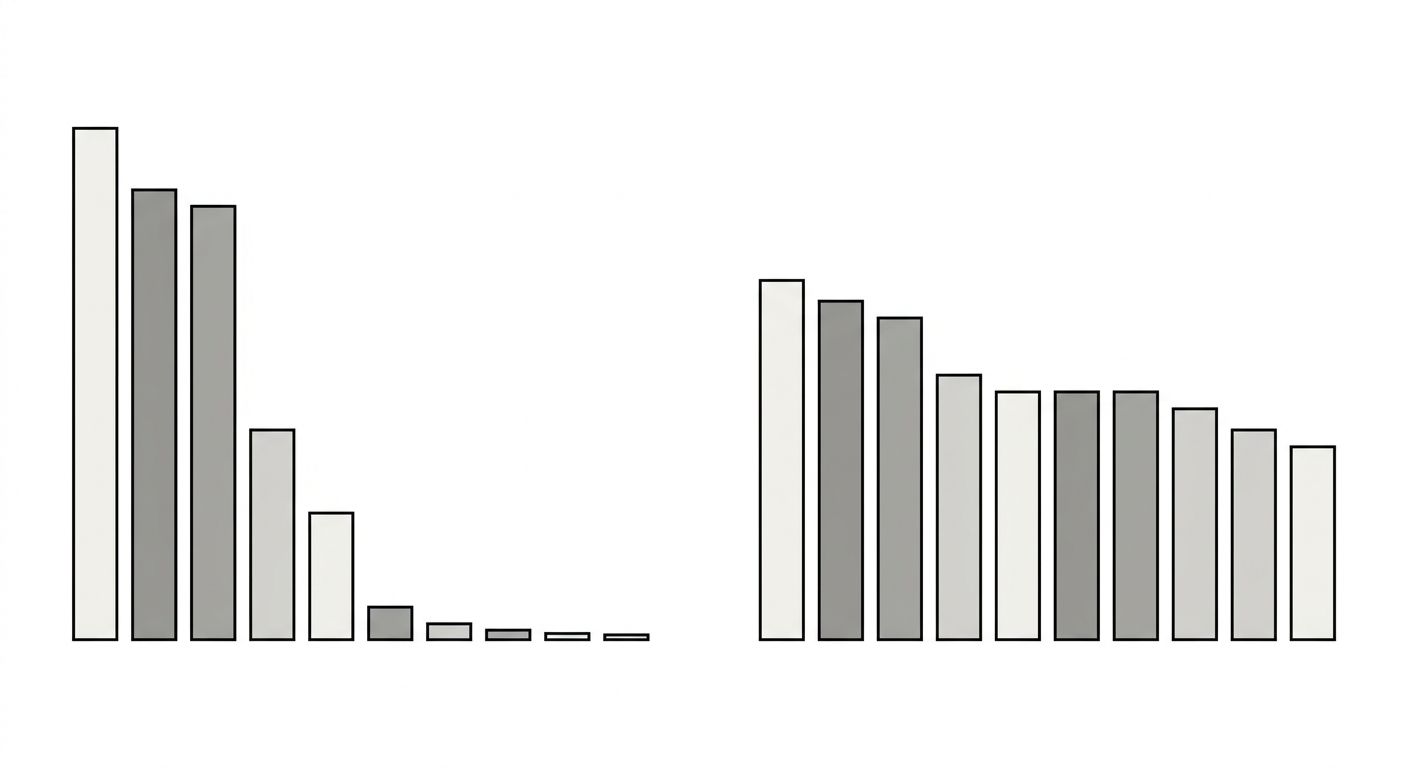
Position 1 now delivers 32% fewer clicks than it did in April 2025. But positions 6 through 10 are actually more valuable than they were before, because users who do scroll past the AI Overview tend to scan deeper into the results. This redistribution of click value is something most SEO dashboards don't reflect yet. If your reporting weights position 1 at 30%+ expected CTR and position 8 at sub-2%, those numbers are outdated and they're giving you a distorted picture of which pages are actually performing.
The update also appears to have reshuffled which pages get cited in AI Overviews, putting higher-quality sources with original research and clear sourcing in front of users more consistently. That shift connects directly to what happened next.
The April Rebound Signal
And now, this week's data. Seer Interactive's April 2026 update shows organic CTR on AIO-present queries rebounded 85% over a two-month period. SearchEngineLand confirmed the trend yesterday: the year-long slide in CTR on AI Overview queries is showing early signs of reversal.
What's driving it? A few possible factors are converging:
Users are adapting to AI Overviews and learning when the summary is insufficient, prompting them to click through for deeper information
Google has been adjusting AIO formatting and citation placement, making source links more prominent in the overview box
Brands cited within AI Overviews earn roughly 35% more engagement than non-cited competitors, suggesting the citation itself functions as a trust signal that encourages clicks
The March 2026 core update may have improved citation quality, which in turn increases user willingness to visit cited sources
This rebound doesn't mean the crisis is over. The 85% recovery is relative to the trough, and CTR levels remain well below pre-AIO baselines. But the direction has changed, and that change creates both opportunity and urgency for SEO teams that haven't updated their measurement practices. If recovery is uneven across query types and verticals, and it will be, only granular tracking will show you where your specific opportunities lie.
What Measurement Looks Like Now
The current state of search visibility measurement in 2026 requires tracking at least three layers that most SEO setups still treat as optional. Here's what needs to be in your reporting, broken down by the work involved.
CTR Segmented by SERP Feature Presence
Google Search Console doesn't natively tell you which of your impressions occurred alongside an AI Overview. You need to cross-reference GSC query data with a tool that tracks SERP feature presence at the query level. If you've built API-based workflows using the GSC API, this becomes a data join between your query-level CTR data and a SERP monitoring tool's feature presence data. If you haven't, you're relying on sampling from rank tracking tools that may or may not capture AIO presence consistently.
The goal is simple: for every query driving impressions, know whether an AI Overview appeared, and calculate CTR separately for AIO-present versus AIO-absent queries. Without this segmentation, your organic click-through rate benchmarking is averaging two completely different realities into one meaningless number. A blended CTR of 2.5% could mean you're getting 4% on non-AIO queries and 0.8% on AIO queries, and those two numbers require very different strategic responses.
AI Citation Tracking Across Platforms
Google isn't the only AI answer engine referencing your content. ChatGPT, Perplexity, and Gemini all pull from the web, and each represents a surface where your brand either appears or doesn't. Tracking brand mentions, citations, and share of voice across these platforms is now a core part of any serious measurement stack. Several of the tools worth paying for in 2026 have added AI citation monitoring features in the past six months, including Semrush's AI Search Visibility Checker and similar offerings from other vendors.
This layer matters because a page might lose traditional organic clicks while gaining visibility through AI citations. If you're only measuring the first metric, you'll see decline where mixed signals actually exist. HubSpot published a practical guide on AI citation tracking and GA4 setup for monitoring these referral paths earlier this week, which walks through the technical implementation in detail.
Content Citation-Worthiness Scoring
The pages most likely to be cited in AI Overviews share specific structural characteristics: Q&A formatting, statistics with clear sources, neutral and thorough summaries, and strong on-page optimization including FAQ and HowTo schema markup. Pages with structured data see CTR improvements of 20-35% via rich snippets, and a SearchPilot test demonstrated a 20% CTR boost within 30 days of adding structured data.
You should be scoring your own pages against these criteria. Which of your top-traffic pages are structured in ways that make them citation candidates? Which ones are formatted as walls of prose that an AI system would skip in favor of a competitor's cleaner, more structured content? This scoring exercise directly informs where to invest editorial effort right now, while the rebound window is still opening.
Where This Lands Now
The data as of this week tells a story with clear phases. The initial AIO rollout through 2024 and early 2025 steadily eroded organic CTR. The September 2025 study quantified the damage at 61%. The erosion extended even to non-AIO queries, with a 41% CTR decline that pointed to broader behavioral shifts. The March 2026 core update reshuffled ranking signals and citation patterns. And now, in April 2026, the first credible rebound signal has appeared.
SEO professionals who built measurement systems during the decline phase are now positioned to detect and act on recovery. Those still relying on ranking position as a primary success metric are flying blind in both directions: they couldn't properly diagnose the loss, and they can't properly identify where recovery is happening.
The practical shift is straightforward. Segment your CTR data by SERP feature presence. Track AI citations across platforms, including the ones that aren't Google. Score your content for citation-worthiness against the structural patterns that AI systems favor. And update your traffic forecasting models to reflect the new CTR curves at each position, because the benchmarks from even twelve months ago describe a search results page that no longer exists.
Recovery from CTR compression will be uneven. Transactional queries, where AI Overviews appear in only 4% of searches, have a very different trajectory than informational queries at 39.4% AIO presence. Your measurement needs to reflect that unevenness, or your reporting will keep telling you stories that don't match what's actually happening in your traffic. The window between "the rebound is starting" and "everyone has recalibrated" is when the teams with better data pull ahead.
OrganicSEO.org Editorial
Editorial team writing about Ethical, white-hat, organic SEO education.