Link Wheels and Private Blog Networks: Why Black-Hat Link Schemes Still Get Sites Penalized
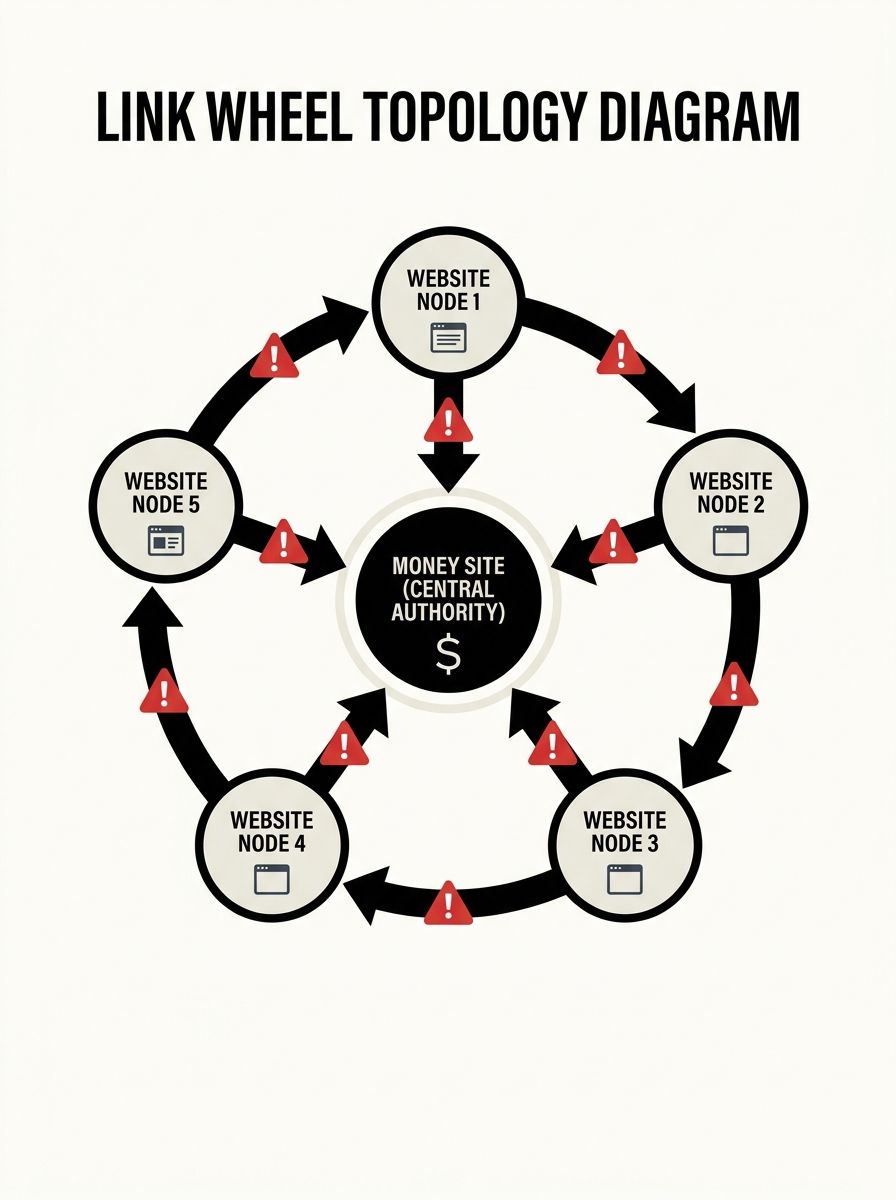
Five domains, each linking to the next in a closed loop, with every site in the chain also pointing a link at one central "money site." That's the basic topology of a link wheel, and Google has been identifying and penalizing this structure for over a decade.
Link Wheels and Private Blog Networks: Why Black-Hat Link Schemes Still Get Sites Penalized
Five domains, each linking to the next in a closed loop, with every site in the chain also pointing a link at one central "money site." That's the basic topology of a link wheel, and Google has been identifying and penalizing this structure for over a decade. The persistent misunderstanding among marketers who still deploy link wheels and private blog networks is that sophistication in setup equals invisibility to search engines. It doesn't. The detection mechanisms have evolved faster than the schemes themselves, and understanding how they work explains why these tactics keep failing.
The Topology of a Link Wheel
A link wheel SEO scheme works by creating a circular chain of websites. Site A links to Site B, Site B links to Site C, and so on until the last site links back to Site A, completing the loop. Every site in the chain also links to the target website you're trying to rank. The idea is that each site in the wheel passes link equity to its neighbor, building "authority" as the signal travels around the loop, with all of that compounding authority also flowing to the money site.
The theory sounds elegant on a whiteboard. In practice, the pattern produces telltale signals that algorithms are built to catch. As documented by PRPosting, the scheme enters a risk stage when it appears artificial: anchors get repeated in unnatural ways, layouts look identical across sites, and publishing schedules align too neatly. When five or ten domains that have no organic audience suddenly begin linking to each other in a tight circular pattern, the topology itself becomes the evidence.
Link wheels can also involve Web 2.0 properties like free blog platforms, article directories, and social bookmarking sites. The operator creates accounts on these platforms, posts thin content with links to each other and the money site, and hopes the domain authority of the platform passes through. Search engines caught on to this variant years ago. The links from these low-effort properties carry almost no weight, and the pattern of creation (same registration email, similar content, identical outbound link targets) makes detection straightforward.
How a Private Blog Network Gets Assembled
A private blog network (PBN) takes the concept further. Instead of using free platforms, the operator buys expired domains that still carry residual authority from their previous legitimate use. Maybe the domain once belonged to a local newspaper, a university department blog, or a niche hobbyist site. The operator registers it, puts up a WordPress installation with some filler content, and plants links pointing to their money site.
The more sophisticated PBN operators try to hide the network's shared ownership. They'll register domains through different registrars, host each site on a different IP address, use varied WordPress themes, and sometimes even hire different writers for each blog. All of this effort goes toward making the network look like a collection of independent websites that just happen to link to the same target.
But the operational overhead is enormous, and every shortcut creates a footprint. Shared hosting providers, recycled Google Analytics IDs, identical privacy policies, overlapping WHOIS records, similar CMS configurations, and common CDN setups all leave traces. Google's systems analyze these structural similarities at scale. As Search Engine Land has reported, Google's Penguin algorithm runs in real time as part of the core ranking system and can detect these schemes and devalue your site's rankings accordingly.
What SpamBrain and Penguin Actually Look For
Understanding the link scheme detection mechanism requires knowing what signals these systems analyze. There are two layers: algorithmic detection and manual review.
Algorithmic Detection
Google's SpamBrain, introduced via the 2022 Link Spam Update, is an AI-powered system designed to identify link spam at scale. SpamBrain doesn't always outright ban a site with spammy links. Instead, it often neutralizes those links silently. Your PBN backlinks may simply be ignored, meaning the money and time you invested in building the network produce zero ranking benefit without you ever receiving a notification.
The Penguin algorithm, which has been part of Google's core ranking system since 2016, specifically targets black-hat link-building strategies including link buying, link farming, and PBNs. Penguin evaluates link patterns in real time, which means there's no waiting for a periodic update. The moment the algorithm identifies unnatural link patterns pointing to your site, the devaluation can begin.
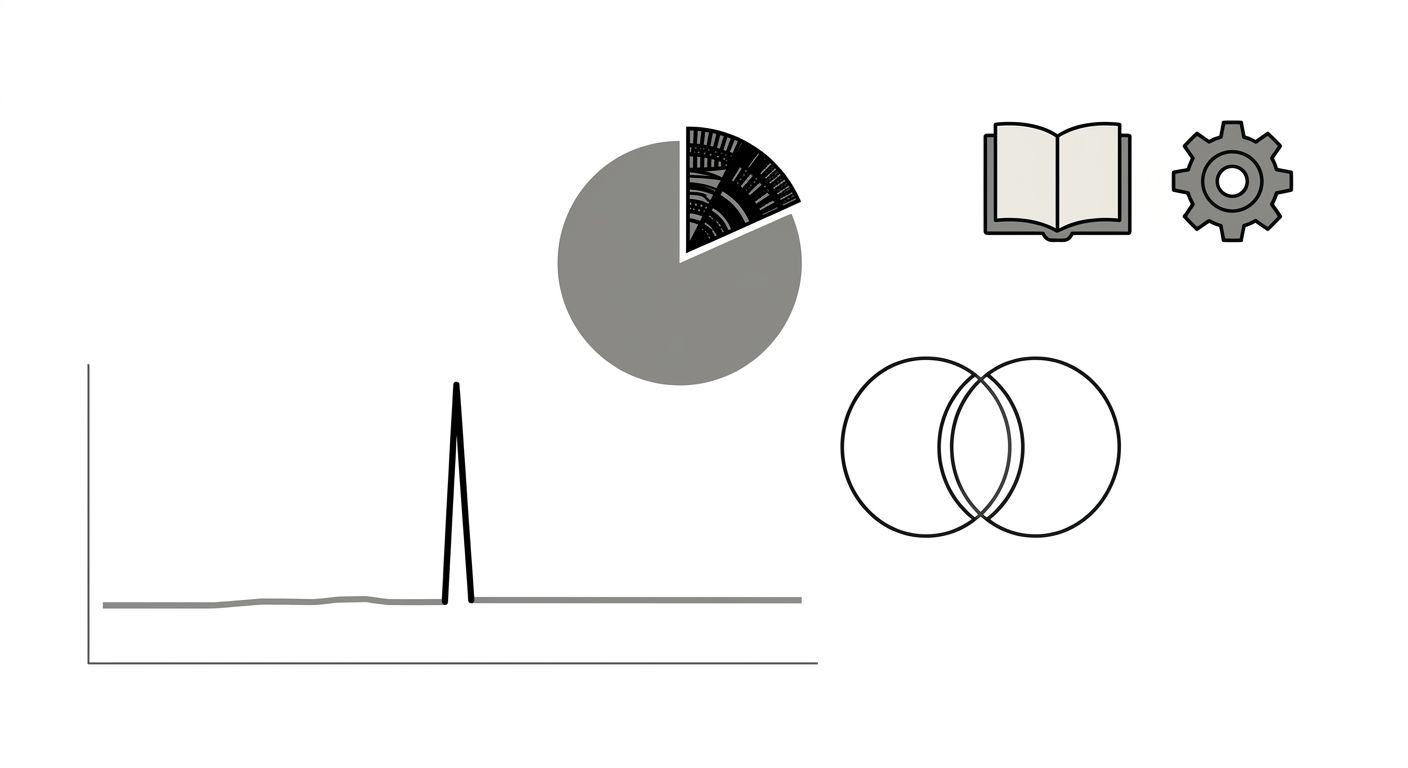
What do these systems look for specifically? The signals include:
Link velocity anomalies: A site that suddenly acquires dozens of backlinks from domains with no prior linking history raises a flag.
Anchor text distribution: Natural backlink profiles contain a mix of branded anchors, naked URLs, and varied descriptive text. PBN links tend to use exact-match keyword anchors far more often than organic links would.
Topical irrelevance: When a site about pet grooming receives links from domains covering casino reviews, pharmaceutical products, and web hosting, the mismatch is obvious.
Network footprints: Shared IP ranges, identical site architectures, similar content publication patterns, and overlapping technical configurations across linking domains.
Manual Review
Google also employs human reviewers. When a site is flagged algorithmically or through a spam report, a member of Google's Search Quality team can manually inspect the backlink profile. They look at the linking sites, evaluate whether the content is genuine, and determine whether the links serve users or exist solely to manipulate rankings. Google combines algorithmic analysis with manual review processes to identify and penalize private blog networks.
According to The Silicon Review, Google has issued over nine million manual penalties since 2020, with manipulative link building among the most common triggers. That volume tells you something about how actively the review teams pursue these schemes.
What a Google Penguin Penalty Actually Looks Like
When Google takes action against a site for black hat link building, the consequences come in two forms.
Algorithmic devaluation happens without any notification. Your rankings drop, sometimes gradually, sometimes overnight. You won't find a message in Search Console. Your traffic declines, and because you don't receive an explicit warning, you might spend weeks chasing phantom technical SEO issues before realizing the backlink profile is the problem. This is what SpamBrain does when it silently neutralizes links. The investment in PBN infrastructure becomes a sunk cost that yields nothing.
Manual actions are more transparent but more severe. Google sends a notification through Search Console stating that your site has received a manual penalty for unnatural links. Your rankings can plummet across the board, and in extreme cases, the site is removed from search results entirely. Recovery from a manual action requires filing a reconsideration request, which means identifying every problematic link, attempting to have them removed, disavowing the rest, and then waiting for Google to re-review. This process often takes months, and there's no guarantee your former rankings return.
If you're building a site's authority through legitimate means (like the approaches covered in our piece on white-hat link building that actually works), any PBN links mixed into your profile can contaminate the entire backlink graph. Google may begin scrutinizing your organic, earned links with the same suspicion applied to the manipulative ones. The broader PBN risks and related costs are something we've explored in detail when examining what black-hat SEO actually trades away.
Why These Schemes Keep Recurring
Given the detection capabilities and penalty severity, why do people still build PBNs and link wheels? A few dynamics keep these schemes alive.
First, there's a survivorship bias problem. The PBN operators who haven't been caught yet are the ones writing tutorials and selling services. You don't hear from the majority whose networks got burned because they've moved on or gone quiet. The visible "success stories" create a distorted picture of the risk-reward ratio.
Second, some operators treat penalties as a cost of doing business. They run disposable affiliate sites, extract short-term revenue, and abandon the domain when it gets penalized. They're not building a business with long-term organic value. They're running arbitrage on the gap between Google's detection speed and their extraction speed.
Third, the SEO service market is full of agencies that sell PBN links without disclosing what they are. A business owner who buys a "link building package" promising 30 high-authority backlinks per month may not realize those links are coming from a private blog network until the penalty arrives. This is one reason understanding how search engines actually evaluate and rank links matters for anyone purchasing SEO services.
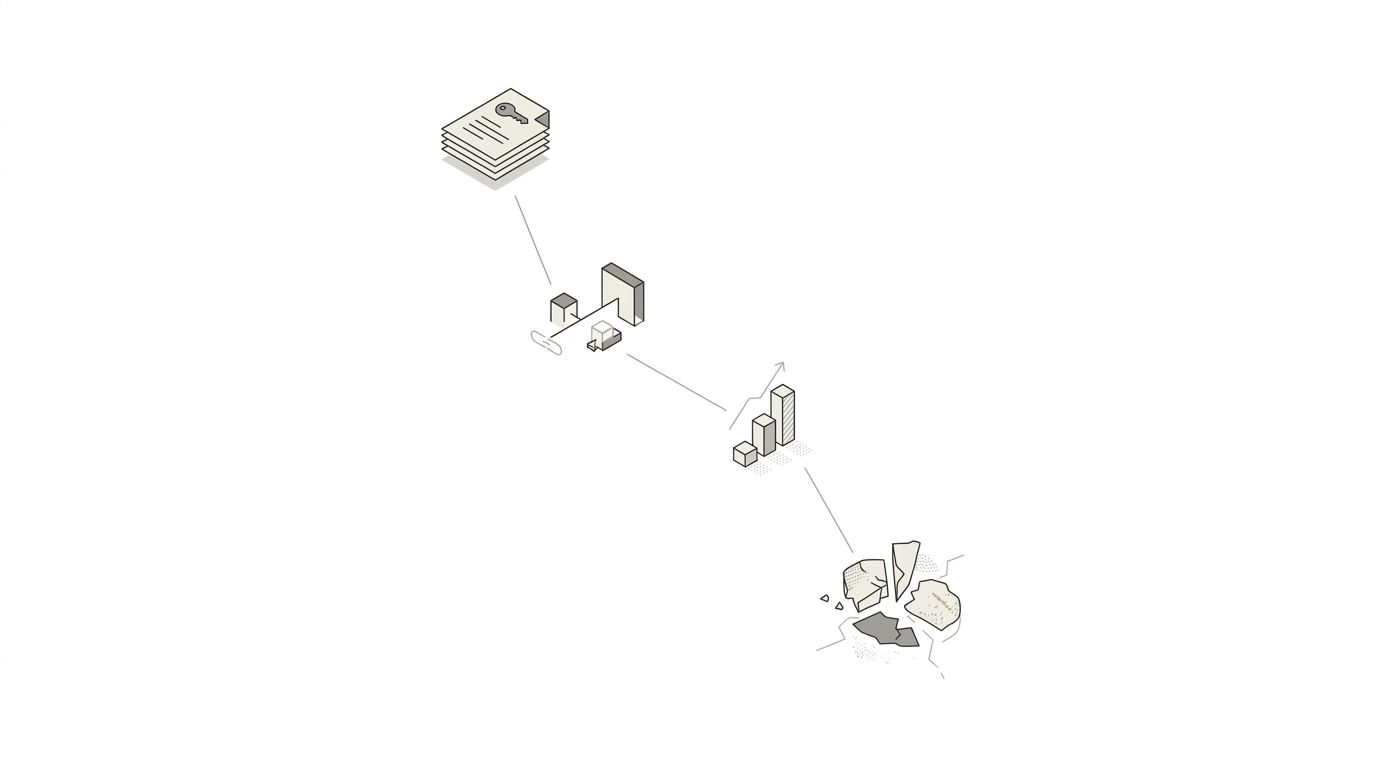
And fourth, the terminology gets repackaged. What was called a "link wheel" in 2010 might be sold as a "tiered link building strategy" today. What was a PBN in 2015 might be marketed as a "curated publisher network." The mechanics remain the same: controlled properties linking to a target site to inflate its perceived authority. Google's guidelines call this a link scheme regardless of the branding.
Where Every Disguise Eventually Fails
The fundamental weakness of both link wheels and PBNs is that they're adversarial by design. They exist to deceive a system that is continuously improving its ability to detect deception. Every new concealment technique (randomized hosting, varied templates, drip-fed link placement) adds operational cost while buying only temporary safety. Google's detection systems learn from each network they identify, which means the signatures of past PBNs inform the discovery of future ones.
SpamBrain operates as a machine learning system. Each confirmed PBN it processes becomes training data. The more networks it analyzes, the better it gets at spotting the structural fingerprints that all PBNs share, no matter how carefully the operator tried to obscure them. Link wheels face the same problem: the circular linking topology is inherently unnatural, and no amount of content variation on the individual sites can make the link graph itself look organic.
The honest assessment is that these schemes worked, for a while, in a less sophisticated search environment. The Penguin algorithm's initial rollout in 2012 represented a major escalation in Google's ability to identify manipulative links. Its integration into the core algorithm in 2016 made detection continuous rather than periodic. SpamBrain's introduction added AI-driven pattern recognition on top of that. Each layer makes the disguise harder to maintain and the penalty more likely.
If your link building strategy requires hiding what you're doing from Google, the strategy has a built-in expiration date. The detection mechanism improves on a schedule; the disguise doesn't. And when the gap closes, the site pays the price. Earning links through genuine value, the kind you'd build as part of an organic SEO approach, produces a backlink profile that no algorithm update can penalize because there's nothing to detect.
OrganicSEO.org Editorial
Editorial team writing about Ethical, white-hat, organic SEO education.
Frequently Asked Questions
- What is a link wheel SEO scheme and how does it work?
- A link wheel is a circular chain of websites where Site A links to Site B, Site B links to Site C, and so on until the last site links back to Site A. Every site in the chain also links to a target "money site" with the goal of passing link equity around the loop and building authority that flows to the target site.
- Why do link wheels get penalized by Google?
- Link wheels create telltale signals that Google's algorithms detect, including repeated unnatural anchor text, identical layouts across sites, aligned publishing schedules, and the unnatural circular linking topology itself. The pattern of multiple domains suddenly linking to each other in a tight circle becomes the evidence of the scheme.
- What is a private blog network (PBN) and how do operators try to hide them?
- A PBN involves buying expired domains that still carry authority from their previous legitimate use, then filling them with filler content and linking to a target site. Sophisticated operators try to hide ownership by using different registrars, separate IP addresses, varied WordPress themes, and different writers, but shared hosting providers, recycled analytics IDs, identical policies, and overlapping WHOIS records leave traces.
- What signals do Google's SpamBrain and Penguin algorithms look for?
- These systems detect link velocity anomalies (sudden backlink spikes), unnatural anchor text distribution (overuse of exact-match keywords), topical irrelevance (links from unrelated industries), and network footprints like shared IP ranges, identical site architectures, and overlapping technical configurations.
- What happens when Google penalizes a site for black hat link building?
- Penalties come in two forms: algorithmic devaluation happens silently without notification and causes ranking drops, while manual actions send a Search Console notification and can plummet rankings or remove the site from results entirely. Recovery from manual penalties requires identifying problematic links, attempting removal, disavowing others, and waiting for re-review.
- Why do PBN and link wheel schemes keep recurring despite detection capabilities?
- Survivorship bias means only operators who haven't been caught publicly share success stories, distorting the risk-reward perception. Some treat penalties as a disposable cost and extract short-term revenue before abandonment. Additionally, SEO agencies often sell PBN links without disclosure, and the terminology gets repackaged with new names like "tiered link building strategy" or "curated publisher network."
- How does Google's continuous detection improve over time?
- SpamBrain operates as a machine learning system where each confirmed PBN becomes training data, making it better at spotting structural fingerprints. Each layer of detection—Penguin's rollout in 2012, its core integration in 2016, and SpamBrain's AI-driven analysis—makes disguise harder to maintain while the detection mechanisms continuously improve.
- What should I ask an SEO agency before buying link building services?
- If an agency promises a specific number of backlinks per month from "high authority" domains without disclosing the actual source sites, there's a reasonable chance those links come from a PBN. Ask for transparency about where links originate before signing any contract to avoid unwitting participation in a link scheme.