Link Building for SEO: The White-Hat Approach That Still Works
Sites relying on private blog networks and paid link schemes saw traffic drops between 40% and 60% after Google's February 2026 core update. Brands with editorial backlinks from trusted, topically relevant publishers held steady or climbed.
Link Building for SEO: The White-Hat Approach That Still Works
Sites relying on private blog networks and paid link schemes saw traffic drops between 40% and 60% after Google's February 2026 core update. Brands with editorial backlinks from trusted, topically relevant publishers held steady or climbed. The gap between manipulative and earned link building has widened to the point where choosing the wrong approach can bury a domain for months.
This matters because backlinks remain one of the strongest ranking signals Google uses. They function as votes of confidence from one site to another. But Google has gotten remarkably good at distinguishing genuine editorial citations from manufactured placements. A spammy link profile actively hurts you now. As OneFirst's research on natural backlink profiles documents, penalties from manipulative tactics can tank rankings and take months of remediation to reverse.
So what does white hat SEO look like when it comes to links in practice? It looks like earning them through content, relationships, and patience.
Google Reads the Page Around Your Link
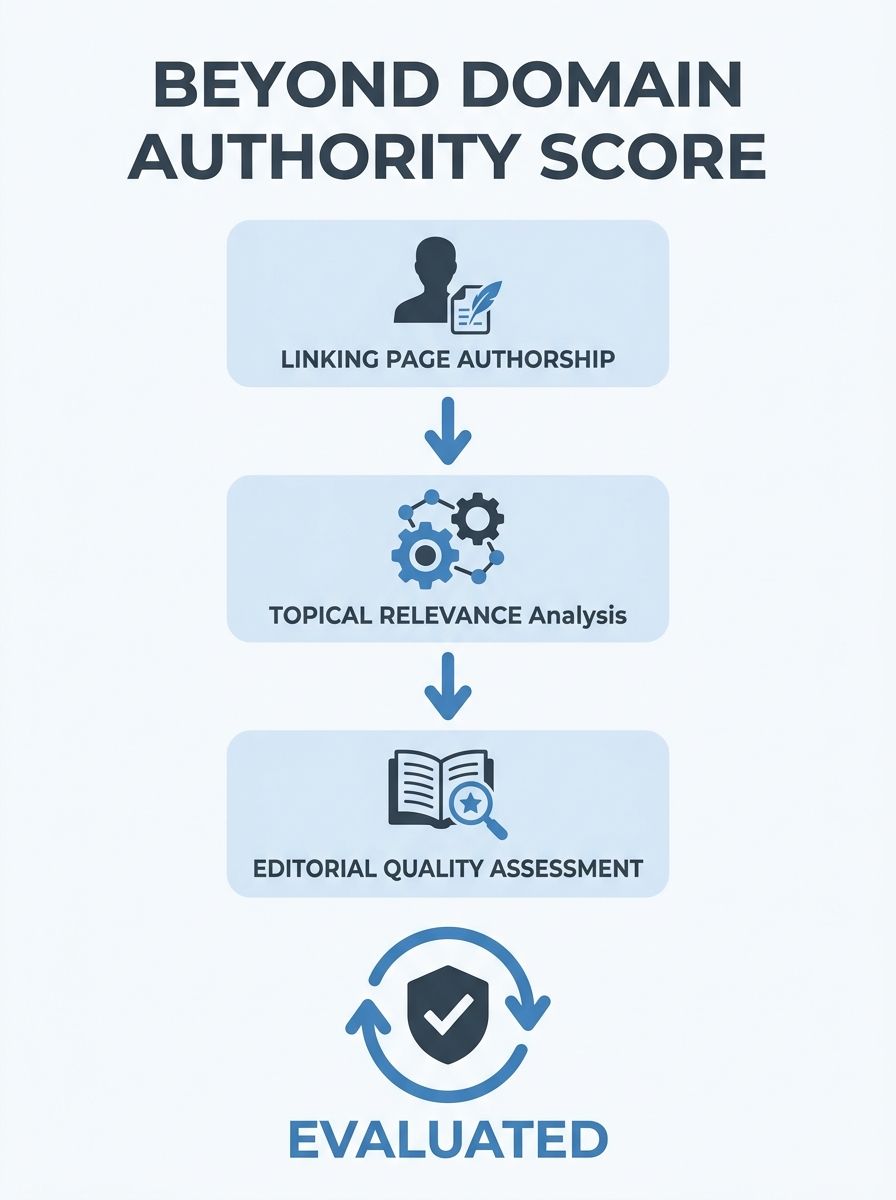
Domain authority used to be the shorthand everyone optimized for. Get a link from a DA 70+ site, and you'd see movement in the SERPs. That shorthand is outdated. Google's algorithm now maps the editorial context surrounding a link: who wrote the content, whether the site has transparent authorship, and whether the linking page shares genuine topical overlap with your destination.
A link from a niche-relevant publication with clear editorial standards carries far more ranking weight than one from a high-DA directory with no editorial oversight. Cross-niche backlinks have lost nearly all their influence. A tech blog linking to a pet grooming site produces minimal impact unless there's an explicit, justified reason for the connection.
This shift rewards site owners who understand how search engines crawl, index, and rank pages. Google's crawlers aren't counting links in a spreadsheet. They're reading the pages those links live on and deciding whether the reference makes editorial sense in context.
What a Natural Backlink Profile Looks Like
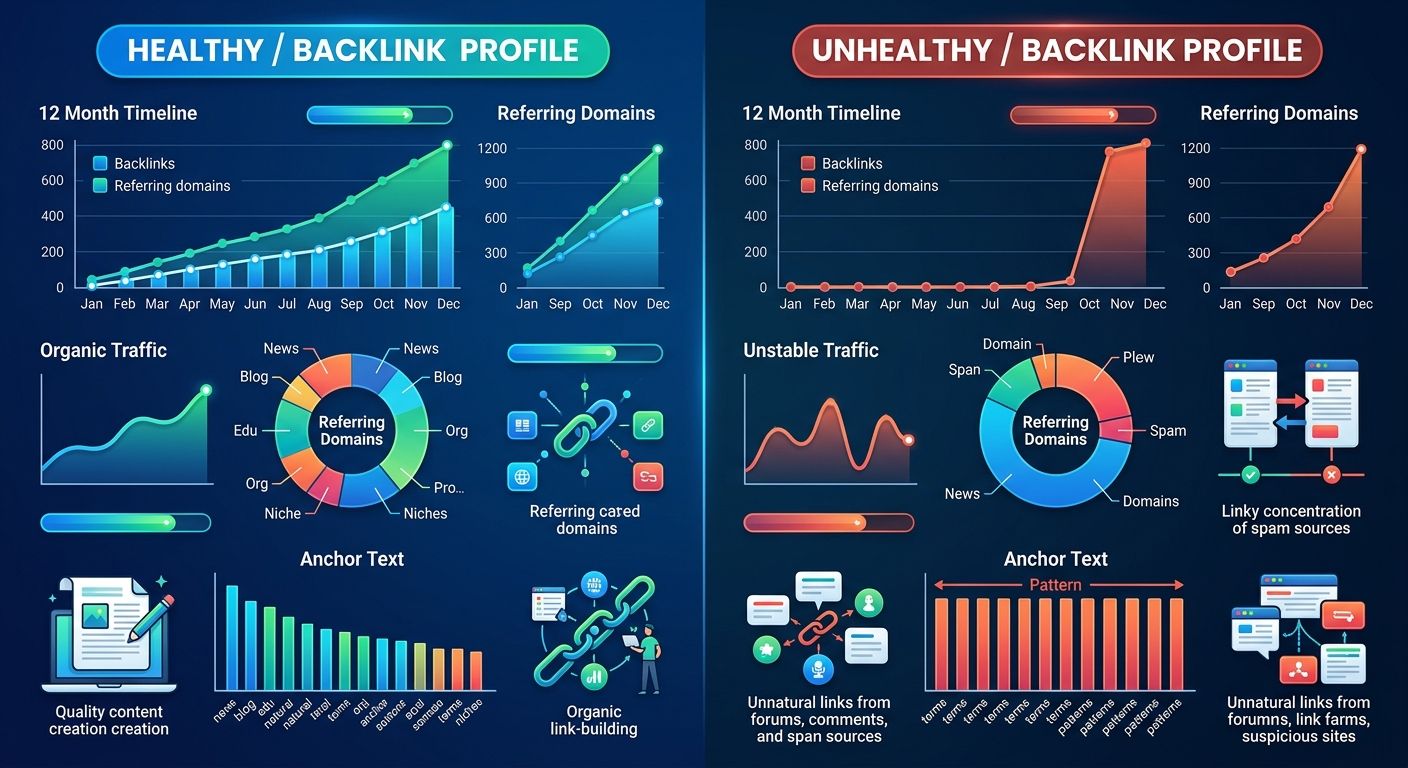
Google expects your backlink profile to grow the way a real business's reputation grows: gradually, from varied sources, with occasional spikes tied to specific events like a product launch or a piece of content going viral.
Here's what the algorithm looks for in a healthy profile:
Diverse referring domains. Links from many different sites matter more than many links from the same site. A hundred backlinks from five domains looks suspicious. Fifty backlinks from forty domains looks organic.
Varied anchor text. If 80% of your inbound links use the same keyword-rich anchor, that's a red flag. Natural profiles include branded anchors, naked URLs, generic phrases like "click here," and the occasional keyword match.
Steady acquisition over time. Sudden spikes in link velocity trigger algorithmic scrutiny. Gaining 50+ links in a single week without an obvious cause (a viral article, a press mention) looks manufactured. The algorithm favors growth patterns that match genuine brand authority.
A mix of link types. Some links come from blog posts, some from news articles, some from resource pages, some from forums. A profile made entirely of guest post bio links screams manipulation.
If your site's on-page optimization is solid but rankings aren't moving, an unnatural backlink profile could be the drag. Run a backlink audit in Ahrefs or Semrush before assuming you need more links. You might need fewer, better ones.
Five Link Building Tactics That Hold Up Under Scrutiny
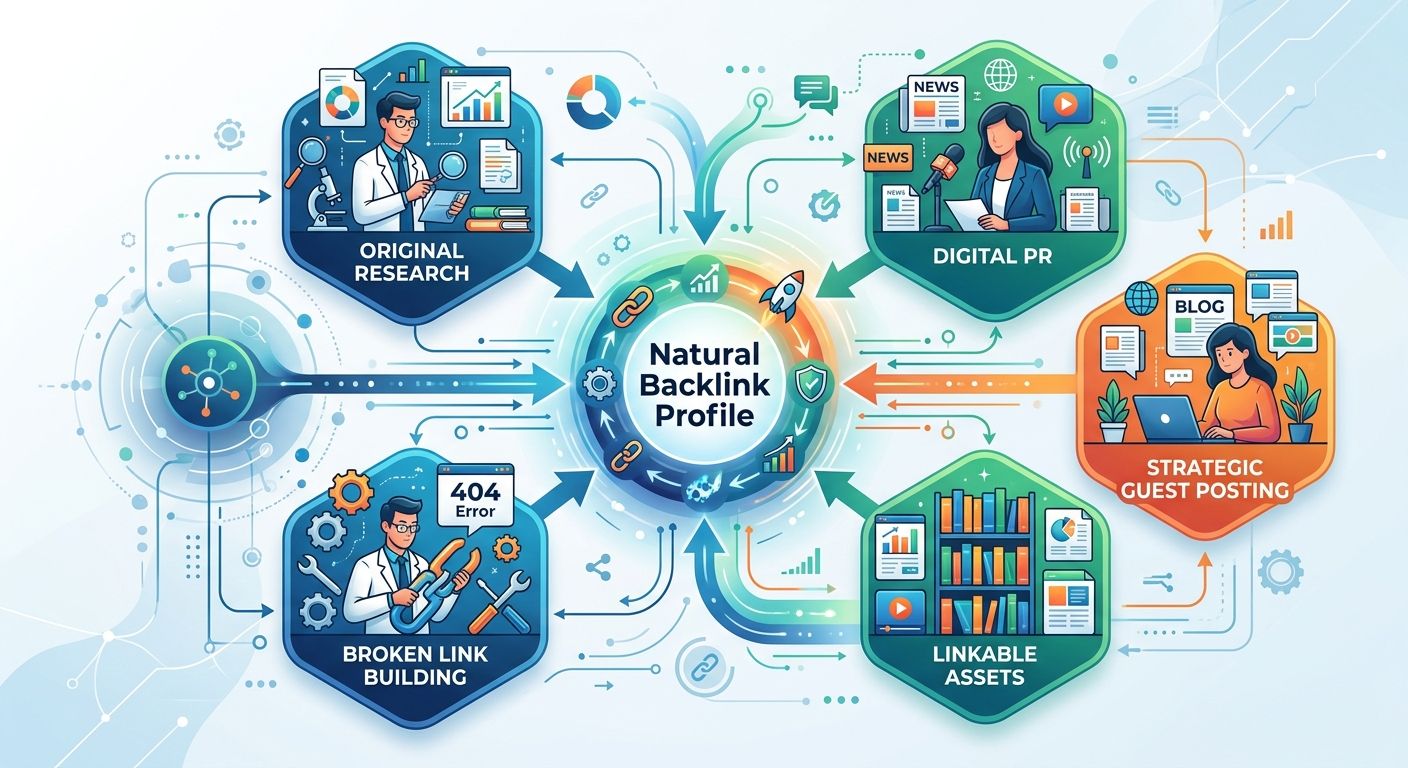
Original Research and Data Studies
Nothing attracts backlinks more reliably than being a primary source. When you publish original data, survey results, or industry benchmarks, journalists and bloggers cite you because they have to. There's no other source for the information.
You don't need a massive budget for this. A survey of 200 professionals in your niche, a dataset pulled from your own product's usage metrics, or a systematic comparison of publicly available information can all work. The key is specificity. Generic "state of the industry" reports compete with well-funded publications. A narrow study about a specific problem your audience cares about gets linked because nobody else bothered to do the work.
As LinkBuilder.io notes, statistics pages, original research, and free tools are among the most reliable ways to attract natural backlinks on autopilot. This aligns with what we've seen across dozens of niches: proprietary data earns links that outreach emails can't.
Digital PR and Journalist Outreach
Editorial mentions from journalists deliver 3–5× more ranking power than guest posts or directory placements. According to industry surveys, roughly 48.6% of SEO professionals now rate digital PR as the most effective white hat link building tactic.
The approach works like this: you create something newsworthy (a data study, an expert opinion on a trending topic, a tool that solves a real problem), then you pitch it to journalists who cover your space. The pitch needs to lead with what's in it for their readers, not what's in it for your rankings.
Broken Link Building
This one's been around for years, and it still works because it offers genuine value to the publisher. You find broken outbound links on relevant authoritative sites, create content that could replace the dead resource, and email the site owner with a heads-up about the broken link and a suggestion.
The average success rate sits around 17%. That sounds low, but each win produces a link from a site that already had editorial standards high enough to be worth targeting. The math works if you systematize the prospecting.
Creating Genuinely Indispensable Resources
The word "linkable asset" gets thrown around a lot, but the concept is sound. Some content formats earn links naturally because people need to reference them:
Detailed comparison guides with current data
Free calculators or interactive tools
Visual explainers (charts, diagrams, process maps)
Definitive glossaries or reference pages for niche terminology
The content needs to be so useful that people reference it in their own writing without you asking. As Neil Patel's team puts it, one link from a trusted, relevant source beats 100 weak ones. Building the kind of content that earns those trusted links requires investing more time upfront than most teams are comfortable with.
If you're building resources in a specific niche, making sure your keyword research reflects actual search behavior will help you create content that ranks and attracts links simultaneously.
Guest Contributions on Relevant Publications
Guest posting still works when done right, but "done right" has a narrow definition in 2026. The host site needs to be genuinely relevant to your niche. The link should appear contextually within the editorial content, not in a bio blurb at the bottom. And the article itself needs to provide real value to that site's audience.
Bio links and low-quality placements on sites that accept everything are worse than useless. Google recognizes patterns across guest post networks, and links from ethical link building practices that align with Google's guidelines outperform manufactured placements by a wide margin.
The Real Math of Outreach
Link building through outreach has a brutally low conversion rate. Cold email campaigns convert at roughly 8%. Broken link building does better at around 17%, but that's still a lot of no-replies for every win.
In the UK market, the cost per white-hat link runs between £800 and £1,600 when you factor in the time for prospecting, content creation, and outreach. A reasonable benchmark for most teams: expect 5–10 quality links from 100 outreach emails.
These numbers discourage people, and they should discourage anyone expecting quick results. But the economics shift when you consider durability. A single editorially earned link from a topically relevant publisher can move needle on rankings for years, while paid links and PBN links carry an expiration date that arrives the moment Google's next update catches up.
One case study from the UK SaaS space showed a 287% increase in organic traffic over eight months, achieved entirely through digital PR and content partnerships. No link buying. No directory spam.
Where Links Fit Within a Broader SEO Strategy
Backlinks don't work in isolation. A page with fifty quality inbound links but terrible on-page optimization, slow load times, and thin content won't rank well. Links accelerate what's already working. They don't rescue what isn't.
If you're building a site from scratch, get the fundamentals of organic SEO right first. Make sure your content deserves to rank before you start trying to earn links to it. The best link building strategy in the world can't compensate for pages that don't answer the searcher's question.
The sites that do best with link acquisition tend to treat it as a byproduct of doing good work, not as a separate workstream. They publish original research because it helps their customers, and the links follow. They build relationships with journalists because they have genuine expertise to share, and the mentions follow. The links are an outcome, not the primary goal.
The Open Threads
Several questions remain unresolved as Google continues adjusting how it weighs backlinks.
First, the role of AI-generated content in link building is murky. If a journalist uses AI to draft an article that cites your research, does Google treat that editorial mention differently? Nobody outside Google knows yet, and the answer likely evolves with each update.
Second, the weighting of links relative to other ranking factors may be shifting. Some SEO practitioners report that topical authority and content depth are gaining ground on link signals, particularly for informational queries. Whether links remain the second-most-important ranking factor (behind content relevance) or slide to third or fourth is an open question worth watching over the next twelve months.
Third, link velocity thresholds remain opaque. We know sudden spikes trigger scrutiny, but the exact boundaries depend on your site's existing authority, your niche, and the apparent cause of the spike. There's no public documentation of safe growth rates, which means the conservative approach (steady, organic growth) remains the safest bet.
What's clear is the direction: Google rewards real editorial endorsements and penalizes artificial ones, and the algorithm's ability to tell the difference improves with every update. White hat link building takes longer, costs more per link, and requires genuine expertise. It also keeps working when the next core update rolls out, which is more than most shortcuts can promise.
OrganicSEO.org Editorial
Editorial team writing about Ethical, white-hat, organic SEO education.
Frequently Asked Questions
- What happened to sites using private blog networks and paid links after Google's February 2026 update?
- Sites relying on private blog networks and paid link schemes saw traffic drops between 40% and 60% after Google's February 2026 core update, while brands with editorial backlinks from trusted, topically relevant publishers held steady or climbed.
- What does Google look at when evaluating backlinks now?
- Google maps the editorial context surrounding a link, including who wrote the content, whether the site has transparent authorship, and whether the linking page shares genuine topical overlap with the destination. A link from a niche-relevant publication with clear editorial standards carries far more ranking weight than one from a high-DA directory with no editorial oversight.
- What does a natural backlink profile look like?
- A natural backlink profile includes diverse referring domains, varied anchor text (including branded anchors and naked URLs), steady acquisition over time rather than sudden spikes, and a mix of link types from blog posts, news articles, resource pages, and forums.
- How effective is digital PR for link building?
- Editorial mentions from journalists deliver 3–5× more ranking power than guest posts or directory placements, and roughly 48.6% of SEO professionals rate digital PR as the most effective white hat link building tactic.
- What is the success rate for broken link building?
- The average success rate for broken link building is around 17%, but each successful placement produces a link from a site that already had editorial standards high enough to be worth targeting.
- How much does white-hat link building cost per link in the UK market?
- The cost per white-hat link in the UK market runs between £800 and £1,600 when you factor in the time for prospecting, content creation, and outreach, with a reasonable benchmark of 5–10 quality links from 100 outreach emails.
- What types of content earn the most backlinks naturally?
- Content that earns links naturally includes detailed comparison guides with current data, free calculators or interactive tools, visual explainers like charts and diagrams, and definitive glossaries or reference pages for niche terminology.
- Can backlinks compensate for poor on-page optimization?
- No, links accelerate what's already working but don't rescue what isn't; a page with fifty quality inbound links but terrible on-page optimization, slow load times, and thin content won't rank well.