Affiliate Programs and SEO: How to Run an Affiliate Program Without Tanking Your Rankings
Adding rel="sponsored" to every affiliate link on your site will do almost nothing to protect your rankings if the underlying content is thin. The attribute matters. Google introduced it specifically for paid placements and compensation agreements.
Affiliate Programs and SEO: How to Run an Affiliate Program Without Tanking Your Rankings
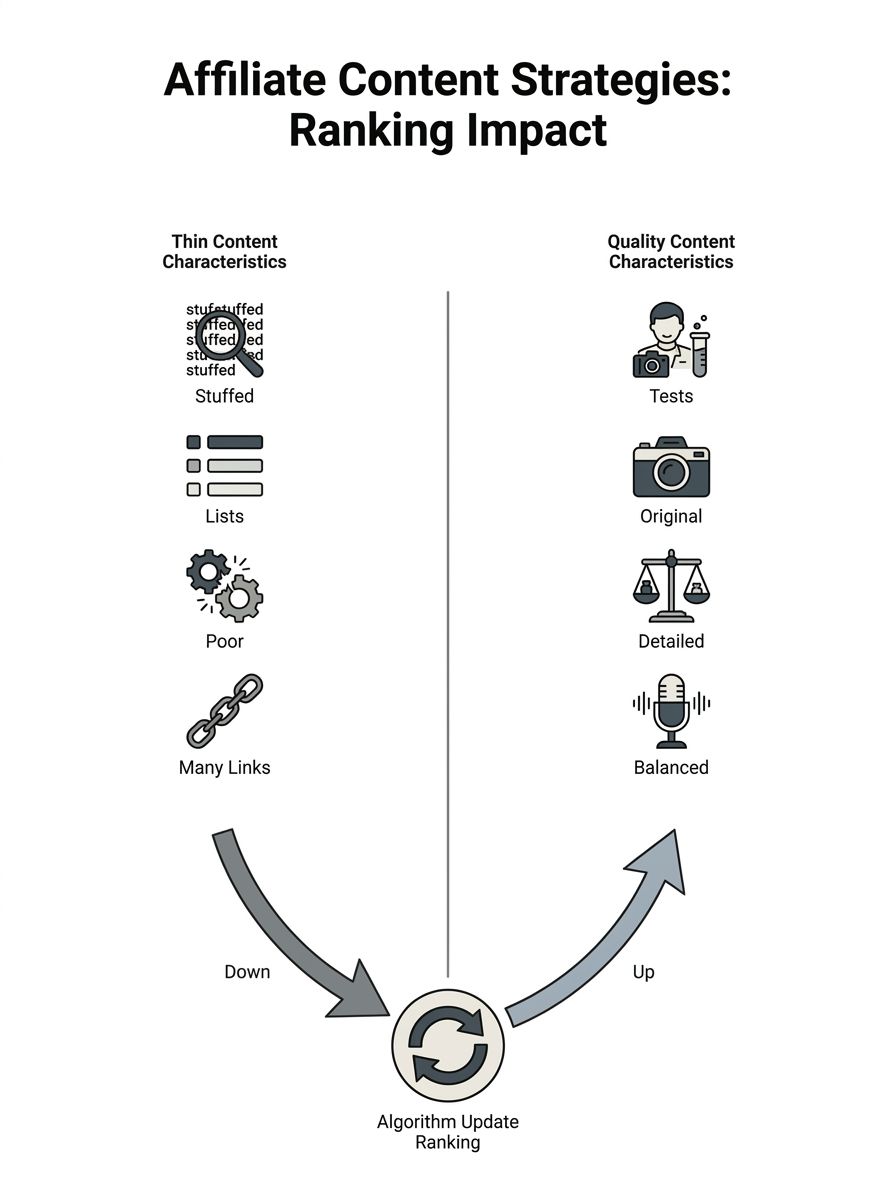
Adding rel="sponsored" to every affiliate link on your site will do almost nothing to protect your rankings if the underlying content is thin. The attribute matters. Google introduced it specifically for paid placements and compensation agreements. But the sites that lost organic visibility after the Helpful Content Update didn't lose it because of missing link attributes. They lost it because their pages existed primarily to route clicks to merchants, and Google got better at detecting that pattern.
This is the misconception at the center of most affiliate program SEO advice: that proper link markup is the primary defense against ranking loss. Markup is a necessary hygiene step. The actual defense is built from content architecture, editorial standards, and how you structure the relationship between your informational pages and your monetized ones.
Three bodies of evidence make that case.
The Helpful Content Update Targeted the Business Model, Not the Links
Google's Helpful Content system, which rolled into the core algorithm through multiple updates, was designed to identify pages created primarily for search engines rather than people. Affiliate sites got caught in the crosshairs because a huge percentage of them were doing exactly that: producing comparison tables and "best of" lists engineered around commercial keywords, with minimal original analysis or firsthand experience backing the recommendations.
CrakRevenue documented how affiliate sites coped with these algorithm changes, noting that surviving the updates required a shift toward authentic, user-first content strategies. High-quality review articles based on real experience, step-by-step guides, and transparent comparison pages performed well. Pages that felt like hard sells got demoted.
The pattern Google punished wasn't "this page has affiliate links." It was "this page has no reason to exist except to collect affiliate commissions." That's a content-model problem, and no amount of proper rel sponsored links will fix it.
If you run an affiliate program and your partners are publishing thin content stuffed with your product links, your brand is attached to pages Google is actively trying to suppress. That's a program management problem masquerading as an SEO technicality.
Proper Link Attributes Are Table Stakes, Not a Strategy
Let's be clear about what rel="sponsored" actually does. When you mark an affiliate link with this attribute, you're telling Google's crawler that the link exists because of a commercial relationship. Google introduced the attribute to give webmasters a way to identify links created as part of advertisements, sponsorships, or other compensation agreements. The older rel="nofollow" still works for this purpose, but rel="sponsored" is more specific.
What the attribute prevents is Google treating your outbound affiliate links as editorial endorsements that pass PageRank. Without it, a page with 15 affiliate links looks to Google's link graph like a page that editorially vouches for 15 different commercial entities. That's suspicious, and it can trigger quality signals that hurt your domain.
So yes, you should be using rel="sponsored" on affiliate links. If you're running an affiliate program, you should require your partners to use it too. This is basic affiliate marketing SEO hygiene, comparable to how proper URL structure prevents crawlability issues. You wouldn't skip either one.
But here's where the advice usually stops, and where the actual problem starts.
The attributes don't address content quality signals
Google's systems evaluate pages on dozens of quality dimensions. E-E-A-T (Experience, Expertise, Authoritativeness, Trustworthiness) applies directly to affiliate content because product recommendations inherently require demonstrated experience. A page reviewing a $400 espresso machine that reads like it was written by someone who's never pulled a shot will get flagged by quality raters, regardless of how cleanly the affiliate links are marked up.
The Helpful Content Update specifically penalized affiliate sites where only 25.1% of affiliate marketers reported negative impacts from the 2024 algorithm updates, mostly because of poor E-E-A-T compliance. That 25.1% number might seem small, but those were overwhelmingly the sites that treated affiliate content SEO as a link-attribute problem rather than an editorial one.
Affiliate cookie tracking SEO considerations that get overlooked
Cookie-based affiliate tracking systems can create duplicate URL parameters that interfere with crawling. When an affiliate link redirects through a tracking domain and appends session-specific parameters to your landing pages, Google might see hundreds of nearly identical URLs for the same page. This is the same class of problem that session IDs create for crawlability, and the fix is similar: use server-side tracking or canonical tags to consolidate those parameter variations. If you're running an affiliate program, audit whether your tracking system generates crawlable parameter URLs. Most modern platforms like impact.com handle this correctly, but older custom implementations often don't.

Content Architecture That Protects Rankings While Monetizing
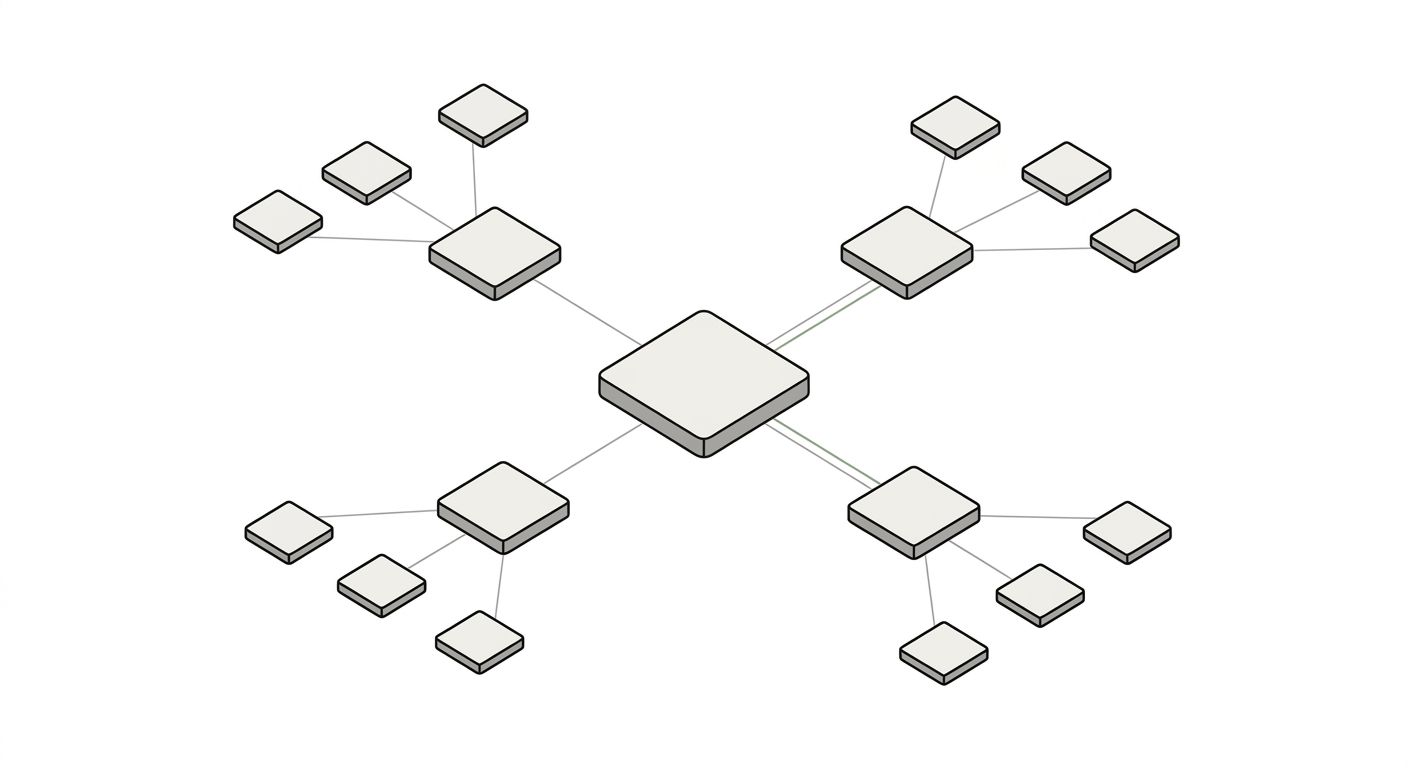
The sites that rank well while running affiliate programs share a structural pattern. They separate their informational content from their monetized content, and they make sure the informational layer is strong enough to stand on its own.
Think about it from Google's perspective. If 80% of your pages exist to send traffic to merchants, your site looks like a funnel. If 80% of your pages are genuinely useful guides, tutorials, and explainers, and 20% of your pages are well-researched product recommendations that link out through affiliate partnerships, your site looks like an editorial resource that also happens to monetize through affiliate relationships.
That ratio matters. And the informational pages need to be actually good, not filler content published to dilute the ratio.
Build topical depth before you monetize
If you're figuring out how to rank an affiliate site, the playbook involves establishing authority on a topic before introducing commercial content. Publish 15 to 20 in-depth informational articles in your niche. Build links to those articles through the kind of genuine white-hat outreach that earns editorial citations. Get indexed, get ranked, build some domain authority. Then introduce product reviews and comparison content that links to the informational foundation you've already built.
This approach takes longer. It also survives algorithm updates, which is the entire point if you want an affiliate program with lasting organic traffic.
Give affiliates editorial guidelines, not just creatives
If you're running the program (as opposed to being the affiliate), your partners' content quality reflects on your brand in Google's eyes. Bad affiliate content pointing to your domain creates a link neighborhood problem similar to the risks of manipulative link schemes. You can't control every page that links to you, but you can set content standards as part of your affiliate agreement, reject partners who publish thin content, and provide editorial guidance that helps affiliates create pages Google actually wants to rank.
Specific offer pages should feel personal and helpful. Viral content needs strategic keyword targeting within the niche. Comparison pages should include genuine pros and cons, not just feature tables pulled from manufacturer specs. According to research on affiliate marketing content strategies, in-depth product reviews, comparison articles, how-to guides, and tutorials perform best when they're informed by actual use.
Diversify traffic so Google isn't your single point of failure
Even a perfectly optimized affiliate site is vulnerable if 100% of its traffic comes from organic search. Building presence on forums, communities, and social platforms creates a traffic floor that cushions algorithm volatility. We've written about using forums for audience building without spamming, and that approach applies directly here. An affiliate site with an engaged email list, an active forum presence, and organic search traffic is far more resilient than one relying on Google alone.
The Claim, Revisited
Affiliate program SEO is a content strategy problem wearing a technical costume. The technical pieces are real requirements. Use rel="sponsored" on affiliate links. Audit your tracking system for duplicate URL generation. Structure your on-page optimization correctly. These are all necessary, and skipping any of them creates avoidable risk.
But the sites that tanked their rankings after algorithm updates didn't fail on technicalities. They failed because their content existed to serve affiliate commissions first and readers second, and Google's systems got precise enough to tell the difference. The sites that thrived built genuine editorial value, used affiliate monetization as a secondary layer rather than the primary purpose, and treated their content standards as seriously as their conversion rates.
If your affiliate program's content strategy can survive the question "would this page be worth publishing if the affiliate program didn't exist?" then your rankings are probably safe. If the honest answer is no, rel="sponsored" tags won't save you. The fix is in the content, not the markup.
OrganicSEO.org Editorial
Editorial team writing about Ethical, white-hat, organic SEO education.
Frequently Asked Questions
- Does rel=sponsored prevent affiliate sites from losing search rankings?
- No, rel="sponsored" is necessary hygiene but not a primary defense against ranking loss. Sites lost rankings after the Helpful Content Update because their pages existed primarily to route clicks to merchants with thin content, not because of missing link attributes. Google's systems got better at detecting that pattern regardless of proper markup.
- What type of affiliate content performs well in Google's search results?
- High-quality review articles based on real experience, step-by-step guides, transparent comparison pages, and content informed by actual use perform well. Pages that feel like hard sells or exist only to collect commissions get demoted, while genuinely useful guides and tutorials rank better.
- How should I structure my website if I run an affiliate program?
- Separate informational content from monetized content, ensuring your informational layer is strong enough to stand alone. Ideally, 80% of pages should be genuinely useful guides and tutorials, with only 20% being monetized product recommendations that link to your informational foundation.
- What is E-E-A-T and why does it matter for affiliate content?
- E-E-A-T stands for Experience, Expertise, Authoritativeness, and Trustworthiness. It applies directly to affiliate content because product recommendations require demonstrated experience—a review written by someone without real experience using the product will be flagged by quality raters.
- Can affiliate tracking systems hurt my SEO?
- Yes, cookie-based affiliate tracking with session-specific parameters can create duplicate URL variations that interfere with crawling. Use server-side tracking or canonical tags to consolidate parameter variations, or use modern platforms like impact.com that handle this correctly.
- Should I diversify traffic sources beyond organic search for my affiliate site?
- Yes, building presence on forums, communities, email lists, and social platforms creates a traffic floor that cushions algorithm volatility. If organic search accounts for more than 70% of your affiliate revenue, you're overexposed to algorithm risk.
- What guidelines should I give affiliate partners to protect my brand's SEO?
- Provide editorial guidelines requiring in-depth product reviews informed by actual use, genuine pros and cons in comparison pages, and personal helpful offer pages. Reject partners who publish thin content and set content standards in your affiliate agreement, as bad affiliate content creates link neighborhood problems.