The Keyword Research Tool Budget Trap: How to Audit Your Stack and Cut Waste Without Losing Coverage
Three keyword research subscriptions running simultaneously is the median for mid-size SEO teams, and almost nobody can articulate why they need all three.
The Keyword Research Tool Budget Trap: How to Audit Your Stack and Cut Waste Without Losing Coverage
Three keyword research subscriptions running simultaneously is the median for mid-size SEO teams, and almost nobody can articulate why they need all three. The tool accumulation pattern goes like this: someone buys Ahrefs for backlink data, then adds Semrush because a new hire prefers it, then picks up a niche keyword tool because it surfaces question-based queries better. Each addition makes sense in isolation. The combined invoice doesn't.
Subscription fees for mainstream keyword research platforms range from $99 to $399 per month per seat, depending on the tier. Stack two or three of those and you're looking at $4,000–$14,000 annually before anyone measures whether each tool delivers differentiated value. The Marketing Stack Complexity Index framework puts it bluntly: the operational tax of maintaining redundant tools typically runs 3-4x higher than the licensing fees themselves, once you account for training, data reconciliation, and workflow friction.
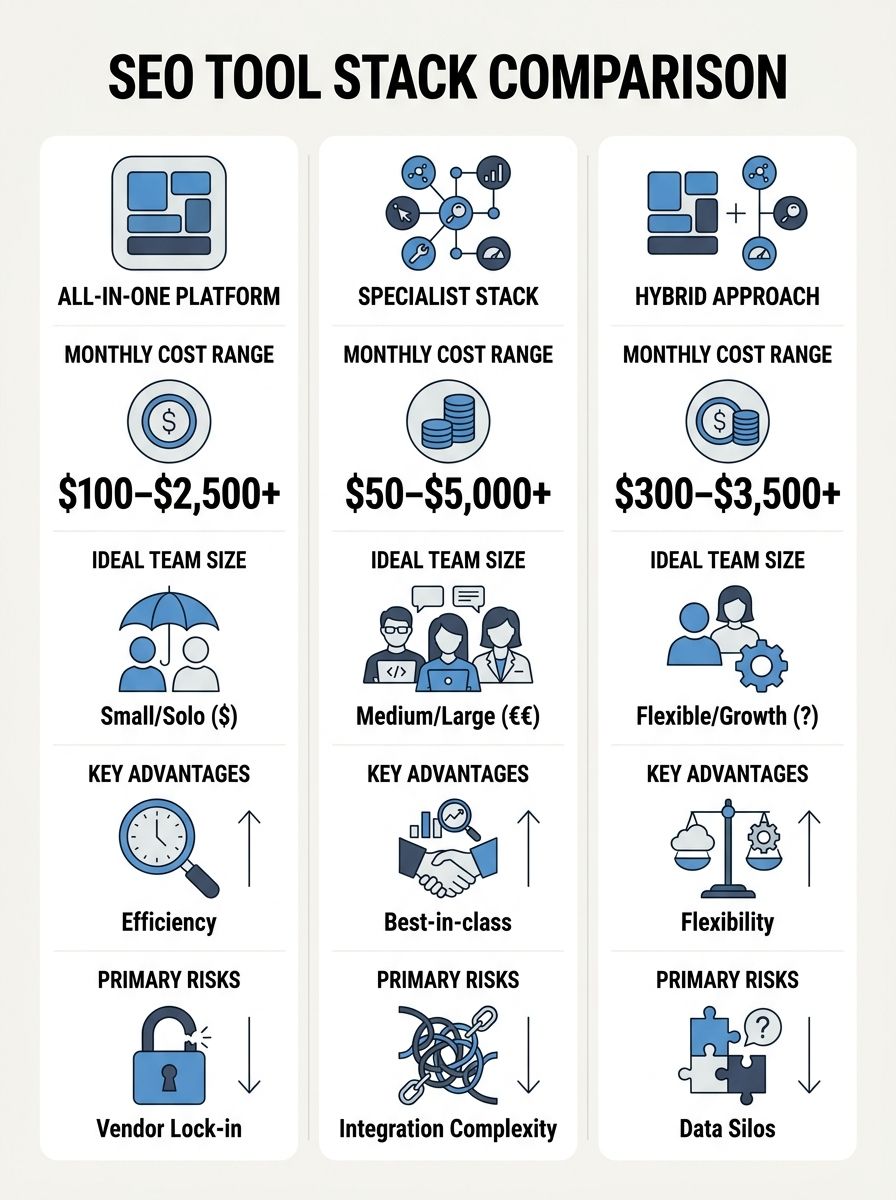
So you have three realistic ways to structure a keyword research tool budget. Each has real tradeoffs. The question is which tradeoffs you can afford.
The All-in-One Platform
Pick one major platform and run everything through it. Keyword discovery, rank tracking, competitor gap analysis, SERP feature monitoring, content briefs. One login, one data source, one bill. Semrush, Ahrefs, Moz Pro, and SE Ranking are the usual candidates.
Where it works well
Teams under five people benefit enormously from having a single source of truth. When everyone pulls keyword difficulty scores, search volume estimates, and competitive data from the same database, you eliminate the maddening "my tool says X but yours says Y" problem. Reporting gets simpler. Onboarding new team members takes days instead of weeks.
The cost-benefit math on keyword research software tilts favorably here for shops billing under $30,000/month in SEO services. A Semrush Guru plan at $249/month gives you enough keyword tracking, site audit capacity, and research volume for most small-to-mid agency workloads. One Belgrade-based agency, Balkan Digital, reportedly achieved 240% revenue growth with exactly this kind of mid-tier single-platform approach, which suggests that tool consolidation doesn't have to mean capability sacrifice.
Where it falls apart
Every all-in-one platform has weak spots. Ahrefs has historically lagged on PPC integration data. Semrush's local keyword data can feel thin outside major metros, which matters if you're building location-based keyword strategies for clients in secondary markets. Moz Pro's link index is smaller than Ahrefs'. If your client base or niche pushes hard against one of these blind spots, you'll either accept the gap or quietly start supplementing with another tool, which defeats the purpose.
The other risk is vendor lock-in. When your entire keyword research workflow, your historical rank tracking data, and your content optimization scoring all live in one platform, switching costs compound over time. If that vendor raises prices 20% (and they do), your negotiating position is weak.
The Specialist Stack
This is the opposite philosophy. Pick the best tool for each job. Ahrefs for backlink analysis and content gap identification. SpyFu for paid keyword intelligence and competitor ad spend research. AnswerThePublic or AlsoAsked for question mining. Google Search Console (free) for your actual click and impression data. KeywordTool.io for YouTube or Amazon keyword research if you're working across platforms.
Where it works well
Specialist stacks produce the best raw data quality. When you're doing deep keyword research on specific query types, a purpose-built tool will surface opportunities that a generalist platform misses. Agencies that serve verticals with unusual search behavior—healthcare, legal, B2B industrial—often find that no single platform covers their needs adequately.
If you've built a team where each person owns a distinct function (technical SEO, content strategy, link building, paid search), the specialist approach maps cleanly to those responsibilities. The link builder lives in Ahrefs. The content strategist lives in Clearscope or Surfer. The PPC lead lives in SpyFu. Nobody steps on each other's data.
Where it falls apart
Cost creep is the obvious problem. Four or five subscriptions at $99-$200 each puts you at $500-$1,000/month before you've added rank tracking or site audit tools. But the hidden cost is worse: data fragmentation. When your keyword difficulty scores come from Ahrefs and your content optimization scores come from Surfer and your rank tracking comes from a third tool, reconciling those numbers into a single strategic picture requires manual work that eats hours every week.
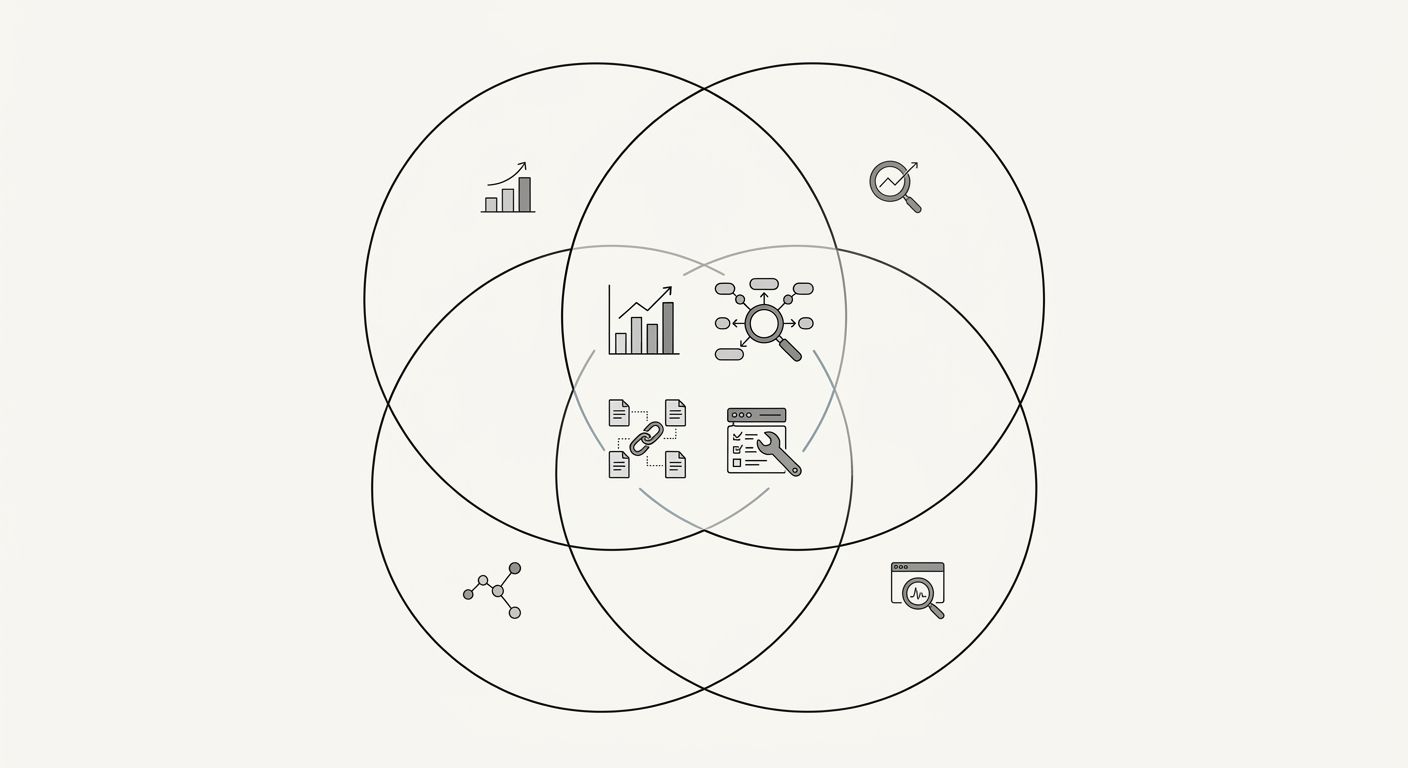
Running multiple plugins or tools that perform similar functions also creates confusion and technical conflicts, as anyone who's stacked three WordPress SEO plugins has learned firsthand. A proper tool overlap audit usually reveals that 40-60% of the features you're paying for across your specialist stack duplicate each other. You're paying premium prices five times for capabilities you'd get once from a consolidated platform.
The Hybrid Approach
This is where most well-run teams end up after a few years of experimentation. One primary paid platform handles 70-80% of your keyword research needs. Then you supplement with one or two targeted tools that fill specific gaps the primary platform doesn't cover well.
What the structure typically looks like
The primary platform does keyword discovery, rank tracking, site auditing, and competitive analysis. Semrush or Ahrefs usually fills this role. The supplementary layer might include Google Search Console (free, and the only source of your actual click and impression data), a SERP feature tracking tool, and maybe a content optimization tool like Clearscope if your primary platform's content scoring is weak.
The key discipline here is that every supplementary tool needs a written justification: what specific capability does it provide that your primary platform cannot? If you can't answer that in one sentence, it's a candidate for cutting.
The tradeoff math
A hybrid stack typically runs $300-$500/month total, less than a full specialist approach, more than pure consolidation. The keyword research tool ROI tends to be highest with this configuration because you're paying premium rates for only one platform while getting targeted value from cheaper additions.
The risk is scope creep. Hybrid stacks have a gravitational pull toward becoming specialist stacks. Someone adds "just one more tool" for a specific project, and that trial subscription quietly auto-renews for eighteen months. Building a quarterly audit into your regular keyword research refresh cycle helps prevent this drift, because the same cadence that keeps your keyword lists current can also keep your tool list honest.
Running the Overlap Audit Itself
Regardless of which approach you're moving toward, you should audit your current stack before making changes. Here's a structured way to do it:
List every tool with keyword research capabilities you're currently paying for. Don't forget WordPress plugins, Chrome extensions with paid tiers, and tools other team members signed up for independently. Check your company credit card statements if you need to, because teams are consistently surprised by what they find.
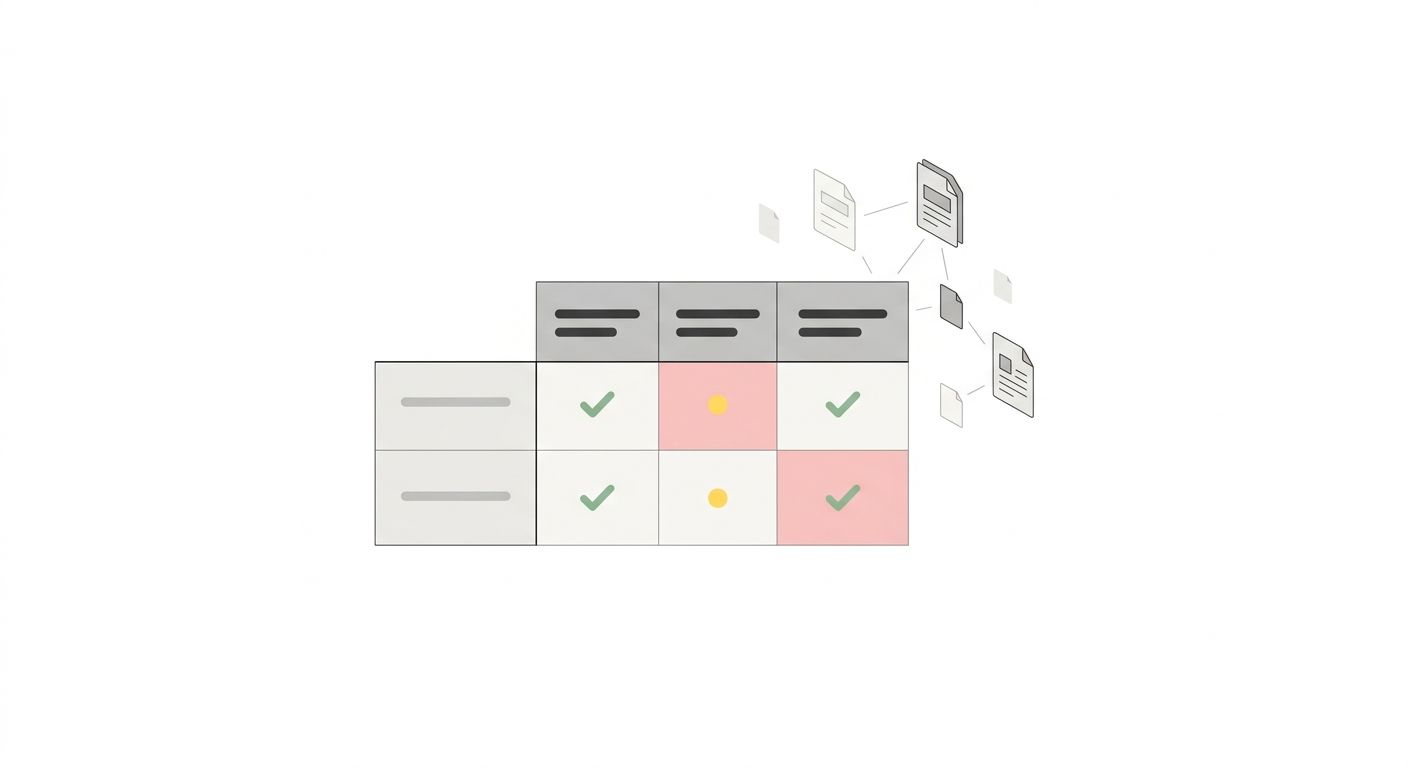
Map features to a grid. Across the top: keyword discovery, keyword difficulty scoring, search volume data, rank tracking, SERP feature monitoring, competitor gap analysis, content optimization scoring, backlink analysis. Down the side: each tool. Mark which tool provides which feature.
Identify pure overlap. Any feature covered by three or more tools is a candidate for consolidation. Semantec SEO's audit methodology focuses on repeated coverage patterns and can be adapted from content auditing to tool auditing with the same underlying logic: if you're paying to cover the same ground multiple times, the redundancy is costing you clarity as well as money.
Test removal before canceling. Before cutting a tool, stop using it for 30 days. If nobody on the team notices or reaches for it, the cancellation is safe. If someone does reach for it, document exactly what they needed. That tells you whether another tool in your stack already covers it or whether you've found a genuine gap worth keeping.
Consolidate keyword lists. When merging data from multiple tools, clean your keyword lists to remove duplicates and bad data. Identical keywords surfaced by different tools inflate your perceived research coverage without adding real value. Free tools like SEO Book's list cleaner can strip duplicates and bad characters from merged lists in seconds.
The goal of SEO tool stack optimization isn't to minimize spending. It's to maximize differentiated coverage per dollar. Every tool in your stack should earn its seat by providing data or capability you genuinely cannot get elsewhere in the stack. If you're already tracking performance metrics across your SEO operation, apply the same rigor to the tools that generate those metrics.
Who Should Pick Which
Solo practitioners and small teams (1-3 people): The all-in-one platform is almost certainly your best SEO budget allocation. Pick the one whose data you trust most for your niche, commit to it, and resist the urge to supplement. The cognitive overhead of managing multiple tools will cost you more in time than the data gaps cost you in coverage.
Mid-size agencies (4-15 people): The hybrid approach gives you the best cost-benefit ratio on keyword research software. One primary platform for the team, with carefully justified supplements. Audit quarterly. If a supplementary tool hasn't been opened by anyone in 60 days, cut it.
Large agencies and in-house enterprise teams (15+ people): You'll likely run a specialist stack whether you plan to or not, because different departments will choose different tools. Your job is managing the overlap rather than eliminating it. Set a budget ceiling, require annual justification for every renewal, and designate one person as the tool stack owner who has authority to consolidate.
The honest answer on SEO tool stack optimization is that most teams are paying for 30-50% more tool coverage than they actually use. Running the audit feels tedious, and it's tempting to keep everything "just in case." But those redundant subscriptions fragment your data, split your team's attention, and create workflow friction that compounds silently. If you've already invested time in evaluating which tools earn their subscription, the overlap audit is the natural next step. Cut what duplicates, keep what differentiates, and revisit the decision every quarter, because your needs will shift faster than your auto-renewals.
OrganicSEO.org Editorial
Editorial team writing about Ethical, white-hat, organic SEO education.