Why Your Keyword Research Tools Disagree on Search Volume (And How to Break the Tie)
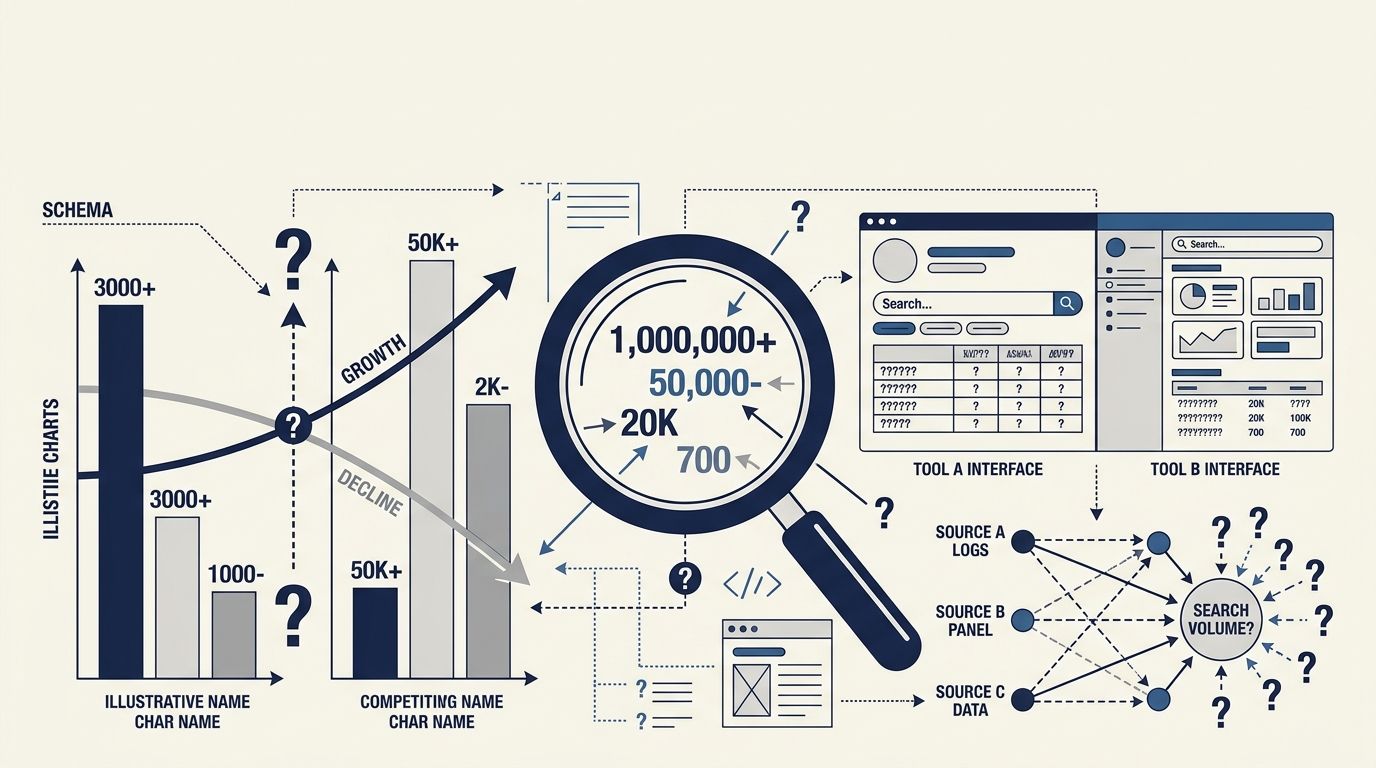
Store Growers tested 10 commercial keywords across Google Keyword Planner, Semrush, Ahrefs, and SpyFu and found that no two tools agreed on volume for a single term.
Why Your Keyword Research Tools Disagree on Search Volume (And How to Break the Tie)
Store Growers tested 10 commercial keywords across Google Keyword Planner, Semrush, Ahrefs, and SpyFu and found that no two tools agreed on volume for a single term. The search volume discrepancies across SEO tools trace back to a series of data-sourcing decisions each platform made independently over the past decade, and understanding that history is the only way to interpret the numbers intelligently.
The Original Source: Google's Ad Auction Logs
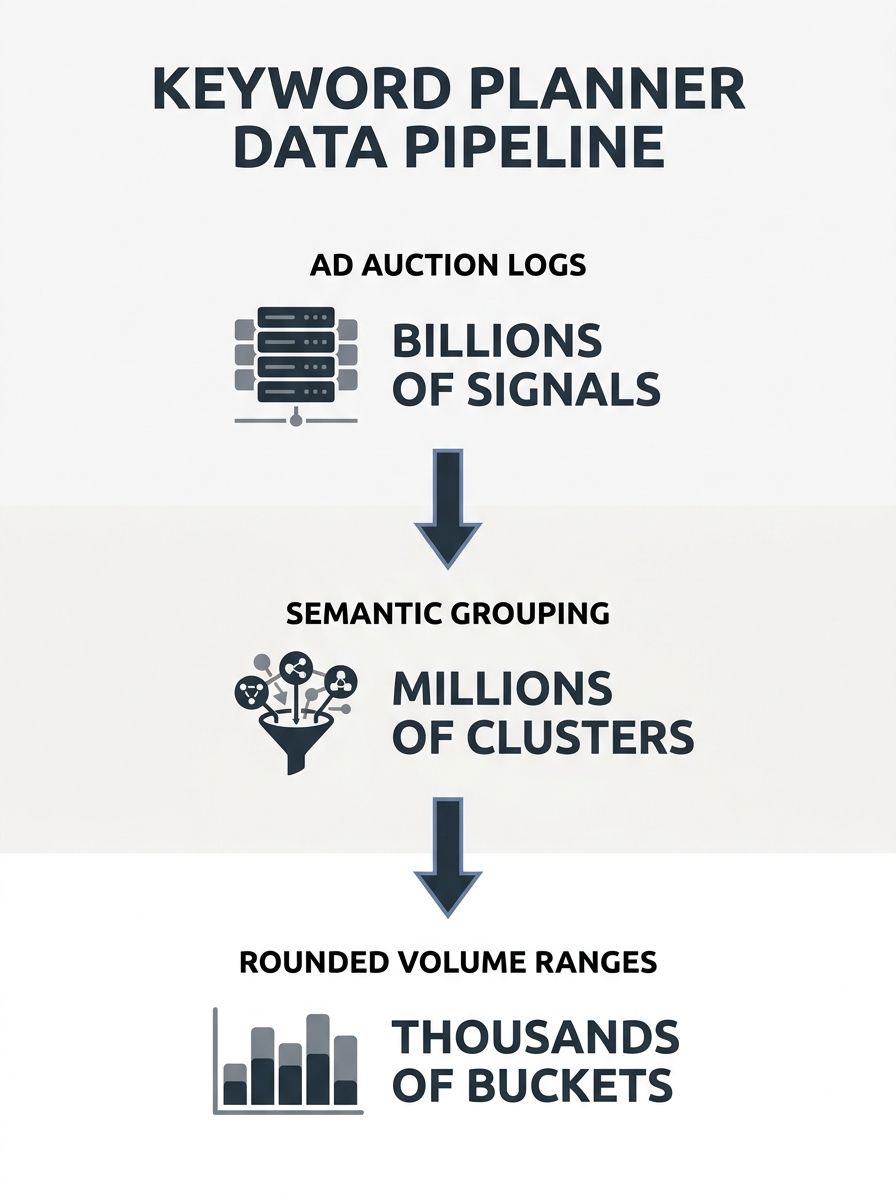
Google Keyword Planner launched as the primary interface for keyword volume data, and for years it was the only game in town. The tool pulls directly from Google's ad auction system, which means it measures how often advertisers bid on queries, not how often users click organic results. That distinction matters more than most practitioners realize.
Google designed Keyword Planner for pay-per-click campaign planning. As Surfside PPC's comparison analysis put it, the tool "shows broad search volume ranges (e.g., 1K–10K), lacks organic SEO metrics, and limits competitor analysis." Those ranges exist because Google groups semantically similar queries into the same bucket. If you type "running shoes" and "running shoe," Planner often reports one combined number for both. The data is real, but it's filtered through an advertising lens.
For SEOs during this early phase, those rounded ranges were the best available signal. Everyone used the same source. Nobody argued about whose numbers were right because there was only one set of numbers. The accuracy question didn't surface until alternatives showed up.
When Clickstream Panels Arrived
Ahrefs and Semrush built their own keyword volume databases by sourcing what the industry calls "clickstream data." This data comes from browser extensions, toolbar software, and ISP-level traffic logs. When a user with one of these extensions installed searches Google, that query gets recorded, anonymized, and fed into a statistical model that extrapolates total volume from the sample.
The math behind clickstream is straightforward in concept. If your panel includes 2% of internet users in the United States, and 960 of them searched "email marketing software" in a given month, you estimate roughly 48,000 total searches. But the accuracy of keyword research tool estimates depends entirely on who's in the panel. Browser extension users skew younger, more tech-savvy, and more likely to use desktop. Mobile search behavior, which accounts for roughly 63% of all Google searches globally according to Statcounter data, is significantly underrepresented.
Ahrefs and Semrush also weight their panels differently. Ahrefs has stated it uses data from multiple clickstream providers and cross-references with Google Search Console integrations from partner sites. Semrush runs a similar process but calibrates against its own proprietary datasets. The result: two tools looking at overlapping but non-identical slices of search behavior, applying different statistical models, and outputting different numbers. The Ahrefs vs Semrush data comparison became a perennial topic in SEO communities precisely because both tools looked authoritative but couldn't agree.
Google Restricts the Spigot
The pivotal shift came when Google decided to limit Keyword Planner's usefulness for anyone not actively spending on ads. As SEO Testing's analysis of keyword tool data sources documented, "Google doesn't want people to use the data for SEO. This is why they have stopped showing exact keyword volumes for low-spending accounts and started showing ranges instead."
This created a two-tier system. Advertisers with active campaigns and significant monthly ad spend see more granular volume data inside Keyword Planner. Everyone else sees those broad 1K–10K buckets. The move essentially pushed SEO practitioners toward third-party tools for any kind of precise volume estimation, which accelerated the adoption of Ahrefs, Semrush, Mangools, and others.
But it also introduced a quiet problem. The third-party tools still used Keyword Planner as a calibration benchmark for their clickstream models. So you had tools calibrating against a source that was itself becoming less precise for most users. The circularity created drift. By the time practitioners started routinely comparing Ahrefs and Semrush side-by-side, the numbers had diverged enough to cause real confusion in content planning.

The Three-Way Split in Practice
So what do the disagreements actually look like? When Store Growers ran their 10-keyword test, the conclusion was blunt: "It's impossible to figure out which one of these keyword research tools is most accurate." And Ryan Robinson, writing for ryrob.com, reinforced this: "Keyword tools are only directionally reliable and useful. Don't expect search volume data to be 100% accurate."
Here's a representative picture of how the tools diverge on the same queries:
Keyword | Google Keyword Planner | Ahrefs | Semrush | SpyFu |
|---|---|---|---|---|
"email marketing software" | 10K–100K (range) | 14,000 | 18,100 | 12,500 |
"best CRM for small business" | 1K–10K (range) | 3,200 | 4,400 | 2,800 |
"project management tools" | 10K–100K (range) | 22,000 | 27,100 | 19,000 |
The spreads are consistent in direction (all tools agree on relative ranking of these terms) but inconsistent in magnitude (discrepancies of 20–40% between Ahrefs and Semrush on the same keyword are common). Google Keyword Planner limitations become obvious here: a range of "1K–10K" covers an order of magnitude. That range tells you almost nothing about whether to prioritize one keyword over another within the same bracket.
The explanation for these search volume discrepancies across SEO tools isn't that someone is lying. It's that each tool's clickstream panel has different geographic coverage, different demographic skews, and different statistical extrapolation methods. Two tools can both be "right" about their sample and still produce meaningfully different estimates.
How Practitioners Learned to Validate
The SEO community's response to this data chaos developed in stages. First came the "pick one tool and stick with it" advice, which is sound as far as it goes. If you're always using the same tool, relative comparisons between keywords stay consistent even if absolute numbers are off. The r/SEO community on Reddit echoed this repeatedly, with one practitioner noting, "Every tool uses different criteria, hence the numbers differ. But compare data from the same tool."
But the more sophisticated approach involves validating keyword data sources against first-party signals. Google Search Console's Performance report shows actual impressions and clicks for queries your site already ranks for. Those numbers come directly from Google's index, with no clickstream intermediary and no ad-system rounding. If Search Console shows your page received 1,200 impressions for a query in a month while ranking at position 8, you can estimate total search volume by applying known CTR curves for that position (roughly 3–4% for position 8 on desktop, which implies approximately 30,000–40,000 monthly searches).
We've explored why data conflicts between tools create real ranking problems and how to build resolution workflows. The short version: treat third-party volume as a relative signal for prioritization, and treat Search Console as your ground-truth check for any keyword where you already have ranking data.
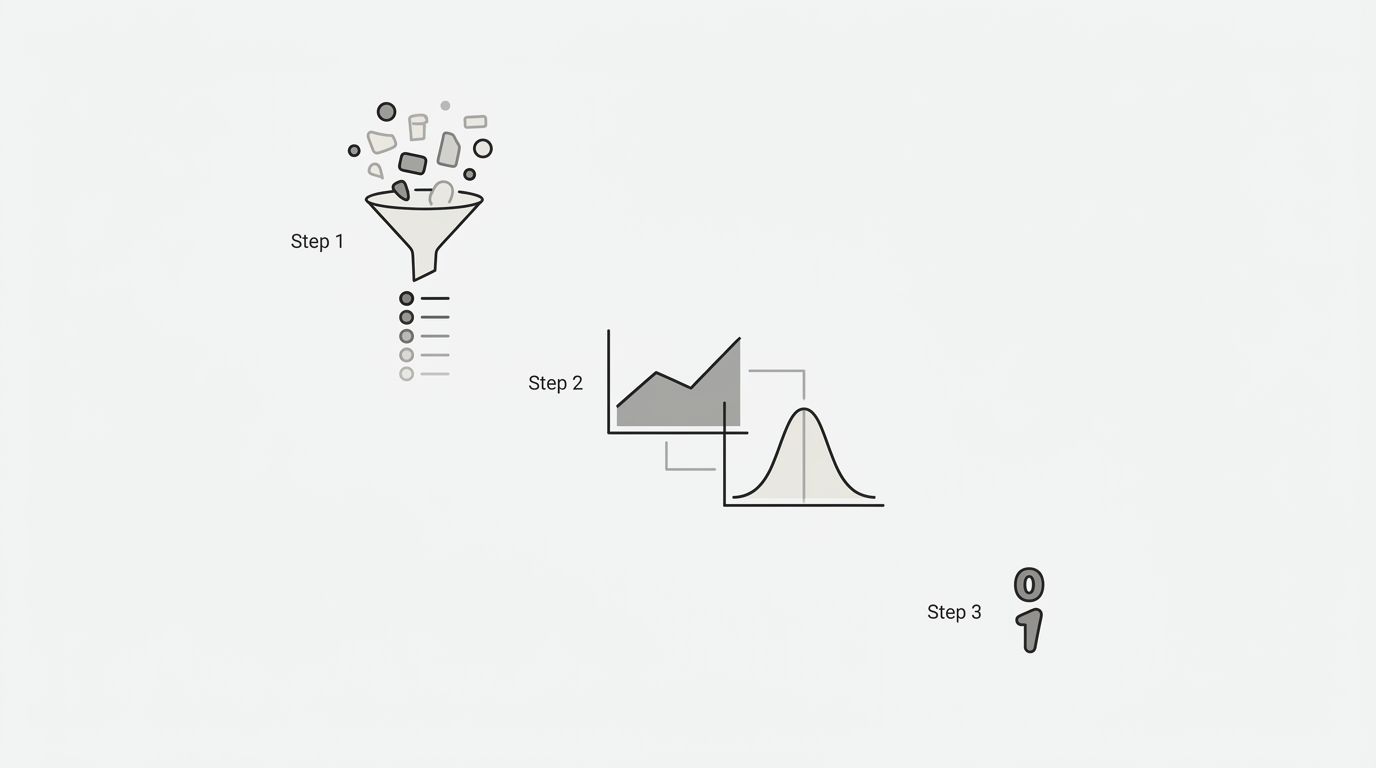
Google Ads Forecast data offers another cross-check. The Seo Engine's 2026 review of Keyword Planner noted that Google's "forecasting uses the same models that power actual ad auction predictions" and that "commercial intent signals are unfiltered." Running a forecast for a keyword (even without launching the campaign) gives you Google's own estimate of impressions at various bid levels. That impression count, divided by your estimated impression share, approximates actual query volume through a pipeline completely independent of clickstream data.
The practitioners who've built reliable content strategies have stopped asking "which tool is right?" and started asking "do all three signals agree on the order of magnitude?" If Ahrefs says 5,000, Search Console data implies 7,000, and Google Ads Forecast suggests 6,200, you have a solid keyword. If Ahrefs says 5,000 but Search Console data implies 800, something is wrong with either your ranking assumptions or the clickstream panel's coverage for that query. Understanding when keyword data conflicts with ranking reality is where real keyword research tool accuracy gets tested.
Where the Data Stands Today
The divergence between tools isn't shrinking. AI Overviews and conversational search features are making query patterns more complex and variable, which makes statistical extrapolation from clickstream panels harder to calibrate. A query that used to be typed identically by thousands of users now arrives in dozens of natural-language variations. Clickstream panels catch some of those variations. Google's ad system groups them together. Neither approach captures the full picture.
The practical framework that holds up under these conditions treats volume as one input among several, not the primary filter. Keyword difficulty metrics (which also vary wildly between tools, since each uses a different formula) need the same cross-validation. And search intent analysis, built from SERP reverse engineering rather than tool-generated scores, provides the context that volume numbers alone can't give you.
The tools aren't going to converge. They each have commercial incentives to maintain proprietary methodologies. Your job is to understand what each tool actually measures, use relative rather than absolute comparisons, and validate against first-party data wherever you have it. The professionals who produce the most reliable keyword research treat every volume number as an estimate with a confidence interval, not a fact. Build your content strategy around directional signals confirmed by multiple independent sources, and the specific number any single tool shows you stops mattering so much.
OrganicSEO.org Editorial
Editorial team writing about Ethical, white-hat, organic SEO education.
Related Articles
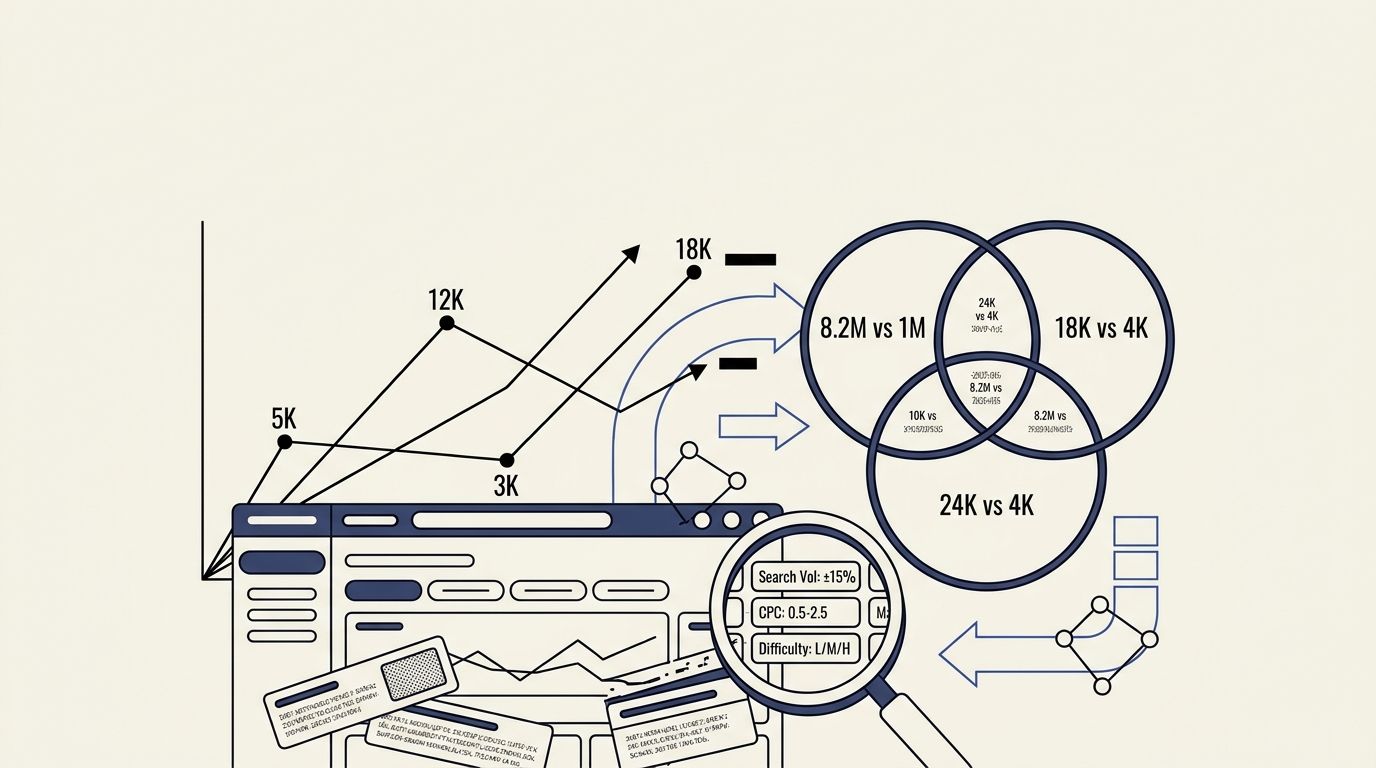
Keyword Research Data Conflicts in 2026: Why Ahrefs, Semrush, and Google Keyword Planner Give Different Numbers (And What to Do About It)
Ahrefs, Semrush, and Google Keyword Planner report different search volume numbers for the same keywords because each tool collects, models, and categorizes search data through fundamentally different methods.
The Keyword Research Data Trap: Why Multiple Tools Contradict Each Other and How to Resolve Conflicts
Google Ads Keyword Planner API, the single upstream source feeding search volume data into Ahrefs, Semrush, Moz, and nearly every other SEO platform, returns estimates bucketed into ranges that can span 10x.
Beyond Search Volume: Why Keyword Research Tools Miss Half Your Opportunity in 2026
Roughly 15% of the queries Google processes each day have never appeared in any keyword research tool's index. That figure represents the floor of what volume-based research misses, before accounting for the queries tools do track but measure with wildly conflicting numbers across platforms.