Search Intent Signals Hidden in Your Competitor's Content Gap: A Reverse-Engineering Method
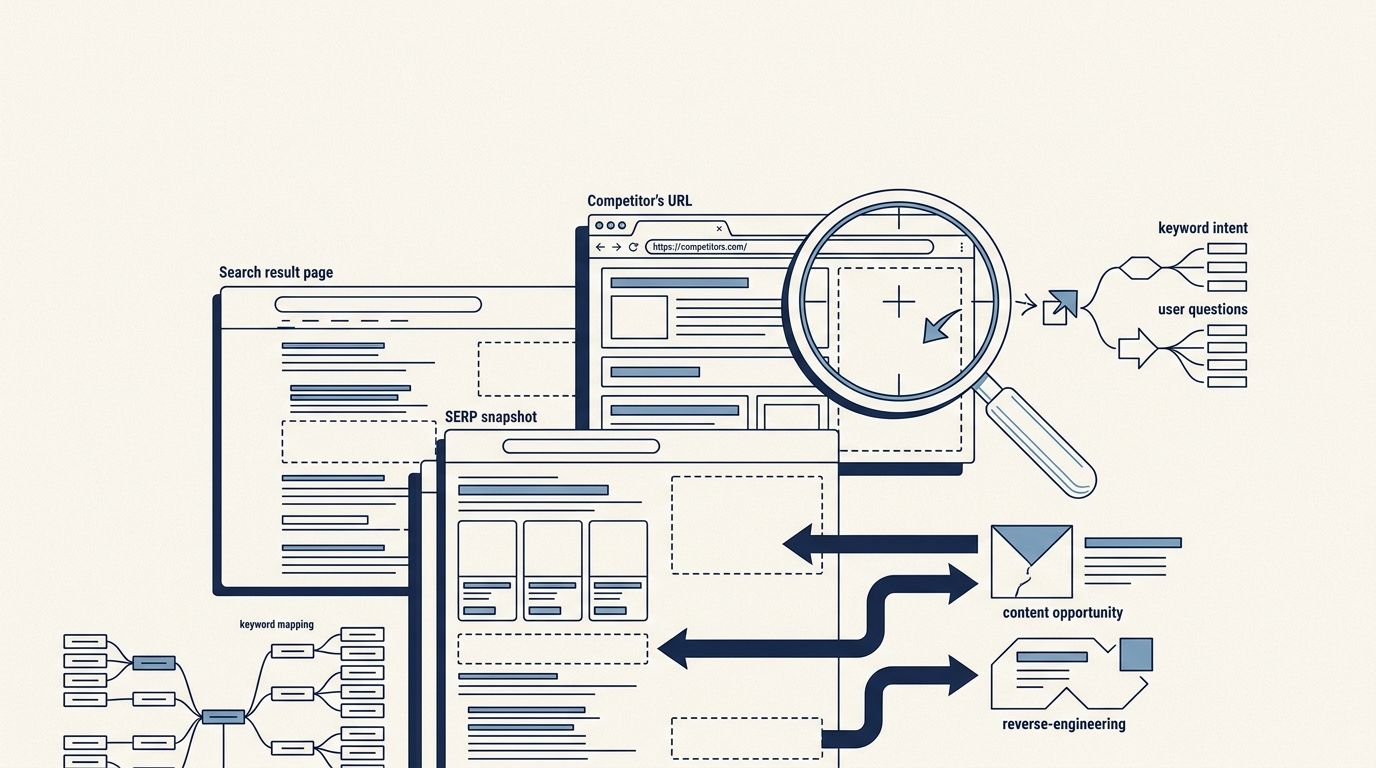
Competitor content gaps carry intent signals embedded in SERP formats, title tag patterns, and H2 structures of pages that already rank. Extracting those signals through systematic SERP reverse engineering produces a prioritized content opportunity map, not a generic list of missing keywords.
Search Intent Signals Hidden in Your Competitor's Content Gap: A Reverse-Engineering Method
Competitor content gaps carry intent signals embedded in SERP formats, title tag patterns, and H2 structures of pages that already rank. Extracting those signals through systematic SERP reverse engineering produces a prioritized content opportunity map, not a generic list of missing keywords.
Content Gaps Are Intent Gaps
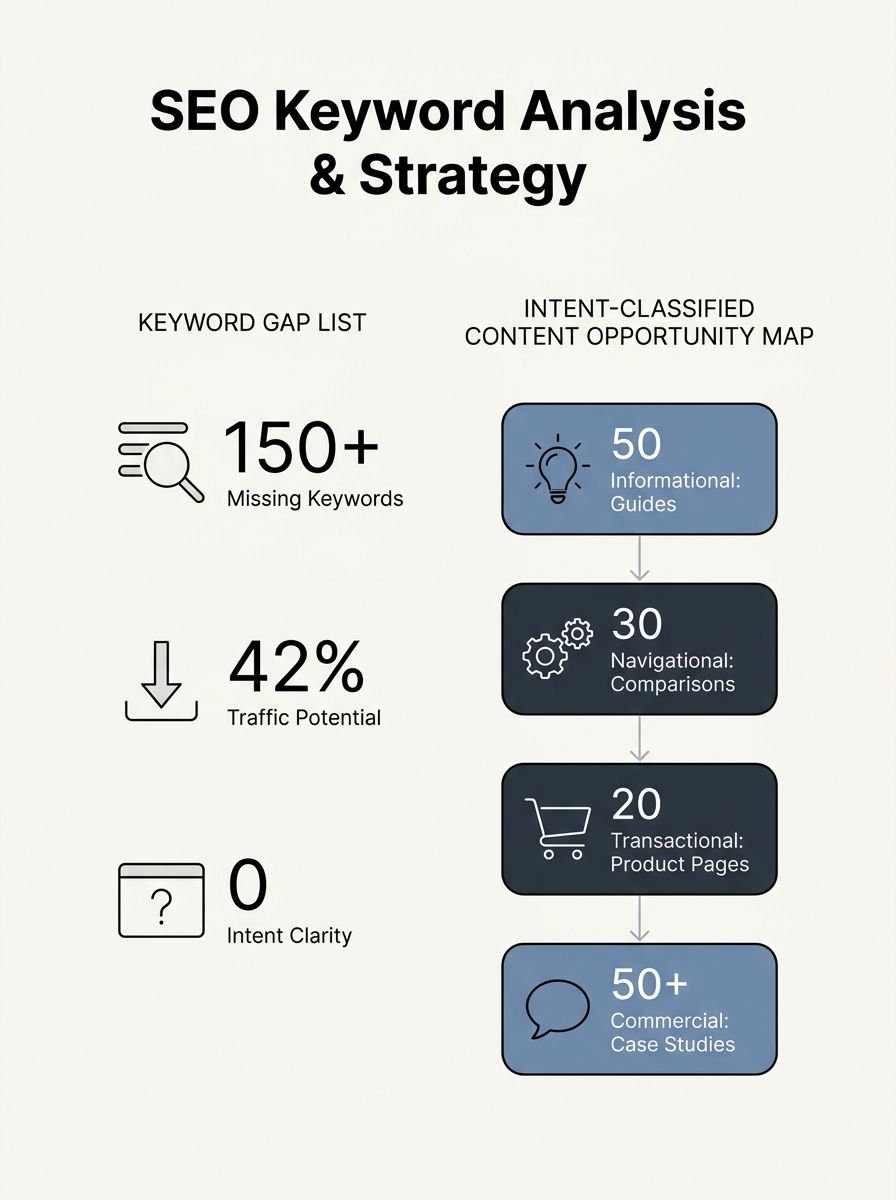
The standard content gap analysis workflow goes like this: plug 3-5 competitors into Semrush or Ahrefs, export the keywords they rank for that you don't, and build a publishing calendar from the results. Backlinko's content gap guide confirms that Semrush's gap feature can surface topics with high opportunity density in a single lookup. But the output of that lookup is a keyword list, and a keyword list without intent classification is just noise.
The real signal lives one layer deeper. When a competitor ranks for "best CRM for small business" with a 2,000-word comparison guide but has no page addressing "CRM implementation timeline" or "CRM data migration checklist," the gap isn't topical. Both clusters fall under "CRM." The gap is intent-based: the competitor covered commercial investigation intent and ignored the informational and transactional intent that appears later in the buying cycle. Pages ranking on page one for target keywords convert at roughly 3% on average, but pages with strong keyword intent alignment push past 5%, according to conversion benchmarks from Grow and Convert. That 2-percentage-point difference is the payoff of getting intent classification right.
If you've run into situations where your rankings look healthy but your traffic quality is poor, you're likely dealing with the same root cause. Understanding how keyword intent mismatches hide behind decent rankings is a prerequisite for this entire method.
The Four-Layer Intent Extraction Method
Why does a content gap tool miss intent signals? Because it exports keywords with volume and difficulty scores but strips away the SERP context that reveals what users actually want. Surfer's search intent guide puts it directly: "Examine the title tags, meta descriptions, and content structure of top-ranking posts. This will help you better understand the search intent and what content Google expects to appear for your chosen keyword" (Surfer). The method below uses that SERP context as your primary data source.
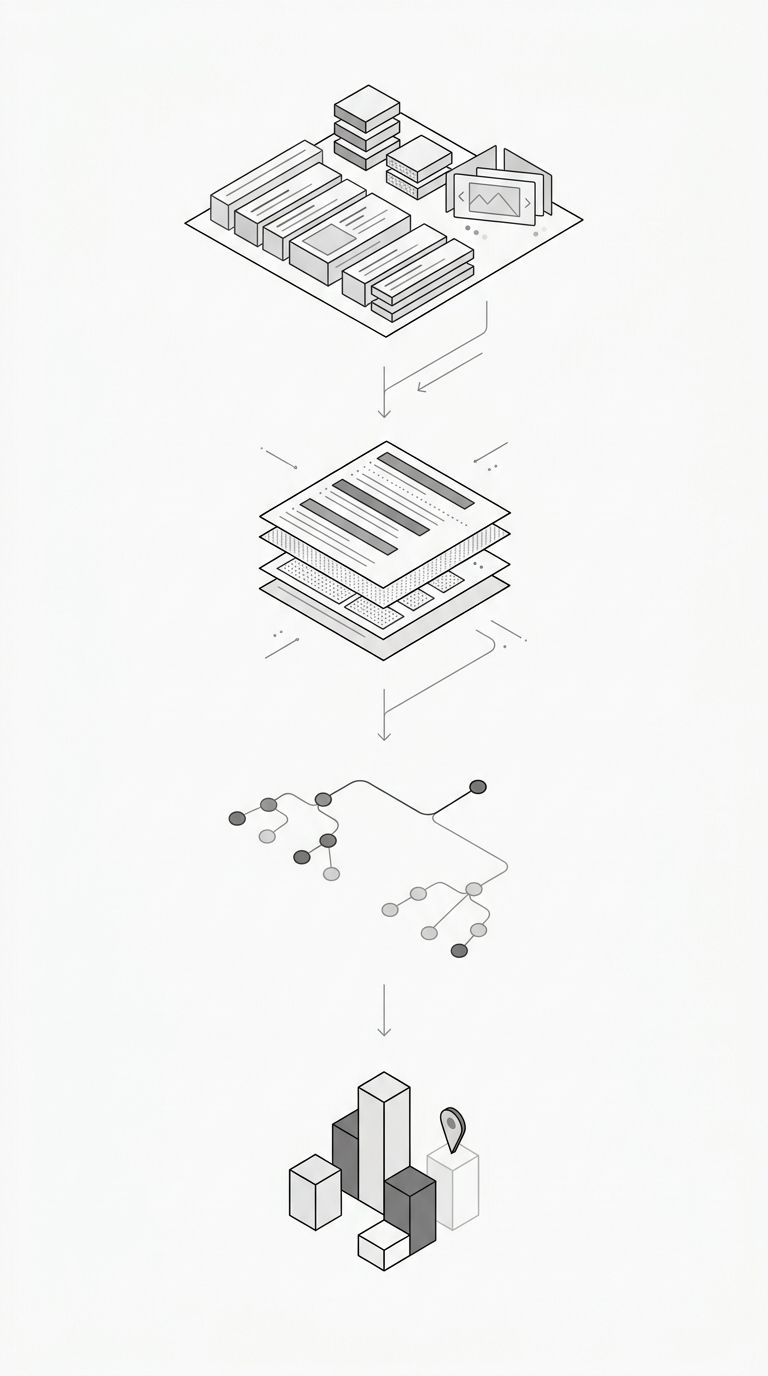
Here's the framework. I call it the Four-Layer Intent Extraction, and it works on any keyword set exported from a standard competitor gap analysis.
Layer 1: SERP Format Fingerprinting
Pull up the SERP for each gap keyword and record the content types that appear in the top 10 positions. Mangools' research on search intent emphasizes that SERP diversity is itself an intent indicator: product listings with review markup signal transactional intent, video carousels signal how-to or tutorial intent, and informational article dominance signals early-stage research intent. If 7 out of 10 results are product pages, you're looking at transactional intent regardless of what the keyword modifier suggests. Record these ratios. A SERP with 60% informational articles and 40% comparison tables has mixed intent, and that's a signal too: it means Google hasn't fully resolved the query type, which often means a well-structured page can capture both intent clusters.
Layer 2: Title Tag Pattern Analysis
Scan the title tags of the top 10 results for each keyword and categorize them by pattern. Titles starting with "How to," "What is," or "Guide to" indicate informational intent. Titles with "Best," "Top 10," or "vs." indicate commercial investigation. Titles with pricing, "Buy," or brand names indicate transactional intent. Count the distribution. If 8 of 10 titles follow a "Best X for Y" pattern, the dominant intent is commercial and your content needs to match that format. If the distribution is split 5/5 between "How to" and "Best," you've found a SERP where Google is testing intent, and a page that clearly commits to one type can outperform pages that try to serve both.
Layer 3: H2 Sub-Intent Mapping
This is where the deepest signals hide. Semrush's competitive analysis guide recommends mapping the H2 headings on your competitors' top pages because "this can show you subtopics the competitor is targeting within their content" (Semrush). But the real value is reading those H2s as intent sub-signals. A competitor's page on "email marketing platforms" might have H2s covering features, pricing, integrations, and setup. If none of the top 5 ranking pages include an H2 addressing "email deliverability rates by platform" or "migration from Mailchimp," those are sub-intent gaps within a topic the competitor already ranks for.
Export the H2s from the top 3-5 ranking pages for each target keyword. Group them by intent type. The H2s that appear across multiple competitors are table-stakes content. The H2s that appear on zero competitors' pages, but that you know from sales conversations or support tickets are real user questions, represent the highest-value gaps.
If you've built a process for mining CRM conversations for search intent, this is where that data becomes directly actionable.
Layer 4: Content Depth Scoring
For each gap keyword, estimate the depth differential between what exists and what the SERP signals demand. A keyword where the top results average 2,500 words but the 6th-10th results average 800 words tells you the depth bar is set high but the bottom of page one is weak. A keyword where all 10 results sit between 1,000 and 1,200 words tells you the format is standardized and depth alone won't differentiate. Score each gap keyword on a 1-3 scale: 1 means the existing content already matches SERP depth expectations, 2 means moderate depth gaps exist, 3 means the top results are thin relative to the query complexity. Priority goes to keywords scoring 3 on depth with clear, unmixed intent signals from Layers 1-2.
Keyword Intent Prioritization Using Impact and Effort
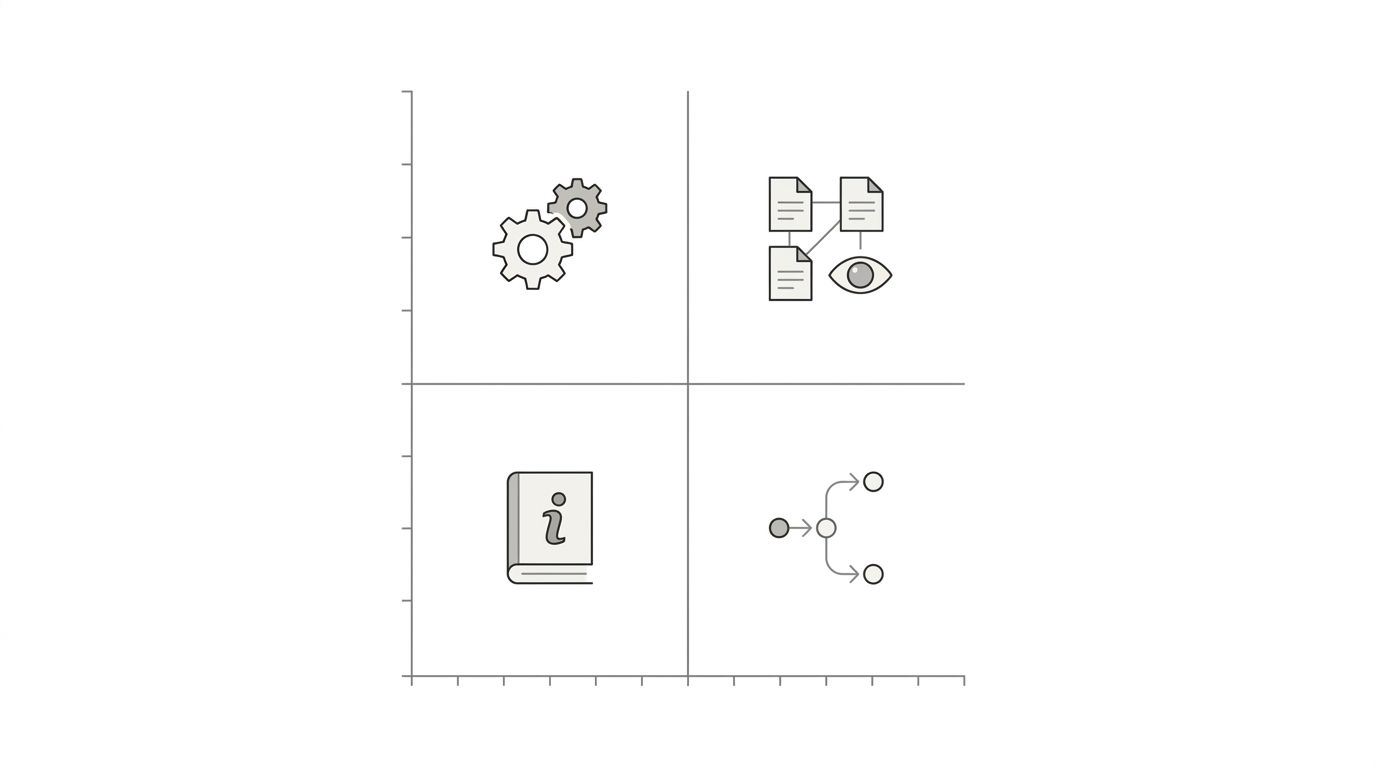
Once you've run all four layers across your exported gap keywords, you'll have a scored dataset. The next step is keyword intent prioritization, and Hypertxt's content strategy methodology offers a clean approach: use an impact versus effort matrix, prioritizing high-search-volume, low-competition opportunities that align with business objectives. The competitive intelligence guide from the Competitive Intelligence Alliance adds an important filter: "filter by search intent and crank up the keyword difficulty threshold" to remove outliers and surface the most relevant opportunities.
Here's how to operationalize that matrix with 4 quadrants:
High impact, low effort: Gap keywords with clear single-intent SERPs (Layer 1 shows 80%+ format consistency), weak competition in positions 6-10, and depth scores of 2-3. Publish these first.
High impact, high effort: Keywords with strong volume but mixed-intent SERPs and deep existing content from authoritative domains. These need significant content investment and often require you to map them to your site architecture before you can commit resources.
Low impact, low effort: Long-tail keywords with small volume but perfect intent alignment and no real competition. Batch these into cluster pages.
Low impact, high effort: Keywords where the gap exists for a reason, either because the intent is ambiguous or the commercial value is low. Skip these.
HubSpot's documented results from intent-based content opportunity mapping showed a 30% increase in organic traffic and 25% higher conversion rates compared to their previous keyword-first approach. The difference came from publishing fewer pages with tighter intent alignment rather than more pages with broad keyword targeting.
Where Tools Help and Where They Don't
Semrush's content gap feature, Ahrefs' Content Gap report, and Moz's keyword gap tool all excel at the extraction step. They'll give you the keyword list in minutes. But none of them perform search intent analysis at the SERP level automatically. You still need to pull up actual SERPs and run Layers 1-3 manually, or use a tool like Surfer or Clearscope to partially automate the H2 analysis.
The tools also tend to flatten intent into 4 categories (informational, navigational, commercial, transactional) when real SERPs often show blended or transitional intent. Google's 2022 Helpful Content Update intensified this pattern by rewarding pages that satisfy the dominant intent rather than pages that try to serve multiple intent types simultaneously. The data conflicts between different keyword research tools compound this problem, because volume estimates can vary by 10x across platforms, which means your prioritization matrix is only as reliable as the data feeding it.
Manual SERP review for 50-100 gap keywords takes 4-6 hours. That's the real cost of this method. But the output is a content opportunity map with intent signals baked in, which is fundamentally different from a flat keyword list sorted by volume.
What Still Isn't Settled
Google's intent classification is dynamic. A keyword that shows 80% informational results today can shift to 60% commercial results within 3 months as Google tests different SERP compositions. That means your Four-Layer scores have a shelf life. Re-running the analysis quarterly, especially on your highest-priority gap keywords, catches these shifts before you publish content optimized for an intent profile that no longer exists. Building a search intent map for your full site gives you a baseline to measure drift against.
The interaction between AI Overviews and traditional SERP intent signals is also unresolved. AI Overviews tend to absorb informational queries, which may shift the remaining organic SERP results toward commercial and transactional intent for keywords that previously looked informational. Whether that changes the value equation for informational content gaps is something the industry is still measuring. The Four-Layer method works regardless, because it reads whatever SERP Google presents rather than assuming static intent categories, but the prioritization weights may need adjustment as AI Overview penetration grows through 2026 and beyond.
OrganicSEO.org Editorial
Editorial team writing about Ethical, white-hat, organic SEO education.
Related Articles
When Keyword Research Data Conflicts With Ranking Reality: The Intent-Volume Paradox
Every major keyword tool defaults to sorting results by search volume descending. That single UX decision has trained an entire generation of SEOs to build content around the metric least predictive of whether a page will actually rank, earn clicks, convert visitors, or hold its position over time.

From Seed Keyword to Search Intent: Building a Keyword Research Framework That Scales Beyond Tool Suggestions
Every keyword tool on the market outputs the same four columns: search volume, keyword difficulty (a score from 0 to 100), CPC, and a one-word intent label.

Niche-First Keyword Research: Why Understanding Your Market's Sub-Topics Matters More Than Search Volume
Underserved niche markets convert at 3–5x the rate of high-volume keyword targets, according to UniK SEO's analysis of low-volume search segments. The mechanism is specificity: low-volume high-intent keywords filter out casual browsers and pull in users who are already close to a purchase decision.