Beyond Search Volume: Why Keyword Research Tools Miss Half Your Opportunity in 2026
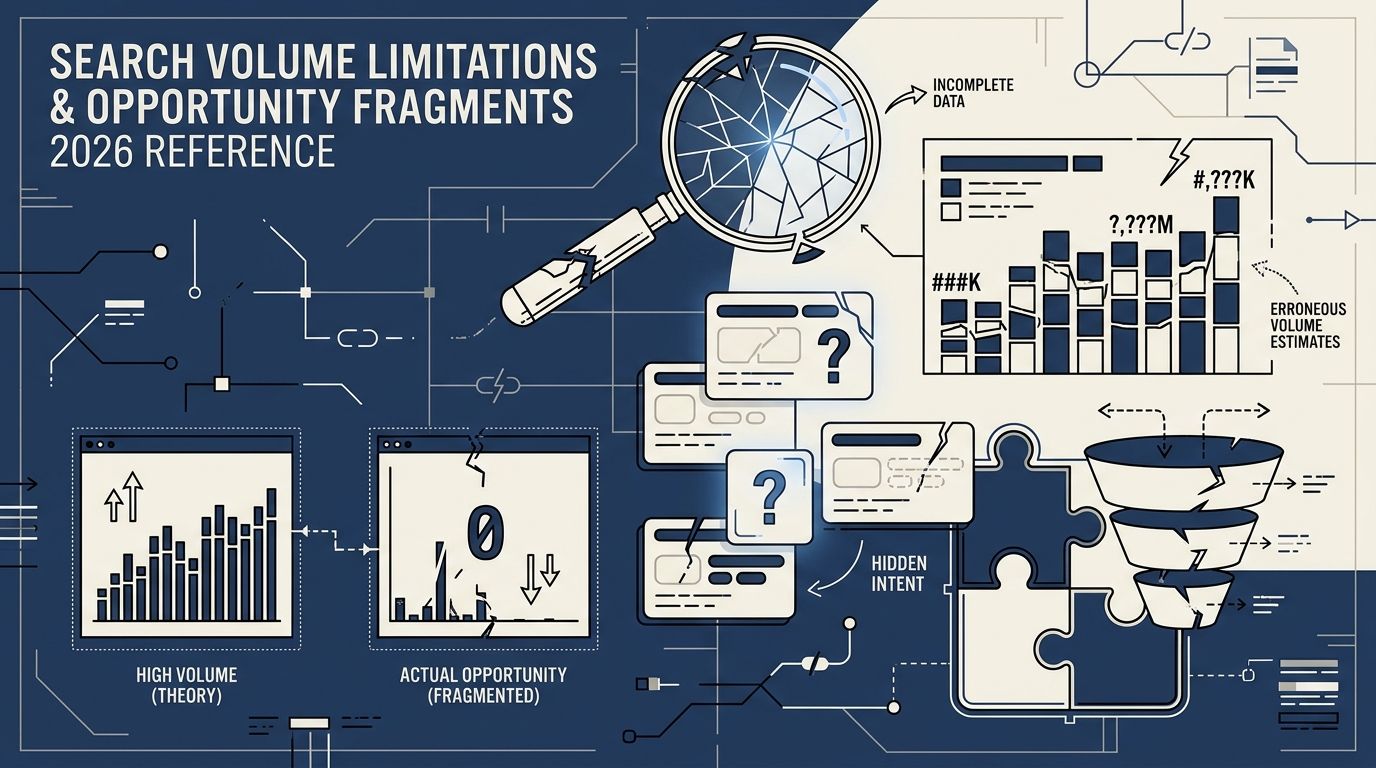
Roughly 15% of the queries Google processes each day have never appeared in any keyword research tool's index. That figure represents the floor of what volume-based research misses, before accounting for the queries tools do track but measure with wildly conflicting numbers across platforms.
Beyond Search Volume: Why Keyword Research Tools Miss Half Your Opportunity in 2026
Roughly 15% of the queries Google processes each day have never appeared in any keyword research tool's index. That figure represents the floor of what volume-based research misses, before accounting for the queries tools do track but measure with wildly conflicting numbers across platforms.
Volume Data Conflicts Run Deeper Than Rounding Errors
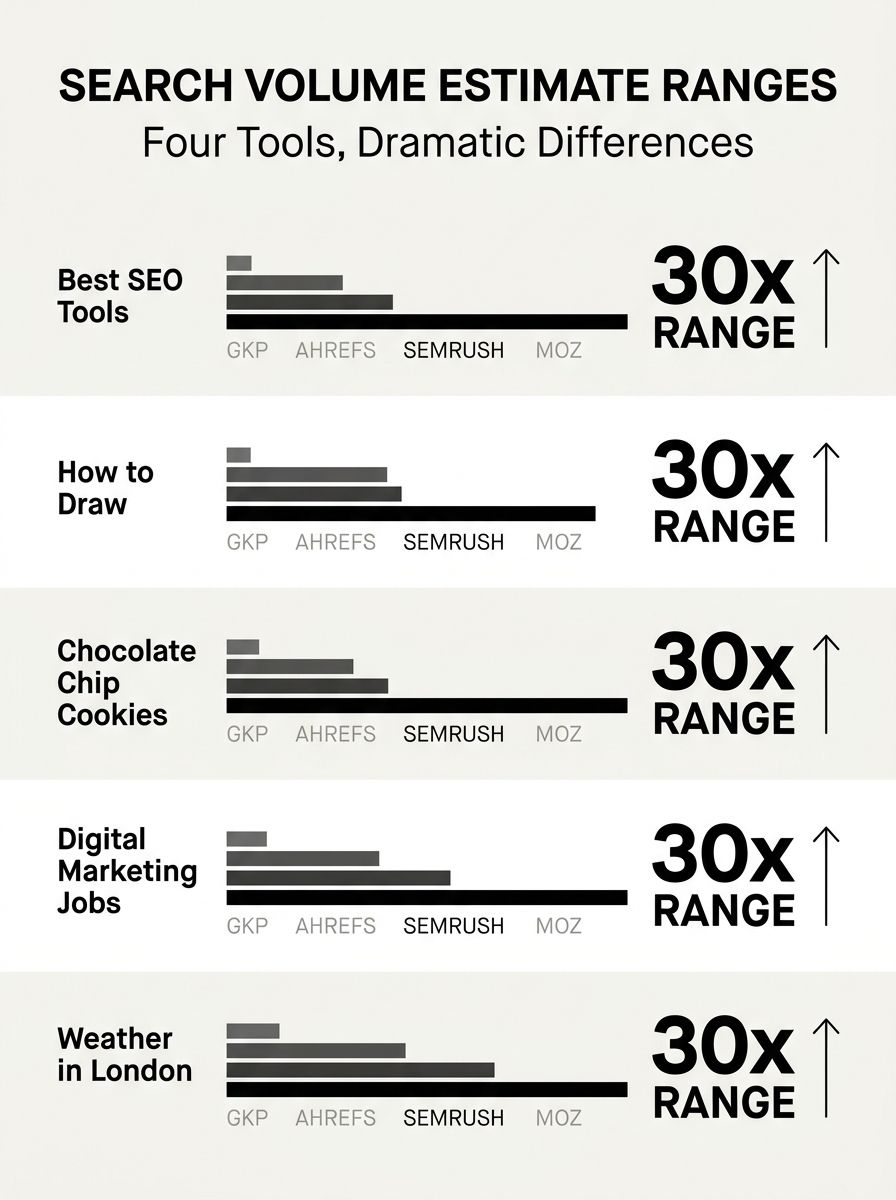
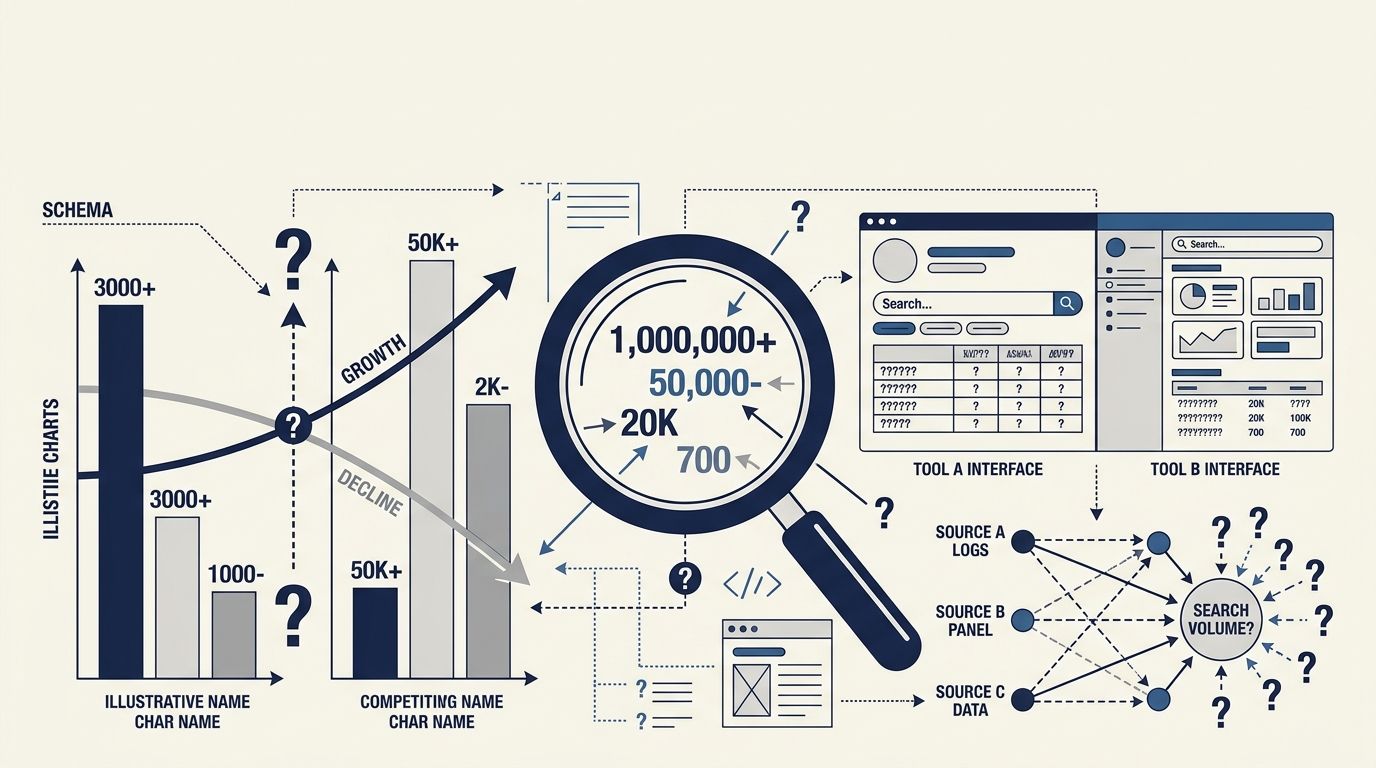
The disagreement between keyword research tools goes well beyond minor rounding differences. Link-Assistant's analysis compared volume estimates for the same keyword across popular platforms and found "a 30 times difference between the lowest estimate from Moz and the highest one from Semrush," as their investigation into search volume accuracy documented. Two tools, one query, 30x divergence. These numbers would lead to completely opposite content prioritization decisions.
The root cause is structural. Google Keyword Planner groups related terms into volume buckets, sometimes combining dozens of variations into a single rounded number. Ahrefs and Semrush use clickstream panels, browser extension data, and proprietary models to estimate monthly searches. When you're dealing with keyword planner limitations like bucket-grouping and four-digit rounding ranges, the number on screen isn't a measurement. It's a model output built on sampled data.
We've covered why these tools disagree on search volume in a previous deep-dive. The practical implication for keyword research tool accuracy in 2026 is blunt: treating any single tool's volume figure as ground truth is a planning error. Cross-referencing at least two sources and weighting Google Search Console impression data above all third-party estimates produces more reliable prioritization. GSC shows actual impressions for your domain, not modeled estimates of total market search activity.
Zero-Volume Queries and the 15% Blind Spot
Why do certain keywords with "0" volume in every tool still drive revenue? Because Google processes approximately 8.5 billion searches per day, and 15% of those queries have never been searched before. That's roughly 1.3 billion daily queries with no historical data in any keyword database, no volume estimate, no difficulty score, nothing.
Machine learning algorithms within tools like Semrush One now predict keyword trends and seasonal fluctuations with 94% accuracy, according to TopicalMap.ai's analysis of modern keyword research platforms. But prediction requires historical signal. Novel queries have none, and 94% accuracy on known queries still means 6% error before you even address the unknown 15%.
The Fuerte Developers team documented this gap directly: "We've seen many cases where pages rank and convert well even for keywords that tools show as 'low volume' or 'no data,'" they wrote in their analysis of tool reliability. Their observation reflects what many practitioners confirm quarterly: pages built around specific, intent-rich queries that tools dismiss as zero-volume can drive meaningful, high-converting traffic.
The reason is intent concentration. Someone searching "best CRM for three-person real estate team with Zillow integration" isn't browsing. They're 90% of the way to a purchase decision. The query won't register in any tool's database, but it represents exactly the kind of intent-volume paradox that separates effective keyword strategy from spreadsheet exercises. Customer support tickets, sales call transcripts, and Reddit threads surface these queries months before they accumulate enough search history for tools to track. You can mine your CRM for search intent that competitors will discover in Semrush twelve months from now, if ever.

Competitor Gap Analysis Replaces Guesswork With Proof
Traditional keyword research starts with seed terms and brainstorming. Gap analysis flips that workflow entirely. It begins with proven opportunities: keywords already driving traffic to competitor sites that your domain doesn't target at all. As AnswerSocrates' research on gap methodology explains, this approach "focuses on proven opportunities—keywords that are already driving traffic to your competitors' sites."
An Upwork case study found that teams using AI-powered content gap analysis identified high-value keywords their competitors ranked for that had been completely invisible through traditional seed-term expansion. The method mapped competitor keyword coverage and surfaced dozens of untapped opportunities that volume-first research would have deprioritized or never found.
The workflow is straightforward. Pull the top 5 ranking competitors for your core pages. Run their domains through Ahrefs Content Gap or Semrush Keyword Gap. Filter for keywords where at least 3 competitors rank in the top 20 but your domain doesn't appear. These are validated queries with proven SERP accessibility. The search volume data conflicts SEO teams encounter between tools matter less here because the signal is positional rather than volumetric. If three competitors rank for a query and receive clicks from it, traffic exists regardless of what the volume column displays.
How AI Changes the Discovery Layer
AI keyword research intelligence in 2026 operates on a fundamentally different axis than traditional tools. Where Keyword Planner and its peers measure what has already been searched, LLM-based tools generate what could be searched based on semantic relationships and entity mapping.
Semrush One integrates AI across its keyword research suite, adding AI-powered features to Keyword Overview and the Keyword Magic Tool, according to Fritz.ai's review of AI research tools. Surfer SEO generates topical maps based on entity relationships rather than keyword co-occurrence. These tools don't replace volume data. They add a semantic context layer that volume alone can't provide.
Search Engine Land's 2026 guidance on tool selection recommends questioning whether any tool's ROI holds up "if a tool can be replaced by a custom GPT or does not save significant time." For AI-powered keyword clustering, the answer is increasingly yes: Claude and ChatGPT can group keywords by meaning and user intent at a precision level that matches or exceeds tool-native clustering, often at a fraction of the subscription cost.
The practical shift is in the input layer. Instead of starting with a seed keyword and expanding outward through tool suggestions, practitioners now feed LLMs with customer personas, product specifications, and competitor content to generate query frameworks that tools then validate with difficulty scores and SERP feature data. The AI generates the map; traditional tools verify the terrain.
The Three-Layer Keyword Audit
Volume is one input signal. Treating it as the only signal is where the opportunity loss compounds. A more complete evaluation scores keywords across three distinct dimensions, each drawn from a different data source with different reliability characteristics.
Layer 1: Volume Signal. Cross-reference at least two tools. Use GSC impression data as the tiebreaker when Ahrefs and Semrush disagree. Accept that the number is directional. When tools disagree by 30x, the true value is unknowable from third-party data alone. Treat volume as a rough category (under 100, 100-1K, 1K-10K, 10K+) rather than a precise figure.
Layer 2: Intent Concentration. Score how specific the query is and how close the searcher is to a decision. "CRM software" scores low on concentration. "CRM for three-person real estate team" scores high. Queries with concentrated intent convert at 3-5x the rate of high-volume generic terms, according to UniK SEO's analysis of low-volume search segments. This is the layer most teams skip entirely because no tool generates an intent concentration score automatically.
Layer 3: Conversion Evidence. Does this query appear in your CRM, support logs, or sales transcripts? Has a competitor built a ranking page for it? Does Google show transactional SERP features (shopping results, local packs, ads) for it? Conversion evidence outweighs volume data because it measures demonstrated buyer behavior rather than estimated audience size.
Evaluation Layer | Primary Data Source | What It Measures | Tool Dependency |
|---|---|---|---|
Volume Signal | Ahrefs, Semrush, GSC impressions | Estimated monthly searches | High (but unreliable across tools by up to 30x) |
Intent Concentration | SERP analysis, query structure | Proximity to purchase decision | Low (manual analysis + LLMs) |
Conversion Evidence | CRM, support logs, competitor pages | Proven buyer behavior | None (first-party data) |
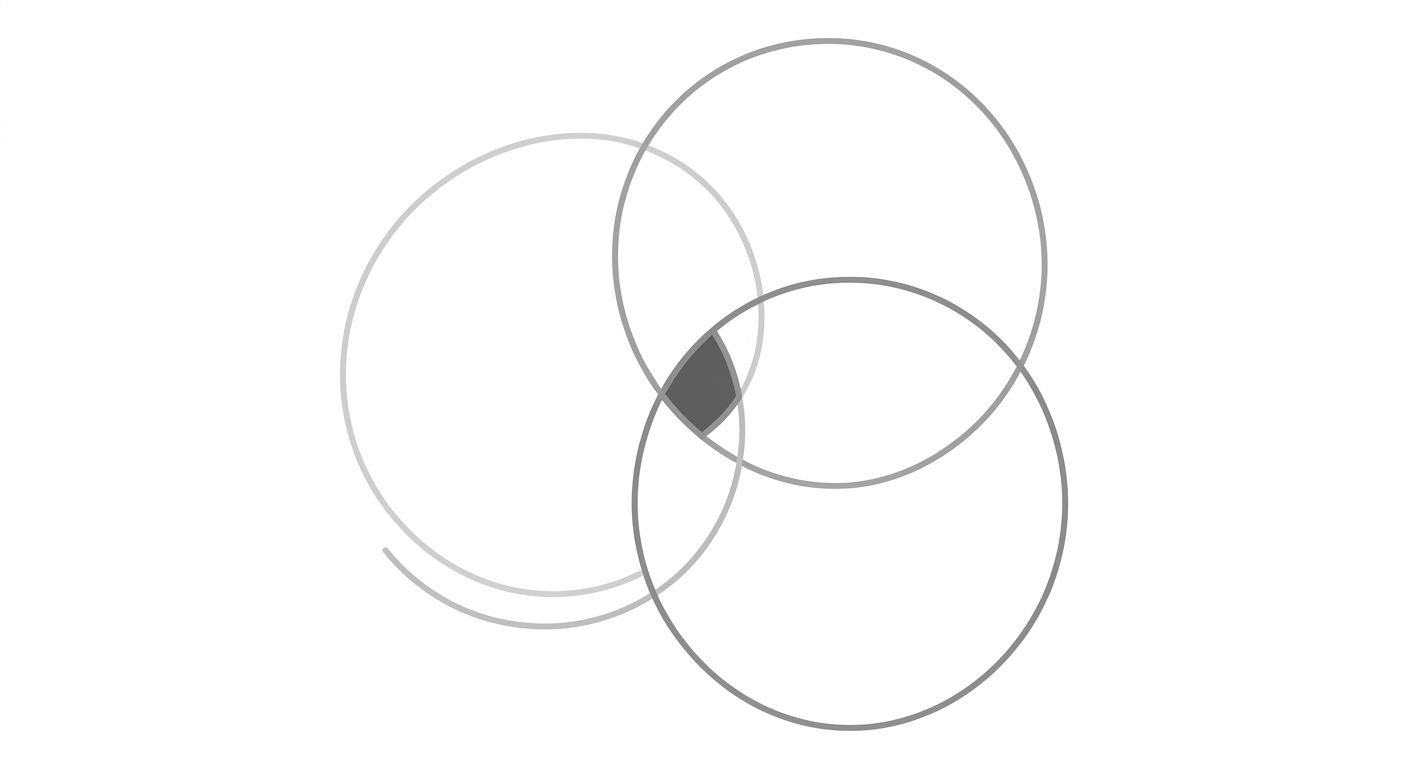
Keywords that score high on all three layers are your highest-priority targets. Keywords that score high on volume alone but low on intent and conversion evidence are the traps that keyword allocation strategy exists to avoid.
What The Numbers Still Can't Answer
The data in this article draws clear boundaries around what keyword research tools measure well (relative volume trends, keyword difficulty, SERP feature presence) and what they miss entirely (novel queries, intent concentration, conversion probability). But several gaps remain open even after layering in AI discovery, gap analysis, and first-party data.
No tool or method reliably predicts how AI Overviews, ChatGPT citations, and Perplexity answers will redistribute click-through rates for a given query over the next 12-24 months. Visibility tracking in AI answer engines is nascent, with no established methodology comparable to rank tracking's 20-year refinement period. And the 15% of daily queries with zero history will likely grow as conversational search patterns generate increasingly unique query strings.
The 94% accuracy figure for ML-based trend prediction applies to queries with sufficient historical data. For emerging topics, seasonal shifts in new categories, and queries generated by product launches that haven't happened yet, prediction models remain unreliable by definition. The three-layer audit framework helps practitioners build a more complete picture, but the conversion evidence layer depends entirely on the quality and depth of your first-party data. Teams without CRM data, support logs, or sales transcripts are missing the most valuable input source available, and no tool subscription fills that gap. The clearest pattern across all of this data is that keyword research in 2026 rewards the teams willing to look beyond the volume column, not the teams with the most expensive tool subscription.
OrganicSEO.org Editorial
Editorial team writing about Ethical, white-hat, organic SEO education.
Related Articles
Keyword Research Data Conflicts in 2026: Why Ahrefs, Semrush, and Google Keyword Planner Give Different Numbers (And What to Do About It)
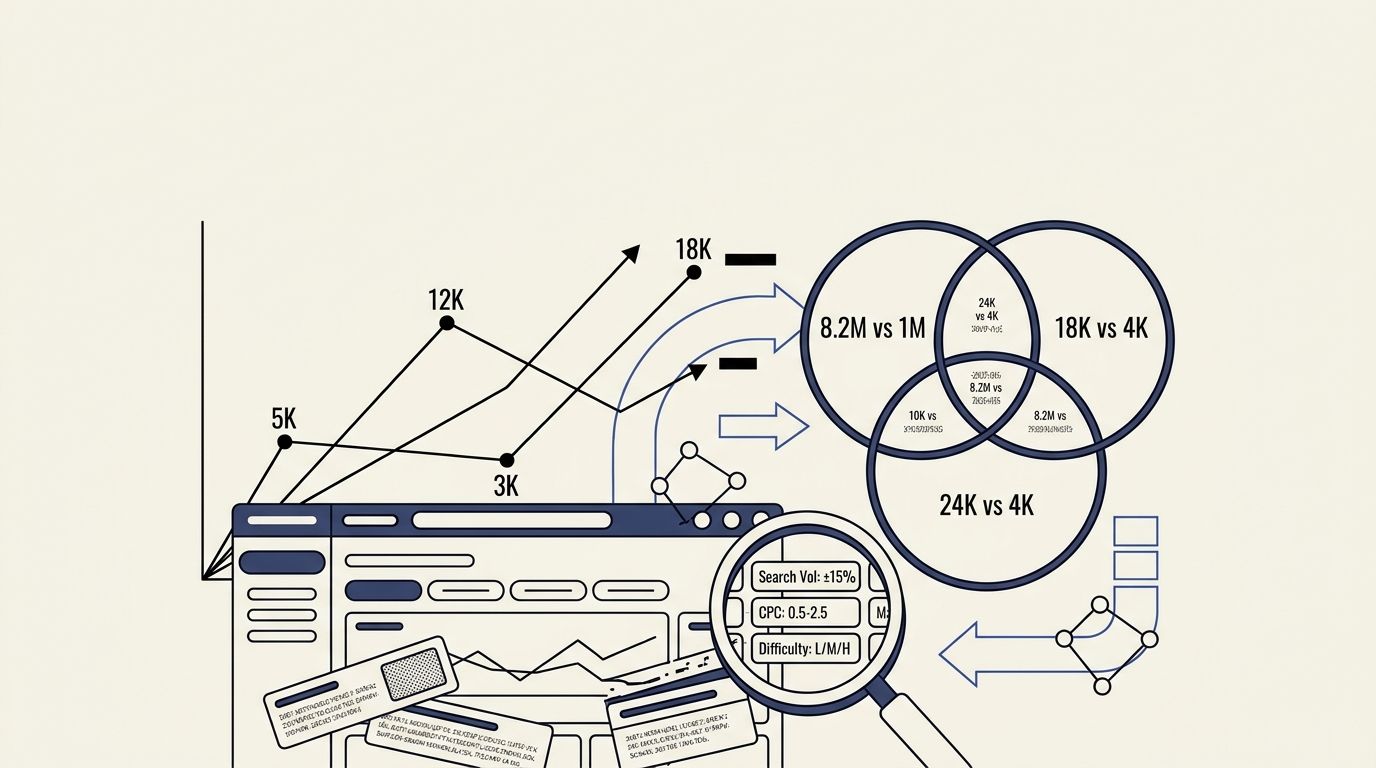
Ahrefs, Semrush, and Google Keyword Planner report different search volume numbers for the same keywords because each tool collects, models, and categorizes search data through fundamentally different methods.
Why Your Keyword Research Tools Disagree on Search Volume (And How to Break the Tie)
Store Growers tested 10 commercial keywords across Google Keyword Planner, Semrush, Ahrefs, and SpyFu and found that no two tools agreed on volume for a single term.
The Keyword Research Data Trap: Why Multiple Tools Contradict Each Other and How to Resolve Conflicts
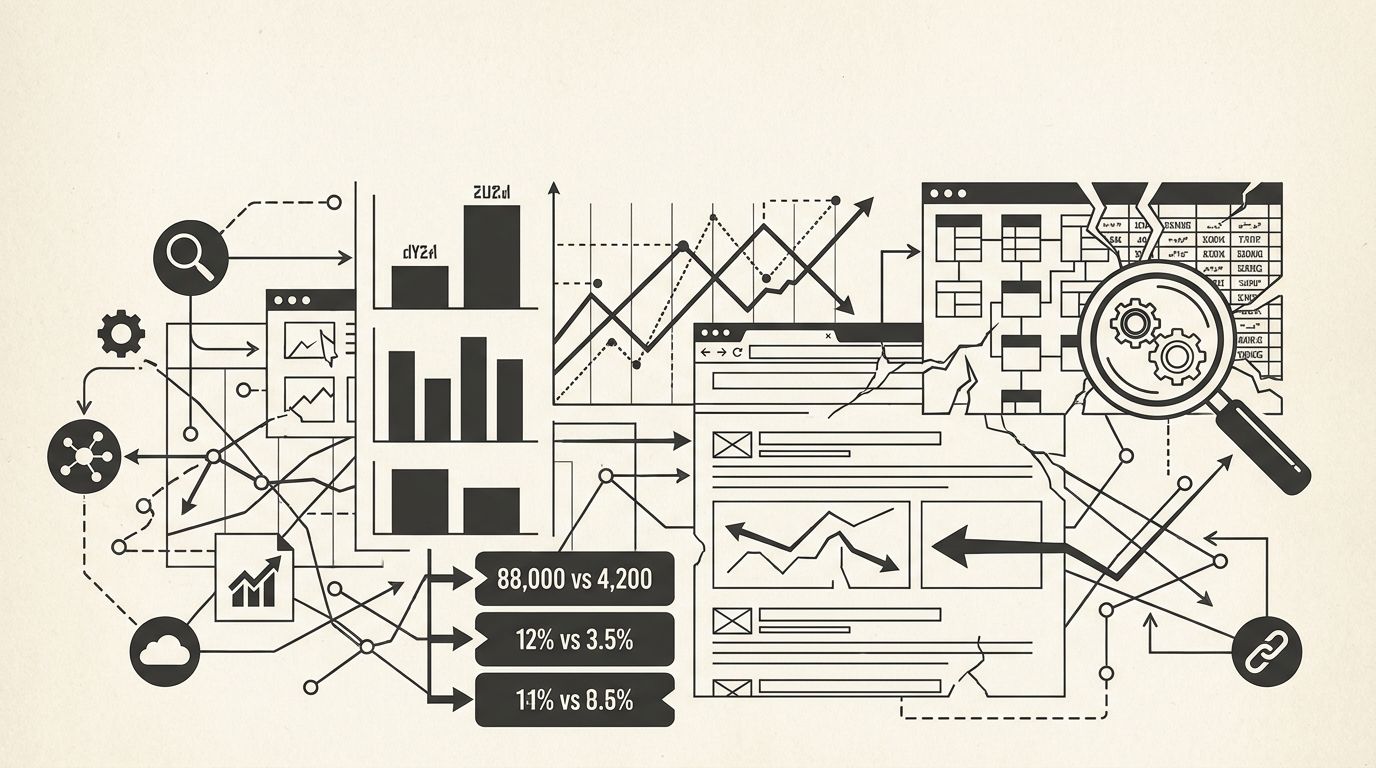
Google Ads Keyword Planner API, the single upstream source feeding search volume data into Ahrefs, Semrush, Moz, and nearly every other SEO platform, returns estimates bucketed into ranges that can span 10x.