When Keyword Research Data Conflicts With Ranking Reality: The Intent-Volume Paradox
Every major keyword tool defaults to sorting results by search volume descending. That single UX decision has trained an entire generation of SEOs to build content around the metric least predictive of whether a page will actually rank, earn clicks, convert visitors, or hold its position over time.

When Keyword Research Data Conflicts With Ranking Reality: The Intent-Volume Paradox
Every major keyword tool defaults to sorting results by search volume descending. That single UX decision has trained an entire generation of SEOs to build content around the metric least predictive of whether a page will actually rank, earn clicks, convert visitors, or hold its position over time.
The paradox works like this: a keyword with 14,000 monthly searches looks like a better target than one with 900 monthly searches. But if the 14,000-search keyword serves four conflicting user needs, your content can realistically satisfy only one of those sub-groups. Your addressable audience might be 2,500 people, not 14,000. And the 900-search keyword, if every searcher wants exactly the thing you've built, delivers a higher ceiling for rankings, engagement, and revenue. The data said one thing. Reality said the opposite. Understanding why this happens, and how to catch it before you build, separates keyword research that produces results from keyword research that produces spreadsheets.
A Single Volume Number Masks Fragmented Intent
When a tool reports 12,000 monthly searches for a keyword like "protein powder," that number collapses at least four distinct user needs into one figure: people comparing brands, people searching for recipes, people checking health risks, and people ready to buy a specific product. Hashmeta's analysis names the consequence directly: "when search intent fragments across multiple categories, your content inevitably satisfies only a portion of the searchers who click through." The result is high bounce rates, weak engagement metrics, and poor conversion rates even when you rank well.
STS Digital Solutions frames the distinction in useful terms: keyword volume indicates a term's popularity, while intent indicates its actual value. A keyword searched 20,000 times per month by people who all want different things is worth less to you than a keyword searched 800 times by people who all want exactly what you offer.
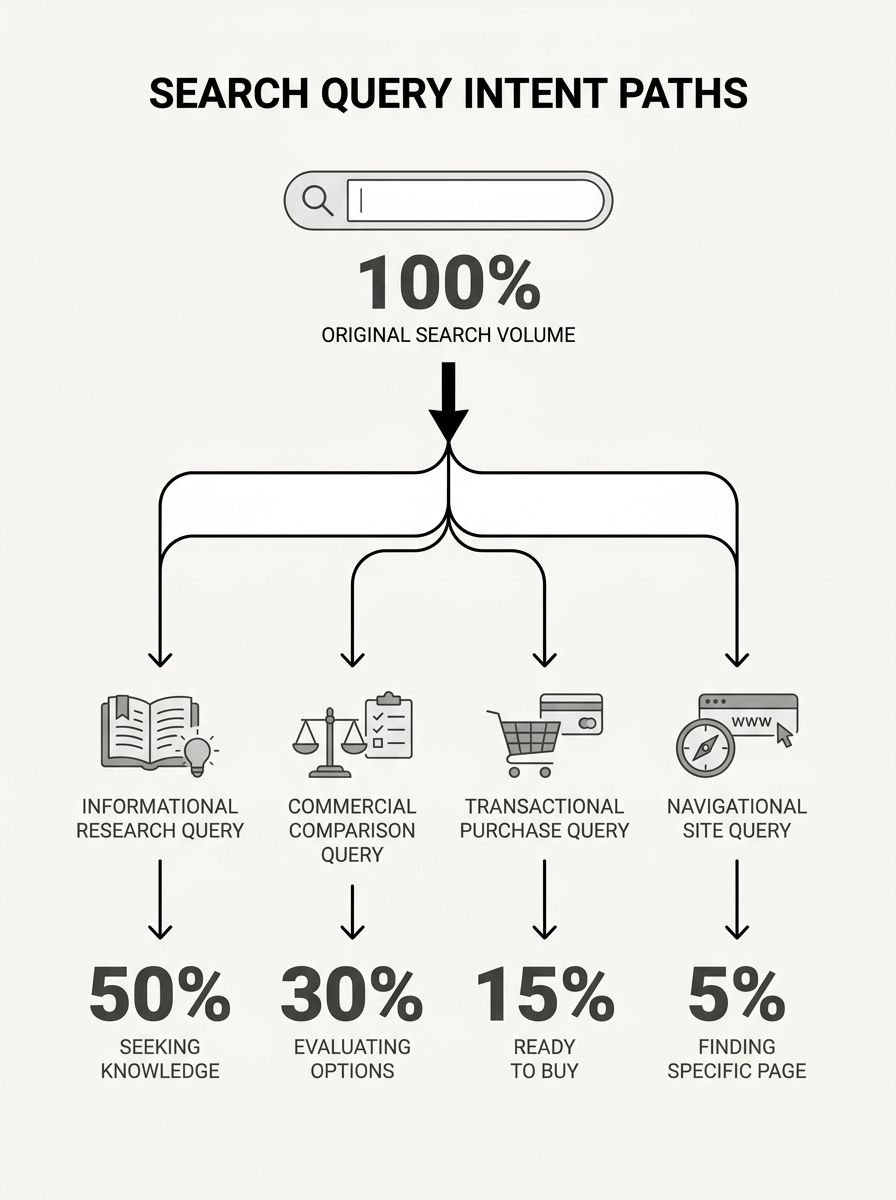
Keyword relevance validation starts with decomposing that single number. Pull up the actual SERP. Count how many distinct content types appear in the top 10 results. If you see a Wikipedia article, two Reddit threads, a product listing, a recipe page, and a medical explainer all ranking for the same keyword, the 12,000 monthly searches figure tells you almost nothing actionable. Each content type serves a different subset of the total volume. Your content can realistically capture only one slice, and if you haven't identified which slice, you're writing for a phantom audience. This is also why tools so frequently contradict each other on the same keyword: they're each estimating a composite number that obscures the thing you actually need to know.
The SERP Already Solved the Intent Problem (Your Tool Didn't)
Google's ranking algorithm has already done the intent analysis that keyword research tools skip entirely. When you search "chocolate biscotti," the SERP returns recipe results. No product listings. No e-commerce category pages. If you built a product page targeting that keyword based on its 6,600 monthly searches, you've created a content format mismatch that no amount of on-page optimization will fix. Google Ads Quality Score, rated on a 1-10 scale measuring relevance between keywords, ads, and landing pages, penalizes this same type of misalignment on the paid side. Organic search does it too, just without giving you a visible score.
Getpassionfruit documented this bluntly: "Perfect on-page SEO, fast loading speed, and great content won't help if you're using the wrong content format. Fix the intent match first, then optimize the technical aspects." And the recommendation for pages already caught in this trap is equally direct: if your blog posts target money keywords, either retarget them for appropriate informational keywords or rebuild them in the format Google has already shown it wants.
The gap between what tools tell you and what the SERP shows you is the intent-volume paradox in its most visible form. Tools give you a number. The SERP gives you Google's interpretation of what searchers want. When those two signals conflict, the SERP wins every time. And this is where domain authority compounds the problem. As Search Engine Land reports, "if every result on Page 1 has a domain rating two to three times higher than yours, you're not losing on content. You're losing on trust signals." The tool showed you a keyword with 8,000 searches and a difficulty score of 42. The SERP showed you 10 pages backed by DR 70+ domains and zero results in the content format you planned to publish. That's a content format mismatch SEO problem layered on top of a competitive reality your tool didn't surface.

Recognizing this pattern before you publish is exactly why reverse-engineering intent signals from competitor content gaps produces better targeting decisions than sorting a keyword list by volume and working top-down.
Low-Volume Keywords With Clear Intent Outperform Ambiguous High-Volume Targets
This is where the paradox becomes measurable in revenue. Low-volume, high-intent keywords convert at approximately 3x the rate of their high-volume counterparts, according to analyses of conversion-focused campaigns across multiple verticals. The math is simple: a keyword with 400 monthly searches and a 6% conversion rate produces 24 conversions per month. A keyword with 5,000 monthly searches, fragmented intent, and a 0.3% conversion rate produces 15. The "bigger" keyword delivers fewer results.
Tiptop SEO Agency documented a specific example: targeting "cycling shorts" with lower volume but clear purchase intent outperformed broader alternatives because "the audience with the right intent is what we wanted to capture." When content doesn't match search intent, the user leaves your site, often before engaging with anything at all.
Web Traffic Exchange defines the correct sequence: "The strongest SEO strategy uses intent as the first filter and volume as the validation tool." Identify what part of the buyer journey your content supports. Find keywords that match that purpose. Among the intent-aligned options, prioritize the ones with stronger volume signals. That ordering matters enormously. The industry default has been the reverse for over 15 years, and it produces the exact pattern described throughout this article: high-traffic pages with terrible engagement, weak conversions, and rankings that erode within 60-90 days as Google's engagement signals catch up with the mismatch.
This is also why niche sub-topics with smaller search volumes so often outperform their parent terms. They carry unambiguous intent. Every searcher wants the same thing. Your content can satisfy 90%+ of the audience instead of 25%.
The Intent Clarity Test: A Three-Question Framework
Before targeting any keyword, run it through three questions. I call this the Intent Clarity Test, and it takes about 90 seconds per keyword:
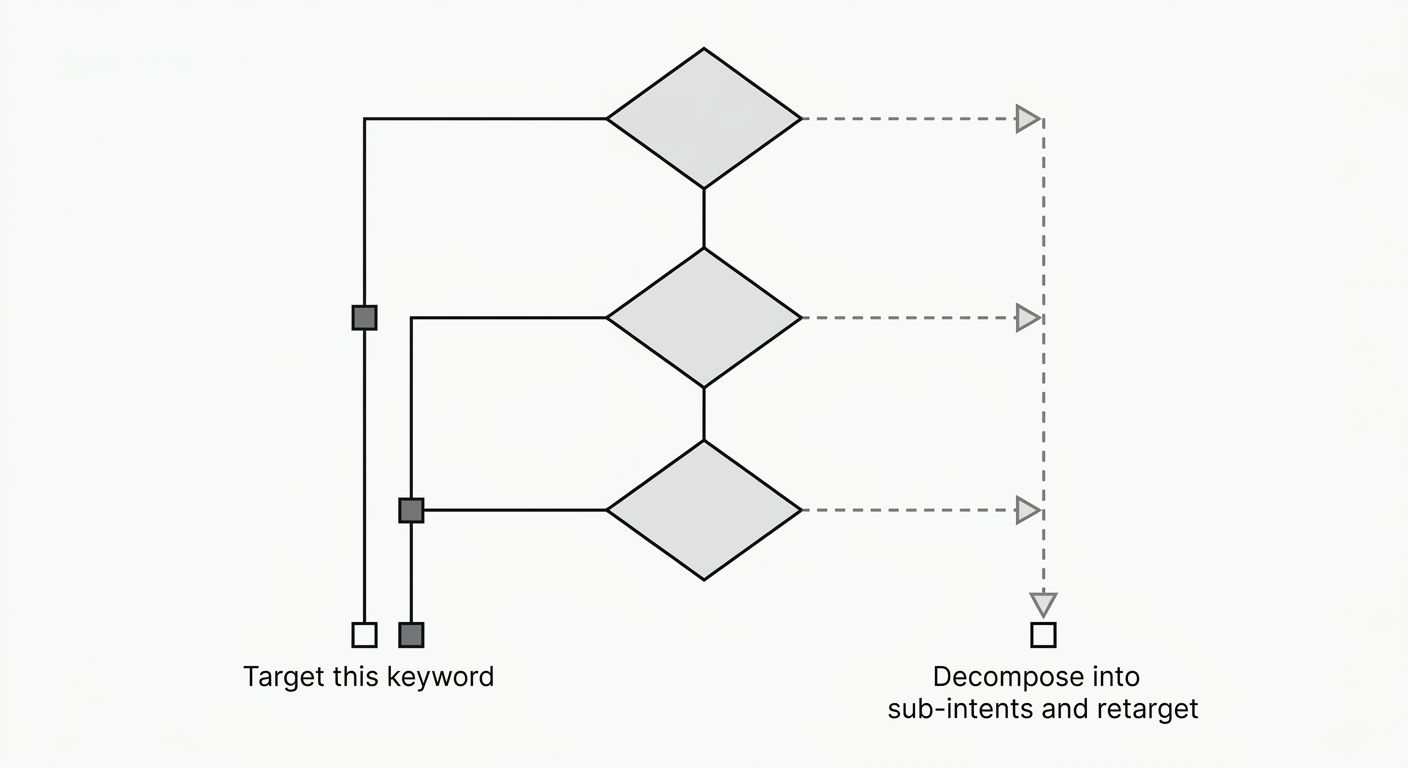
Does the SERP show a single dominant content format, or mixed formats? If the top 10 results include 8+ pages in the same format (all comparison articles, all how-to guides, all product pages), intent is clear. If you see 4+ different formats, intent is fragmented and the volume number is misleading.
Do the top 5 results serve the same user need, or different ones? Read the title tags and meta descriptions. If result 1 answers "how to fix X," result 2 reviews products for X, and result 3 defines X, you're looking at a keyword where Google itself hasn't settled on a primary intent. Your page will compete against all three interpretations.
Would a single piece of content satisfy more than 70% of the searchers? If not, the keyword is a composite, and your realistic addressable volume is the fraction whose intent matches your content. Divide the tool's volume number accordingly.
Keywords that pass all three questions are strong targets regardless of volume. Keywords that fail two or more questions are traps regardless of how impressive the search volume looks. Applying this test also reveals when you're facing a keyword intent mismatch that would produce rankings without traffic quality.
The Paradox, Restated
The intent-volume paradox persists because keyword tools are built to answer the question "how popular is this term?" when the question that matters is "can I satisfy the people searching for this term?" Those are fundamentally different questions, and the answer to the first tells you almost nothing about the answer to the second.
Search volume vs user intent isn't a tradeoff where you sacrifice one for the other. It's a sequencing problem. Intent comes first because it determines whether a keyword's volume is real or phantom from your content's perspective. Volume comes second because, among keywords where your content clearly matches what searchers want, higher volume is obviously better. The industry has simply been running the sequence backwards, and the result is the familiar pattern: solid keyword research, confident content production, puzzling underperformance, and a slow slide into the next quarterly audit where the same cycle starts again.
The fix is boring. Read 10 SERPs before building 1 page. Count the content formats. Check the domain ratings. Ask whether a single piece of content could realistically satisfy the majority of people typing that query. If the answer is yes and you can compete on authority, build. If the answer is no, find the sub-keyword where intent is unified and volume is smaller but entirely yours. That smaller number will produce larger results, and the data will finally agree with what the rankings actually show.
OrganicSEO.org Editorial
Editorial team writing about Ethical, white-hat, organic SEO education.
Related Articles

Niche-First Keyword Research: Why Understanding Your Market's Sub-Topics Matters More Than Search Volume
Underserved niche markets convert at 3–5x the rate of high-volume keyword targets, according to UniK SEO's analysis of low-volume search segments. The mechanism is specificity: low-volume high-intent keywords filter out casual browsers and pull in users who are already close to a purchase decision.
Search Intent Signals Hidden in Your Competitor's Content Gap: A Reverse-Engineering Method
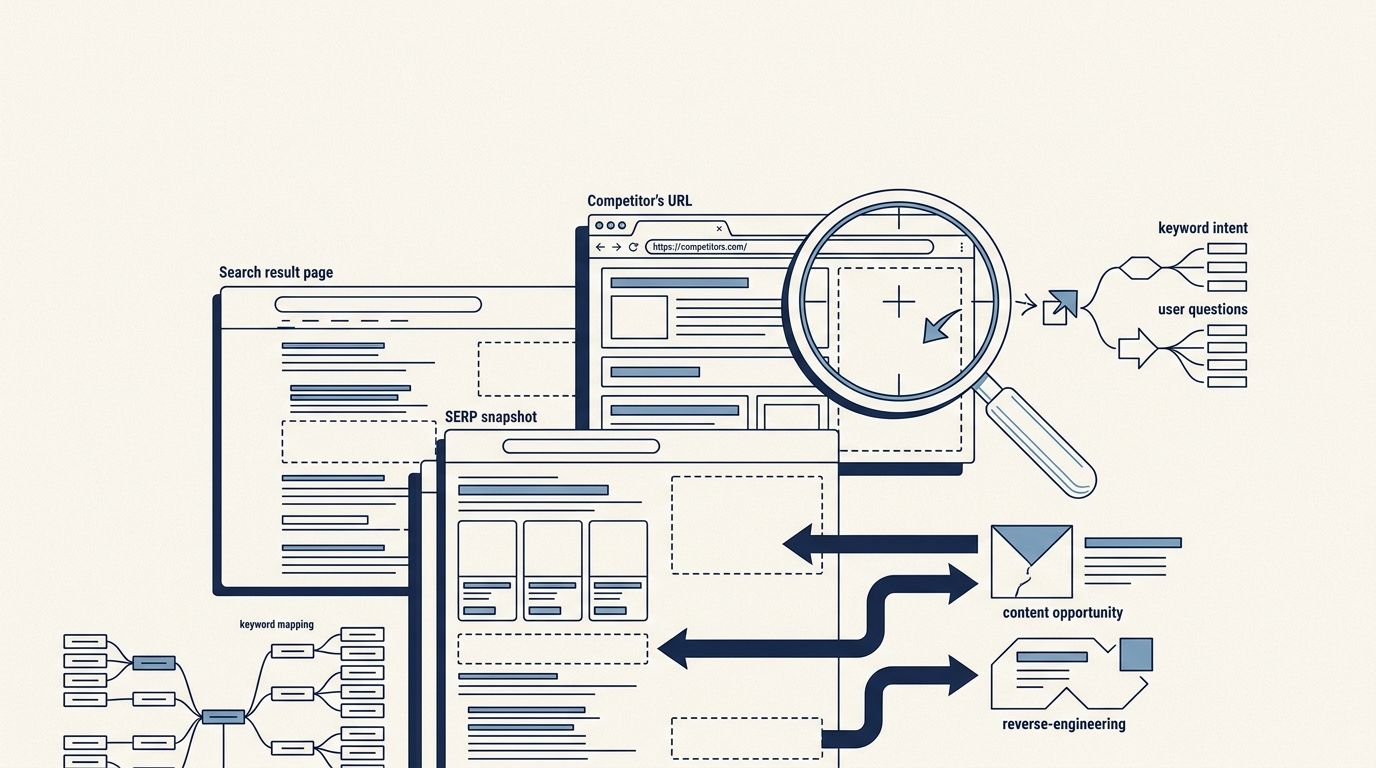
Competitor content gaps carry intent signals embedded in SERP formats, title tag patterns, and H2 structures of pages that already rank. Extracting those signals through systematic SERP reverse engineering produces a prioritized content opportunity map, not a generic list of missing keywords.

From Seed Keyword to Search Intent: Building a Keyword Research Framework That Scales Beyond Tool Suggestions
Every keyword tool on the market outputs the same four columns: search volume, keyword difficulty (a score from 0 to 100), CPC, and a one-word intent label.