The Seed Keyword Expansion Playbook: Moving Beyond Single Terms to Semantic Clusters Without Tool Dependency
Google's algorithmic evolution from Hummingbird through BERT and MUM turned single-keyword targeting into a losing strategy.
The Seed Keyword Expansion Playbook: Moving Beyond Single Terms to Semantic Clusters Without Tool Dependency
Google's algorithmic evolution from Hummingbird through BERT and MUM turned single-keyword targeting into a losing strategy. A modern seed keyword expansion strategy builds semantic clusters using free SERP data, autocomplete, and People Also Ask boxes, producing keyword groups comparable to what paid platforms generate.
When One Keyword Meant One Page
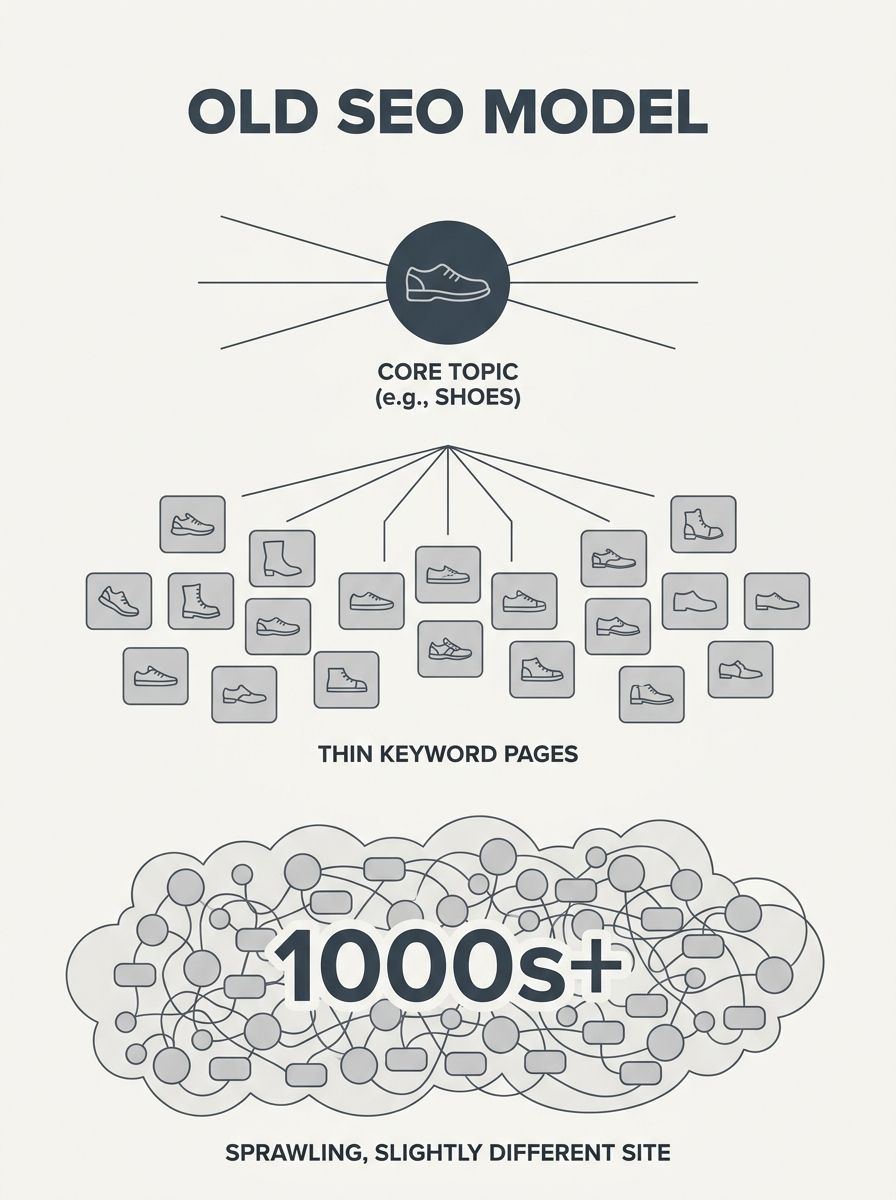
Before September 2013, Google's ranking system operated on string matching. You picked a keyword, built a page around it, and repeated the phrase enough times to signal relevance. The unit of SEO work was literally one keyword per one URL. Practitioners maintained spreadsheets where each row contained a single phrase and a target page, and success meant ranking for that exact string.
This approach created a predictable but bloated workflow. Your seed keyword, say "running shoes," spawned individual pages for "best running shoes," "cheap running shoes," "running shoes for flat feet," and every permutation you could imagine. Sites ballooned to hundreds of thin pages, each fighting for a single phrase. Keyword cannibalization was rampant, but nobody had the vocabulary for it yet because the system seemed to reward page proliferation.
The entire industry operated under a shared assumption: more keyword-specific pages meant more ranking opportunities. And for roughly a decade, that assumption held.
Hummingbird Rewrites the Query Layer
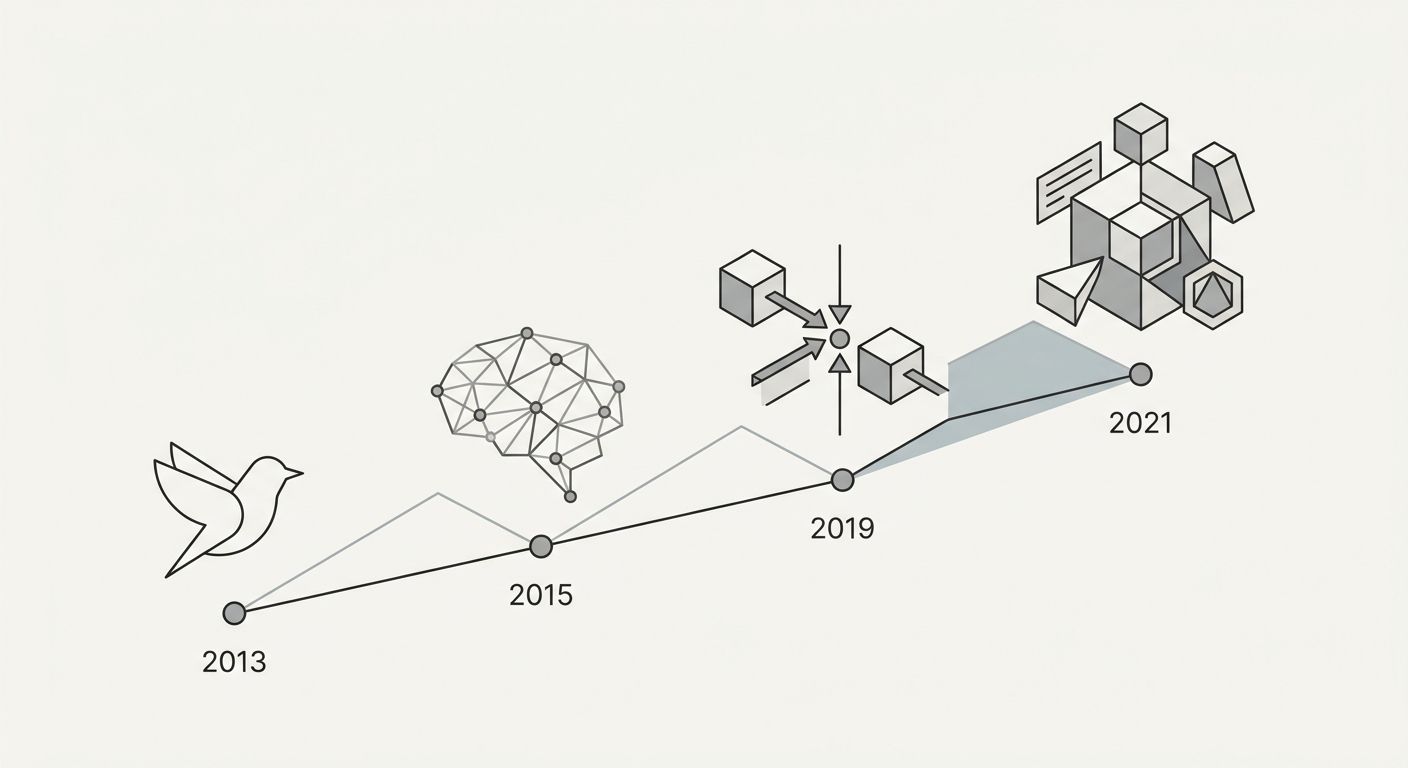
Google's Hummingbird update, deployed in September 2013, replaced the old keyword-matching infrastructure with a system that parsed the meaning of full queries. For the first time, Google could understand that "best shoes for running on pavement" and "top road running sneakers" asked the same question, even though they shared almost no words.
The change was architectural, affecting how Google processed roughly 90% of queries worldwide. Pages that had ranked for exact-match strings started losing ground to broader, more thorough pages that covered a topic rather than a phrase.
For practitioners paying attention, the signal was clear: Google had started grouping queries by meaning. The seed keyword "running shoes" now belonged to a cluster of semantically related terms that Google treated as interchangeable. The organic keyword discovery process needed to follow suit.
But most of the industry didn't adapt for years. Tools kept serving single-keyword volume data. Workflows stayed anchored to individual phrases. The mismatch between Google's semantic understanding and SEO's keyword-by-keyword methodology widened throughout 2014, 2015, and beyond.
RankBrain and BERT Finish the Wiring
RankBrain arrived in October 2015 as Google's machine learning layer for interpreting queries the system had never seen before. Google confirmed it processed roughly 15% of daily queries at launch, all brand-new search strings that existing rules couldn't parse. By 2016, Google identified RankBrain as one of its top 3 ranking signals.
Then BERT landed in October 2019, processing the contextual relationships between every word in a query. BERT could distinguish "flights to London from Paris" from "flights to Paris from London," a task earlier systems struggled with. Google applied it to the full index of English-language queries and expanded to 70+ languages within months.
The compound effect of Hummingbird, RankBrain, and BERT meant that by 2020, Google was genuinely understanding language rather than counting strings. MUM, announced in 2021 with 1,000 times the processing capacity of BERT, extended this to multimodal and multilingual understanding.
Each milestone reinforced the same truth: the unit of optimization moved from the keyword to the topic. A framework for moving from seed keyword to search intent had to account for this semantic infrastructure, or it would produce outdated recommendations.
The SERP Overlap Discovery
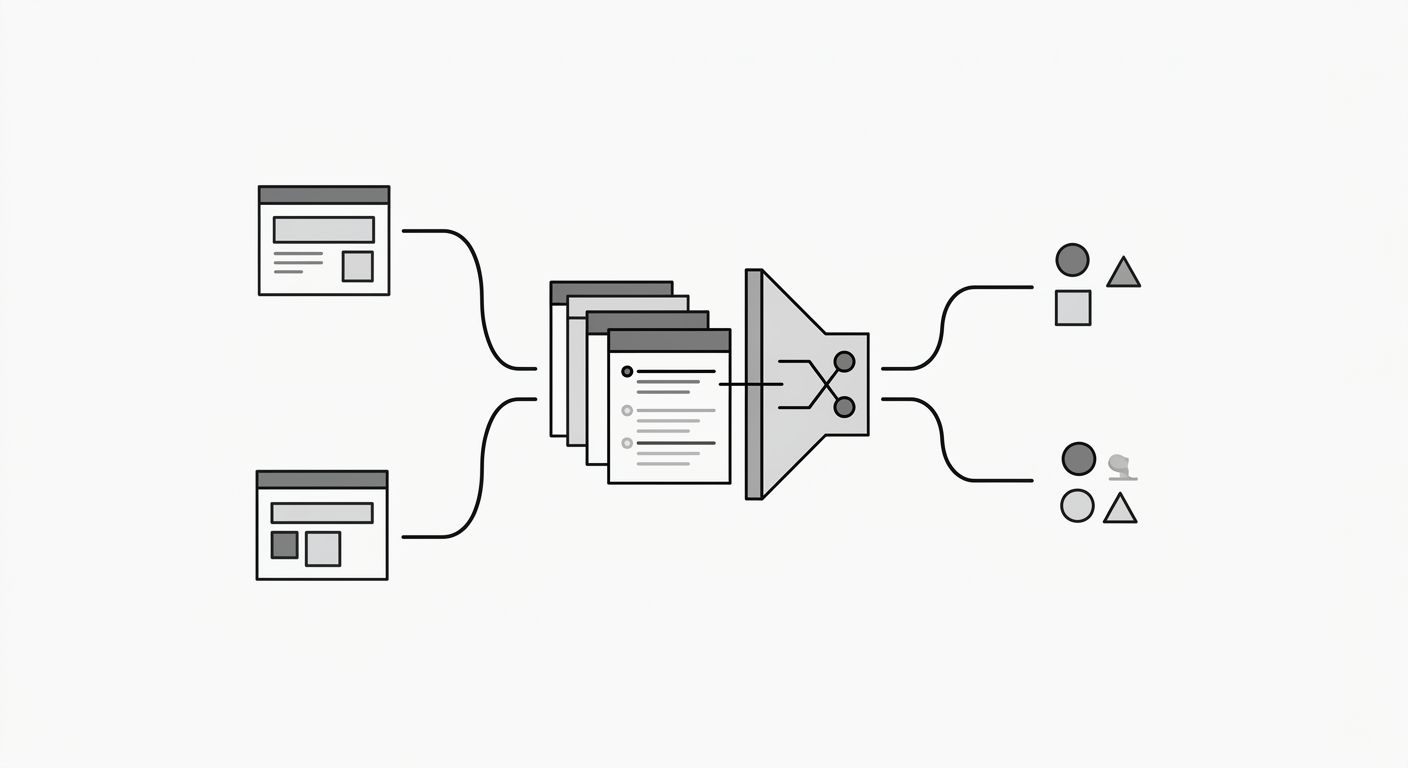
Somewhere between BERT's rollout and the present, practitioners figured out a simple, tool-free test for semantic keyword clustering: type two keywords into Google separately and compare the results. If the same URLs appear in both result sets, Google considers those keywords part of the same semantic cluster. If the results are entirely different, they belong to different clusters and deserve separate pages.
This SERP overlap method became the backbone of organic keyword discovery without paid tools. It's manual and it's slow. And it's remarkably accurate, because you're reading Google's own understanding of keyword relationships rather than relying on a third-party tool's approximation.
Here's how keyword relationship mapping works in practice. Take your seed keyword, "email marketing automation," and search it. Record the top 10 URLs. Then search a variation, "automated email campaigns," and record those top 10 URLs. If 6 or more URLs overlap, those two queries belong on the same page. If 2 or fewer overlap, they need separate pages. The 3-to-5 overlap range is a judgment call that depends on your domain's existing authority and content depth.
When you group related keywords semantically on a single page, that page can rank for dozens or even hundreds of keyword variations. The pages that dominate modern SERPs tend to be thorough treatments of a topic cluster, not thin pages chasing one string.
As Keyword Insights' clustering guide explains, semantic keyword clustering groups keywords based on how closely their meanings relate to each other, using natural language processing to measure that similarity. You can approximate the same grouping manually through SERP comparison without any NLP tooling.
Building Full Clusters From Free Data
The SERP overlap test tells you which keywords belong together. But you need the raw keywords first. Here's the workflow that emerged as practitioners moved away from tool dependency, in the order you should run it:
Autocomplete mining comes first. Type your seed keyword into Google with a space after it and record every suggestion. Then type your seed keyword preceded by each letter of the alphabet ("a email marketing automation," "b email marketing automation") and record those too. A single seed keyword typically yields 40 to 80 unique variations from autocomplete alone.
People Also Ask expansion comes second. Click on 3 or 4 PAA questions in your seed keyword's SERP. Each click generates 2 to 3 new questions. Within 10 minutes of clicking, you can extract 20 to 30 questions that represent real user queries related to your seed.
Related searches at the bottom of the SERP give you another 8 phrases per query. Searching those related searches produces their own related searches, creating a branching tree of keyword variations that grows quickly.
Google Search Console data fills the final gap. If you have an existing site with any traffic, your Performance report shows the actual queries people used to find your pages. These are real, verified search terms that no keyword tool may even track. We've covered why different keyword tools contradict each other on exactly this point. Your GSC data sidesteps that conflict entirely because it's first-party.
Once you've collected 80 to 150 variations from these free sources, you run the SERP overlap test across them, grouping keywords that share 6+ common URLs into clusters. According to SEO.ai's research on cluster sizing, effective clusters range from 5 to 10 keywords for narrow topics to 20 or more for broad ones. The right cluster size depends on the topic depth and the variety in user intent you uncover.
From Clusters to Site Architecture
Keyword relationship mapping only matters if it translates into page decisions. Each semantic cluster you build should map to exactly one URL on your site. The seed keyword becomes your pillar content, and the long-tail variations within each cluster shape the headings, subsections, and internal linking anchors on that page.
This is where practitioners run into the question of how to map keyword research to site architecture without diluting authority. The answer lives in the cluster structure itself. Keywords with high SERP overlap belong on the same page. Keywords with low or zero overlap need separate pages, linked together through intentional internal linking where supporting pages point to core pages using descriptive anchor text.
Surfer's ranking factors study of 1 million SERP results found that pages using keyword variations and semantic relatives consistently outperform pages targeting a single exact-match phrase. This matches what the SERP overlap method reveals: Google already treats these variations as part of the same topic, and your content should mirror that grouping.
For teams that want to scale this clustering process with AI assistance, the manual SERP overlap method provides ground truth to validate what automated tools produce. You can always audit a tool's cluster suggestions by spot-checking whether Google actually ranks the same URLs for the keywords grouped together. If the tool says two keywords belong in the same cluster but Google shows completely different SERPs for them, trust the SERPs.
The State of Play
The seed keyword expansion strategy that works today looks nothing like the keyword research process of 2012. The methodology shifted from finding individual phrases with high search volume to mapping the semantic territory around a topic. The unit of work changed from "keyword" to "cluster." The primary data source changed from third-party tool estimates to Google's own SERP behavior.
Practitioners who adopted this approach early have sites where a single well-structured page ranks for 50 to 200 keyword variations, because the page covers the full semantic cluster rather than one isolated string. Their site architecture reflects the topic relationships Google has already mapped, and their internal linking reinforces those relationships.
Paid platforms like Ahrefs and Semrush generate clusters faster by automating the SERP overlap comparison. That speed has real value when you're working across hundreds of seed keywords. But the underlying logic is identical to what you can do manually with Google's SERPs, autocomplete, PAA, and Search Console. The methodology doesn't require the tool. The tool accelerates the methodology.
Google keeps getting better at understanding meaning with every algorithm update. Your keyword expansion process should track that progression. Start with a seed. Expand it through free data. Test overlap in the real SERPs. Group by meaning and intent. Build pages around clusters instead of phrases. Every Google update since 2013 has rewarded this approach, and nothing about the trajectory suggests that's going to reverse.
OrganicSEO.org Editorial
Editorial team writing about Ethical, white-hat, organic SEO education.
Related Articles

From Seed Keyword to Search Intent: Building a Keyword Research Framework That Scales Beyond Tool Suggestions
Every keyword tool on the market outputs the same four columns: search volume, keyword difficulty (a score from 0 to 100), CPC, and a one-word intent label.

AI-Assisted Keyword Clustering: Using Claude and ChatGPT to Scale Research Without Losing Precision
Keyword Insights shipped a Claude skill that clusters keywords using live SERP overlap data, which means keywords grouped together actually share ranking URLs in Google's index.

Niche-First Keyword Research: Why Understanding Your Market's Sub-Topics Matters More Than Search Volume
Underserved niche markets convert at 3–5x the rate of high-volume keyword targets, according to UniK SEO's analysis of low-volume search segments. The mechanism is specificity: low-volume high-intent keywords filter out casual browsers and pull in users who are already close to a purchase decision.