AI-Assisted Keyword Clustering: Using Claude and ChatGPT to Scale Research Without Losing Precision
Keyword Insights shipped a Claude skill that clusters keywords using live SERP overlap data, which means keywords grouped together actually share ranking URLs in Google's index.
AI-Assisted Keyword Clustering: Using Claude and ChatGPT to Scale Research Without Losing Precision
Keyword Insights shipped a Claude skill that clusters keywords using live SERP overlap data, which means keywords grouped together actually share ranking URLs in Google's index. That architectural difference separates AI keyword clustering that maps to real search behavior from semantic keyword grouping that looks tidy in a spreadsheet but fractures your content strategy.
A Clustering Tool That Reads Google's Results Instead of Your Prompt
The Keyword Insights integration for Claude operates on a fundamentally different mechanism than what most people do when they paste a keyword list into ChatGPT and ask it to "group these by topic." As the Keyword Insights documentation describes it, "the clustering uses live SERP overlap data, which means keywords that consistently appear in the same search results get grouped together."
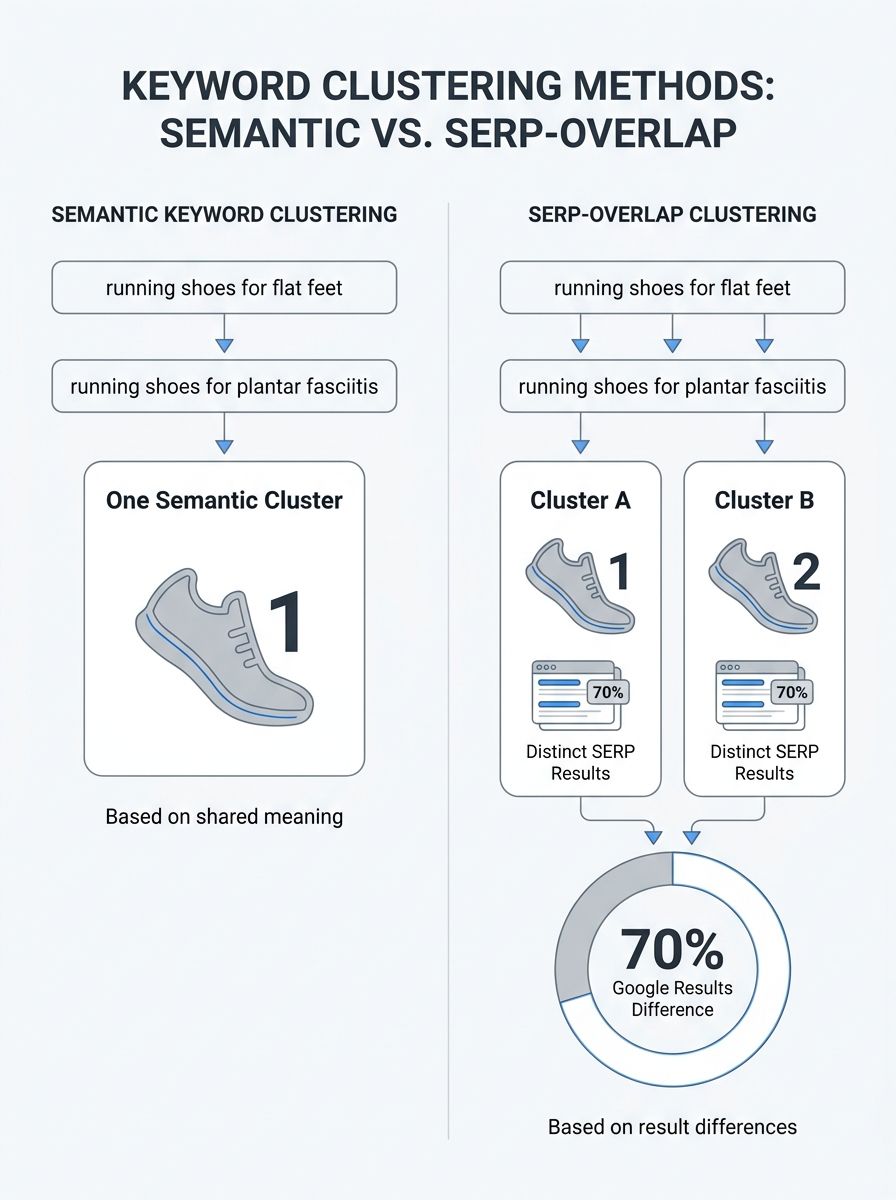
ChatGPT reads the words. It understands that "best running shoes" and "top running sneakers" mean similar things. It groups them based on semantic proximity. What it can't do is check whether Google serves the same results page for both queries. And Google often doesn't. "Best running shoes for flat feet" and "best running shoes for plantar fasciitis" sound like they should cluster together. A semantic model will group them. But SERP analysis frequently shows those queries producing 60-70% different ranking URLs, which means Google treats them as distinct search intents deserving separate pages.
The practical consequence: semantic-only clustering under-segments. It collapses distinct intents into single clusters, and you end up writing one article that tries to serve two different ranking opportunities. When you're building a seed keyword list into a full research framework, that compression creates problems that cascade through your entire content plan.
What ChatGPT Gets Right (and Dangerously Wrong) About Keyword Groups
ChatGPT is genuinely useful for the brainstorming and expansion phase of keyword research. If you need 200 long-tail variations from 10 seed terms, it'll generate them in under 2 minutes. According to testing by Ryze, manual prompting works but takes 20-60 minutes per project for a full research-and-brief workflow, which makes ChatGPT keyword research reasonable for keyword brainstorming automation on individual campaigns.
But the precision claim falls apart when you move from brainstorming to clustering. As ClickRank's 2026 guide states directly: "ChatGPT is great for ideas and intent but it does not have live data like search volume or keyword difficulty." So you're clustering blind. The groups look logical. They read well. They reflect genuine semantic relationships between terms. They don't reflect how Google's index actually organizes those terms into rankable topics.
Consider a B2B keyword set for project management software. ChatGPT will confidently group "project timeline template," "Gantt chart maker," and "project scheduling tool" into a single cluster labeled something like "Project Planning Tools." The label is correct semantically. But SERP-grounded analysis often reveals that "Gantt chart maker" produces a completely different set of ranking URLs than "project timeline template," with overlap as low as 20-30% in the top 10 results. Google treats these as separate topics even though a human (and an LLM) sees them as related.
The research from GetFocal on AI-powered semantic keyword clustering confirms this gap, recommending that practitioners "apply clustering algorithms like K-means to group similar keywords" and then "fine-tune results with BERT or other language models," noting that "this multi-step process can catch nuances that a single method might miss." A single-pass ChatGPT prompt skips all of that refinement.
The SERP Overlap Method Inside the Claude Integration
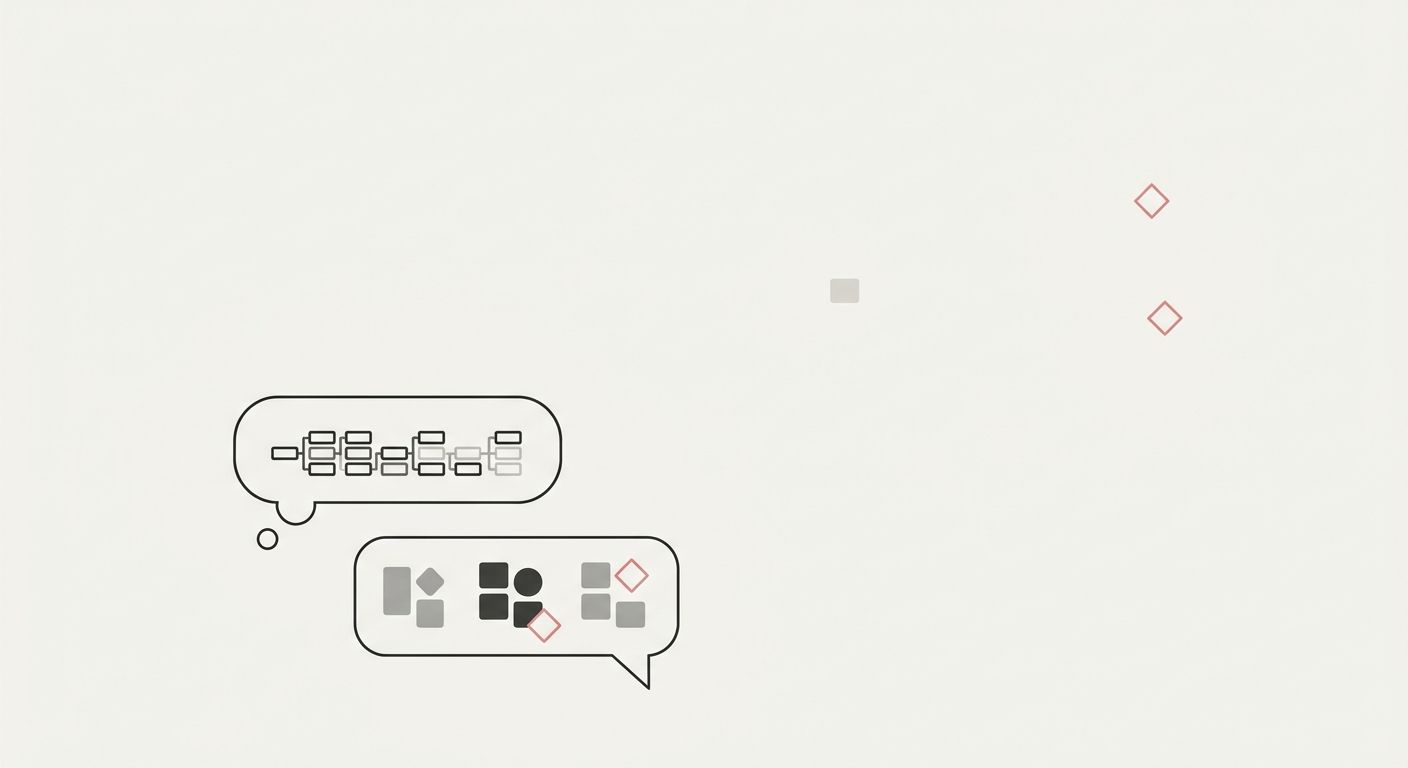
The Keyword Insights skill for Claude runs each keyword against Google's live results and measures URL overlap between keyword pairs. When two keywords share a threshold of common URLs in their top results (typically 3+ shared URLs in the top 10), they cluster together. When they don't, they stay separate, regardless of how semantically similar they appear.
The documentation recommends using a lower cluster sensitivity setting (2 or 3) for broader topic groups, and instructs users to ask Claude to "summarise the top clusters first before diving into the full data" for large keyword lists. This is a practical workflow detail that matters when processing 1,000+ keywords: having Claude identify the major cluster themes before outputting every individual grouping helps you spot structural problems in your keyword set early.
What separates this from running keywords through a standalone clustering tool and then manually interpreting the output? Integration and conversation. You can chain actions in a single session: cluster a list, identify the dominant intent for each group, flag cannibalization risks where two clusters overlap too heavily, and generate content brief outlines. The conversational interface lets you interrogate specific clusters. "Why did 'project management for remote teams' end up separate from 'remote team collaboration tools'?" Claude can explain the SERP divergence and surface which ranking URLs differed between the two queries.
When you're mapping keyword clusters to your site architecture, that contextual explanation prevents the common mistake of re-merging clusters that the tool correctly separated, just because they "feel" like they belong together.
When Semantic Grouping and SERP Grouping Disagree
The disagreements between semantic and SERP-based clustering reveal the most important editorial decisions in your content strategy. Three patterns show up consistently, and each demands a different response.
Semantically identical, SERP-divergent. Keywords that mean nearly the same thing but produce different Google results. "Employee onboarding software" and "new hire onboarding platform" are functionally synonymous. But if Google surfaces different product pages, different comparison articles, and different featured snippets for each, the search intent has diverged. You need two pages, or at minimum two distinct sections with aggressive internal linking between them.
Semantically different, SERP-convergent. Keywords that look unrelated but consistently share top-ranking URLs. "Gantt chart maker" and "project timeline template" come from different vocabularies, yet Google often ranks the same tools for both. A semantic model separates them. SERP data unifies them. You should target them with one strong page rather than two thin ones that split your authority. As Upwork's 2026 review of AI keyword research tools confirmed, AI adds "speed, scale, and precision to SEO keyword research," but the precision component depends entirely on whether the tool accesses live search data or relies on language modeling alone.
Partial overlap with intent split. This pattern is the most dangerous. Keywords share 4-5 of the top 10 URLs but diverge on the rest. "Best CRM for small business" and "CRM software comparison" overlap in mid-page results but diverge at the top, with different featured snippets, different People Also Ask boxes, and different result types. These require careful judgment about your site's existing authority and content production capacity.
The AI tools won't make these Pattern 3 calls for you. This is where building a search intent map for your entire site becomes the necessary companion step. Clustering tells you what belongs together algorithmically. Intent mapping tells you what your site should actually build given its resources and competitive position.
The Cost-Precision Tradeoff That Shapes Every Clustering Decision
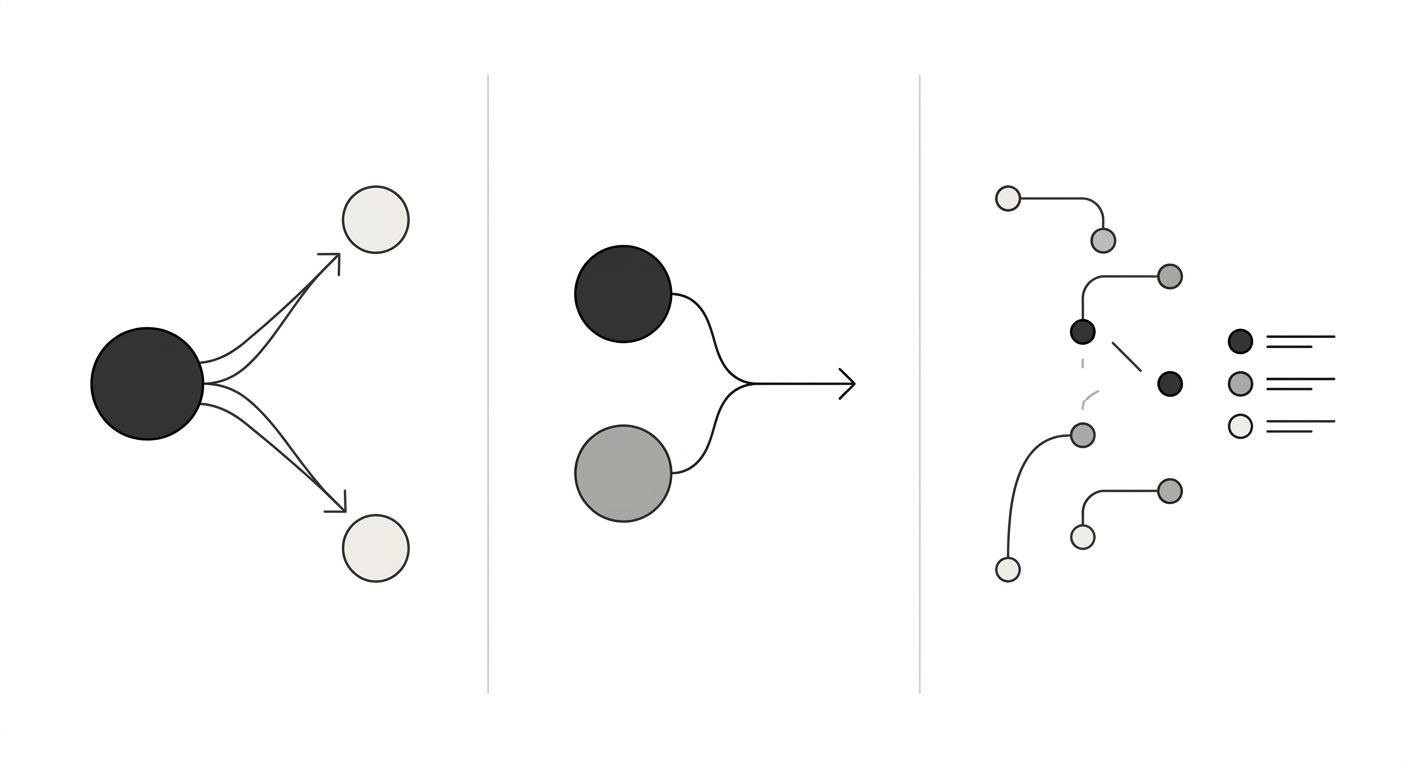
Here's what each approach actually costs in time and money for a typical 1,000-keyword clustering project:
Approach | Time per 1,000 keywords | Monthly cost | Live SERP data | Precision risk |
|---|---|---|---|---|
ChatGPT manual prompting | 20-60 min | ~$20 (subscription) | No | High (semantic-only) |
Claude without Keyword Insights | 15-45 min | ~$20 (subscription) | No | High (semantic-only) |
Claude + Keyword Insights skill | 5-15 min | $20 + KI credits | Yes (SERP overlap) | Low |
Free clustering tools (SEO Scout, Pemavor) | 10-30 min | $0-50 | Varies | Medium |
Enterprise platform (Keyword Insights full) | 3-10 min | $58-199 | Yes | Low |
The dollar difference between semantic-only and SERP-grounded clustering looks small on a monthly invoice. The real cost hides downstream. A semantic-only approach that merges intent-distinct keyword groups means pages targeting the wrong intent or competing with each other for the same queries. If each misallocated page takes 4 hours to research and write, even 10 bad cluster decisions represent 40 hours of content production aimed at targets that won't convert into rankings.
The tool cost savings from using ChatGPT alone instead of a SERP-grounded approach measure about $40-180 per month. The content production waste from bad clusters measures in thousands of dollars of writer time producing pages that won't rank where they should. The clustering tool is the last line item to cut from your SEO budget.
The workflow that holds up under scrutiny has three distinct phases, each assigned to the tool that handles it best. Use ChatGPT for keyword brainstorming automation: generating variations, expanding seed lists, suggesting long-tail terms you hadn't considered. Move the expanded list into a SERP-grounded clustering tool for the grouping phase. Then use Claude's conversational interface to interrogate the clusters, understand the disagreements between semantic and SERP signals, and make the editorial decisions about which clusters deserve dedicated pages and which should consolidate.
Each tool has a specific strength, and each has a specific blind spot. Treating any single AI as a complete semantic keyword grouping solution produces work that looks finished but contains structural errors that propagate through every piece of content you build from those clusters.
OrganicSEO.org Editorial
Editorial team writing about Ethical, white-hat, organic SEO education.
Related Articles
The Seed Keyword Expansion Playbook: Moving Beyond Single Terms to Semantic Clusters Without Tool Dependency
Google's algorithmic evolution from Hummingbird through BERT and MUM turned single-keyword targeting into a losing strategy.
Keyword Research as Site Architecture Reverse-Engineering: How to Extract IA Decisions from Search Data
ClickRank's intent mapping documentation shows that sites assigning exactly one intent type per URL eliminate page-level content overlap entirely, because each URL resolves a distinct query class.
Beyond Search Volume: Why Keyword Research Tools Miss Half Your Opportunity in 2026
Roughly 15% of the queries Google processes each day have never appeared in any keyword research tool's index. That figure represents the floor of what volume-based research misses, before accounting for the queries tools do track but measure with wildly conflicting numbers across platforms.