How Google's Helpful Content System Actually Scores Pages: What the Patents and Tests Tell Us
Google's helpful content system doesn't give pages a single numeric score. It uses machine-learning classifiers trained on human rater feedback, patent-documented signals, and site-level engagement data to sort content into quality tiers.

How Google's Helpful Content System Actually Scores Pages: What the Patents and Tests Tell Us
Google's helpful content system doesn't give pages a single numeric score. It uses machine-learning classifiers trained on human rater feedback, patent-documented signals, and site-level engagement data to sort content into quality tiers.
The SEO community treats these three evidence pools differently. Some practitioners build entire strategies around patent analysis. Others focus on mimicking what quality raters reward. A third group ignores both and runs recovery experiments until something moves the needle.
Each approach reveals real things about how people-first content signals work. Each also has blind spots. Here's what you gain and lose from each lens, and how to combine them.
What Google's Patents Actually Describe
Google's patent filings on content quality describe systems for detecting thin content, duplicate content, and pages built to rank rather than inform. A detailed breakdown from Search Engine People identifies classifier-based approaches that flag content written "solely for SEO purposes rather than to inform or help users."
These patents don't reveal a single scoring formula. They describe multiple overlapping classifiers, each handling a different signal. One patent addresses anchor text n-grams from inbound links. Another covers engagement patterns. A third deals with content originality, comparing a page's information against what already exists in the index.
The "Information Gain" concept stands out. Google measures whether a page adds something new compared to the top 10 results already ranking for a query. Pages that repackage existing answers without original insight score lower on this metric. This connects directly to Google's documented content quality factors: original research, proprietary data, and first-hand experience all register as information gain.
Shaun Anderson, SEO consultant at Hobo Web, wrote in his analysis of Google's quality signals that the systems "classify sources into quality classes (e.g., spam, bad, good) based on aggregated signals" rather than assigning numeric ratings. This matches patent language that describes categorical classification, not continuous scoring.
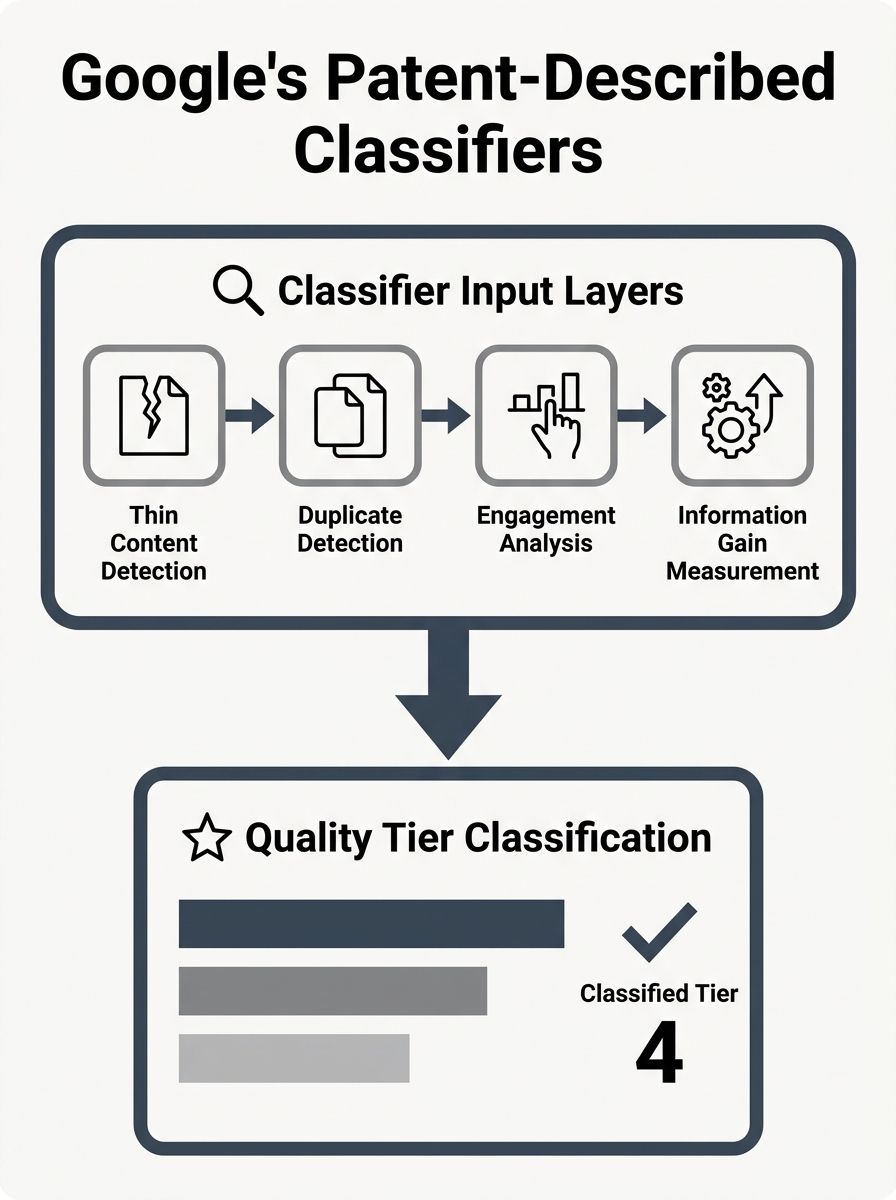
The tradeoff with patent analysis is clear. Patents describe what Google can build, not always what's live in production. Google files hundreds of search-related patents per year. Some become core features. Many stay on paper. You get a detailed map of the technical architecture, but you can't confirm which specific classifiers run at any given time.
Still, the pattern across multiple patent families points in a consistent direction. Google's systems evaluate content at two levels: individual page quality and site-wide quality patterns. A site that publishes 500 pages of thin, AI-generated filler alongside 50 strong articles will see the weak pages drag down rankings for the good ones. This site-level classifier was the core mechanism of the original August 2022 helpful content update.
What the Quality Rater Guidelines Measure
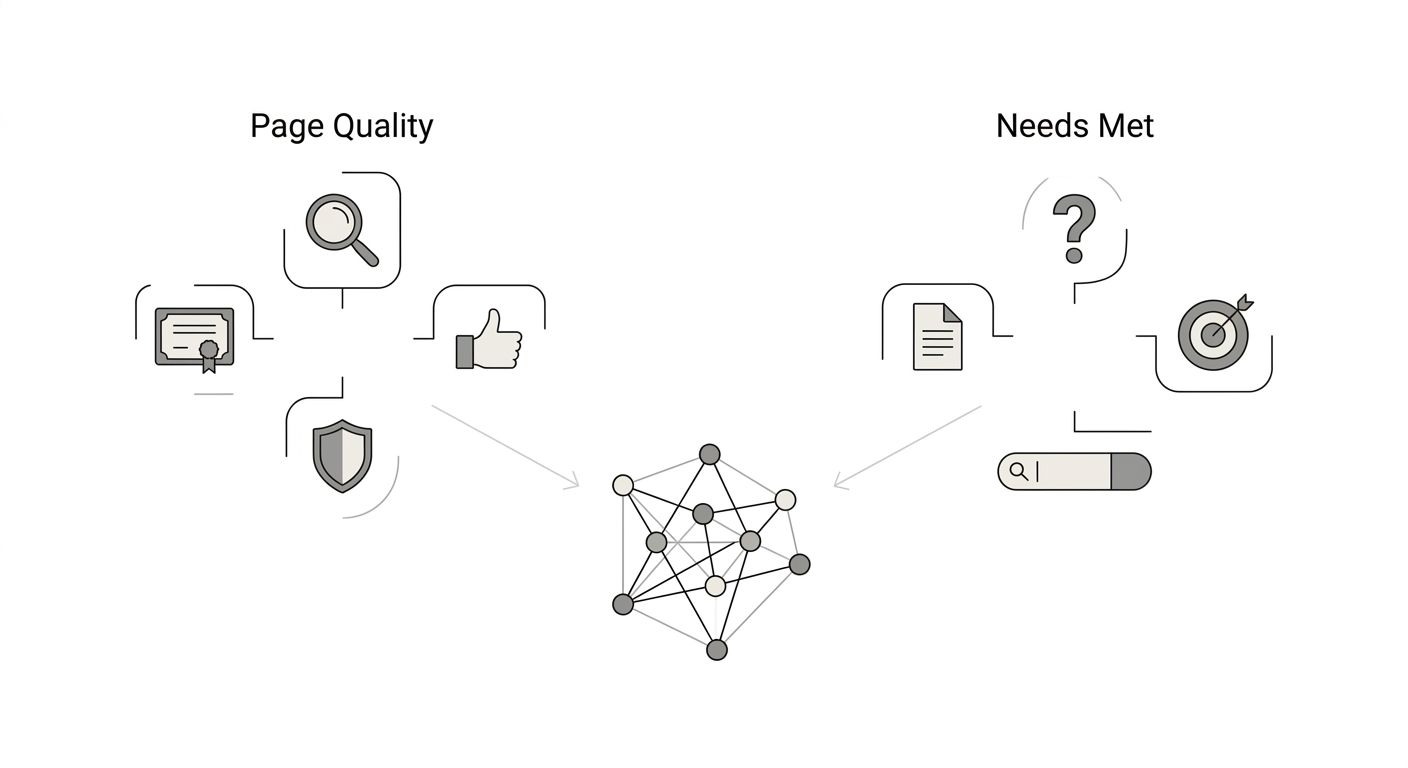
Why does the guidelines-first approach appeal to so many SEOs? Because Google publishes exactly what its human evaluators look for. The Quality Rater Guidelines, a 182-page document last updated in September 2025, define two primary evaluation axes: Page Quality and Needs Met. Human raters use these criteria to evaluate thousands of search results. Their ratings train the machine-learning models that power the helpful content system.
Page Quality assessments center on E-E-A-T: Experience, Expertise, Authoritativeness, and Trustworthiness. These 4 factors aren't assigned as a numeric score. As Google has confirmed, there is no "E-E-A-T score" that raters calculate. Raters make qualitative judgments about whether a page's author demonstrates real knowledge, whether the site has a track record in its topic, and whether the information is accurate and well-sourced.
Google places extra weight on strong E-E-A-T for YMYL topics (Your Money or Your Life), covering health, finance, legal, and safety content. A medical advice page written by an anonymous author with no credentials will fail the Page Quality assessment even if the information happens to be correct.
The Needs Met axis evaluates whether a page actually answers the query a person typed. A page can score high on Page Quality (well-written, expert author, trustworthy site) but low on Needs Met if it doesn't match the searcher's intent. If you're building content around search queries, mapping intent across your site is where this axis becomes practical.
The tradeoff: Quality Rater Guidelines tell you what Google wants to reward, not how the algorithm mechanically implements those preferences. The translation from human judgment to machine classifier isn't 1:1. A page can check every E-E-A-T box in the guidelines and still rank poorly because of site-level issues, technical problems, or weak engagement. If your site structure dilutes authority across too many thin pages, rater-aligned content quality won't save you.
And there's one more wrinkle. In September 2023, Google removed the phrase "written by people" from its guidelines. The focus shifted to content created "for people," regardless of whether a human or AI produced it. AI-generated content isn't penalized by default. But the December 2025 Core Update hit generic AI content hard, targeting pages that offered no original analysis or first-hand perspective. According to Hobo Web's 2026 analysis, "helpful content in 2026 is people-first, demonstrating expertise, experience, authoritativeness, and trustworthiness (E-E-A-T)."
What Recovery Tests and Ranking Data Show
Google announced in its August 2022 helpful content update blog post that the system is "a new signal and one of many signals Google evaluates to rank content." By March 2024, this signal was folded into the core algorithm. Google reported a 45% reduction in low-quality, unoriginal content appearing in search results after the integration.
One documented case: a health and wellness site saw a 37% traffic recovery after adding interactive tools that kept users engaged for an average of 2+ minutes per session on high-value commercial pages. The strategy focused on making visitors spend meaningful time with the content, not land and bounce.
That case points to something the patents and guidelines don't spell out directly: Chrome-sourced engagement data plays a role. Google has access to billions of browsing sessions through Chrome. Time on page, scroll depth, return-to-SERP rates, and click patterns all feed into quality assessment. The exact weight is unknown, but recovery practitioners consistently report that improving these metrics correlates with ranking gains.
Evidence Source | Strengths | Blind Spots | Best Use |
|---|---|---|---|
Patent filings | Detailed technical architecture, classifier logic | Many patents never ship to production | Understanding system design |
Quality Rater Guidelines | Clear criteria, updated regularly (Sept 2025) | No mechanical implementation details | Aligning content with Google's stated values |
Recovery test data | Shows what actually moves rankings | Small sample sizes, confounding variables | Prioritizing fixes on penalized sites |
Topical focus shows up consistently across recovery case studies. Sites that pruned off-topic content, removed thin pages, and concentrated on their core expertise saw faster recoveries than sites that only improved individual page quality. This aligns with the patent evidence about site-level classifiers and with the QRG emphasis on topical authority.
Entity consistency across your site matters here too. If Google's classifiers evaluate your site as a whole, mixed signals about who you are, what you cover, and what credentials back your content will weaken every page. Person schema markup, consistent author bios with verifiable credentials, and a tight topical footprint all reinforce the same signal.
How To Choose Between These Three Lenses
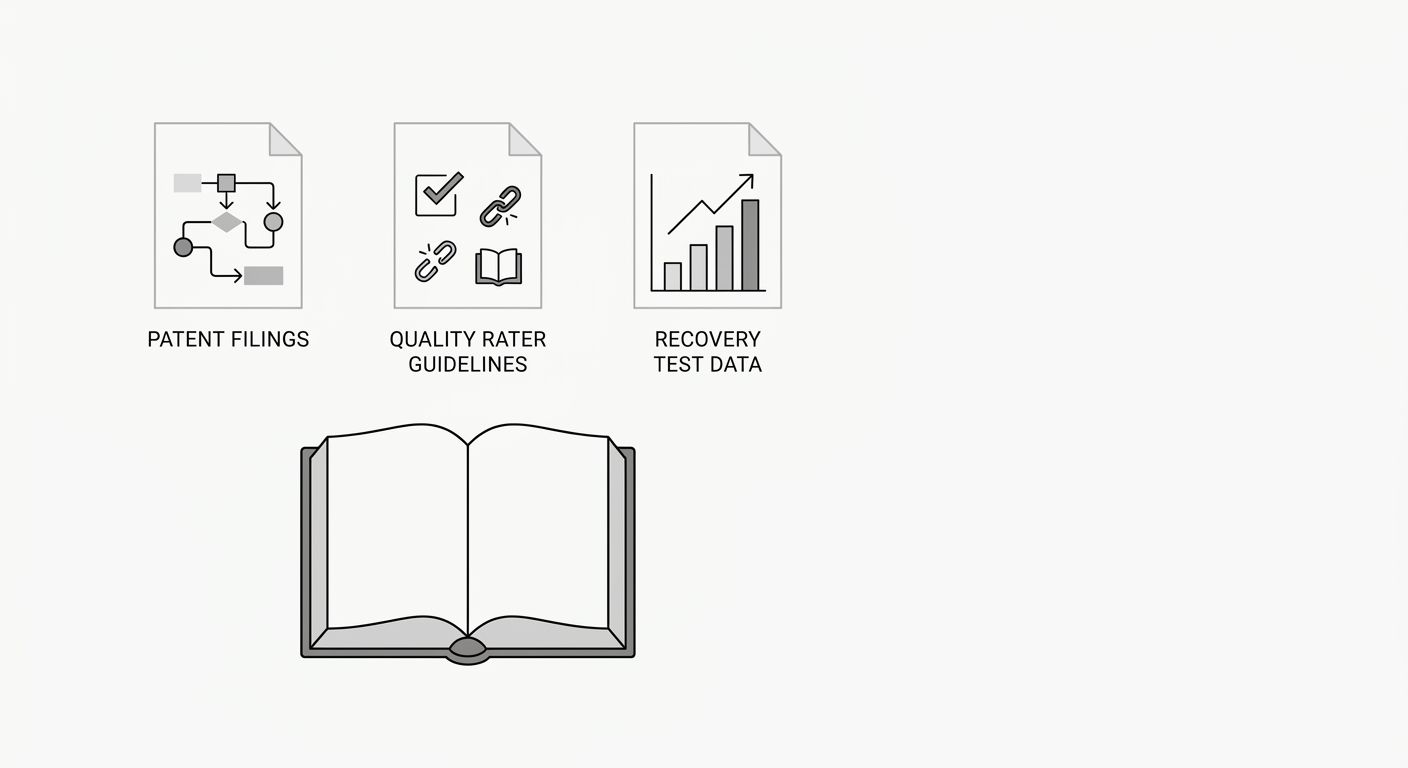
You don't choose one. You combine them, but with different weights depending on your situation.
If your site lost traffic after a core update and you're trying to identify HCU recovery signals, start with recovery test data. Track which pages lost the most, run a systematic diagnosis, and prioritize engagement and topical-focus fixes. The 37% recovery case worked because it addressed what users actually did on the page, not abstract quality criteria.
If you're building a new site or planning a content strategy from scratch, the Quality Rater Guidelines are your starting point. They define what Google is trying to reward. Author transparency with verifiable credentials, topical depth within your niche, and content that satisfies the specific intent behind each query will align you with the 4 E-E-A-T factors before you publish a single page.
If you want to understand why certain fixes work and others don't, patent analysis fills in the gaps. Knowing that Google runs site-level classifiers explains why pruning 200 thin pages can lift rankings on the 50 good ones. Knowing that information gain is a measured signal explains why rewriting a page with original data outperforms rewriting it with better formatting.
The overlap between all three sources is where your confidence should be highest. All three agree that original, experience-backed content within a focused topic area ranks better than surface-level content spread thin across unrelated subjects. All three agree that user satisfaction (defined differently in each source, but pointing at the same outcome) is the central signal. And all three suggest that the site matters as much as the page. A strong article on a weak site faces an uphill fight. A mediocre article on a topically authoritative site with consistent E-E-A-T signals performs better than its individual quality would predict. Read the patents, follow the guidelines, and test your changes. The sites that recover are the ones working with all three inputs, not waiting for one definitive answer.
OrganicSEO.org Editorial
Editorial team writing about Ethical, white-hat, organic SEO education.
Related Articles
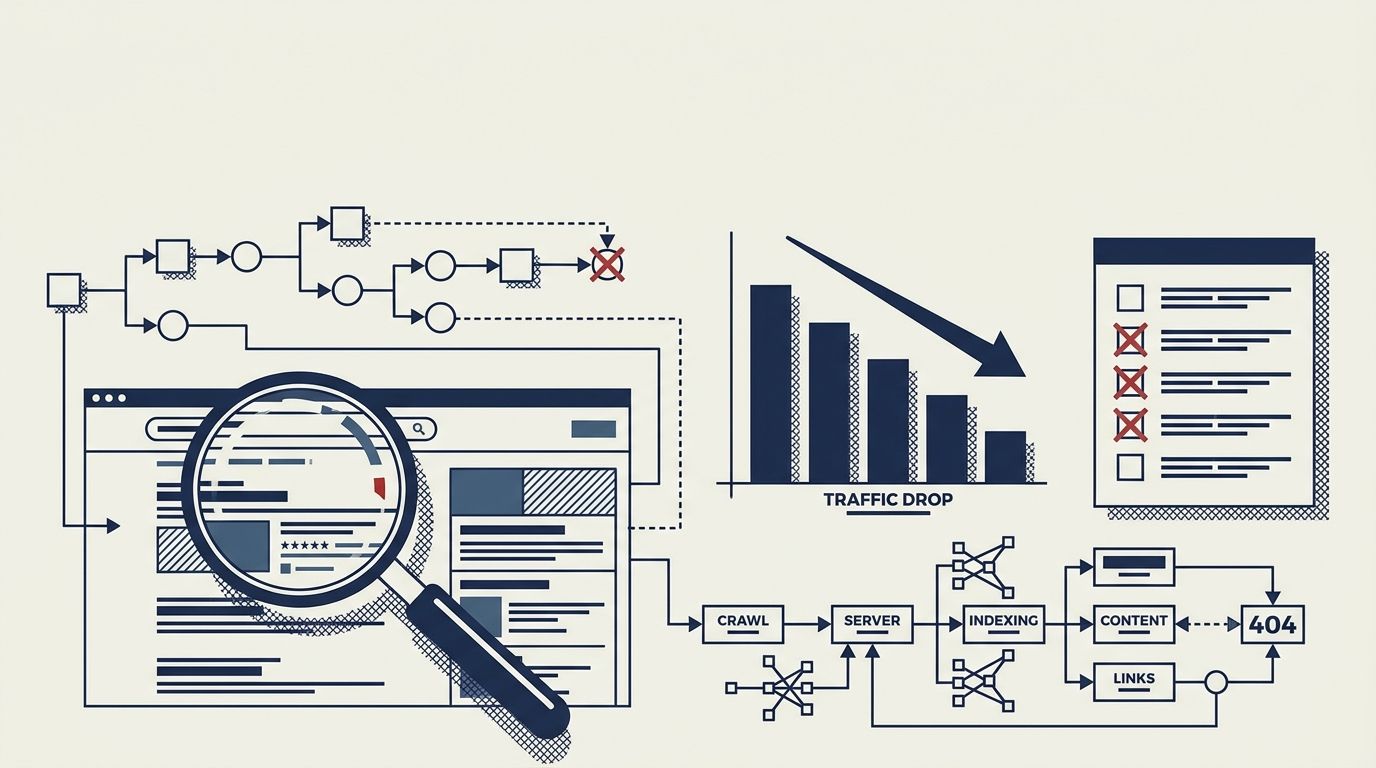
The SEO Debugging Checklist: How to Diagnose Visibility Drops Systematically (Not Frantically)
Diagnosing organic traffic drops requires a bottom-up diagnostic sequence through five layers: Crawl, Render, Index, Rank, and Click. Fixing lower layers first prevents wasted hours rewriting content that Google never crawled in the first place.

Niche-First Keyword Research: Why Understanding Your Market's Sub-Topics Matters More Than Search Volume
Underserved niche markets convert at 3–5x the rate of high-volume keyword targets, according to UniK SEO's analysis of low-volume search segments. The mechanism is specificity: low-volume high-intent keywords filter out casual browsers and pull in users who are already close to a purchase decision.

When Keyword Research Data Conflicts With Ranking Reality: The Intent-Volume Paradox
Every major keyword tool defaults to sorting results by search volume descending. That single UX decision has trained an entire generation of SEOs to build content around the metric least predictive of whether a page will actually rank, earn clicks, convert visitors, or hold its position over time.