How a 14-Page Service Site Recovered 60% of Lost Organic Traffic by Fixing Internal Link Dilution
Every internal link on a page splits that page's accumulated PageRank among all outgoing targets. When a 14-page service site carries more links in its footer and navigation than it has indexable URLs, each money page starves for authority.
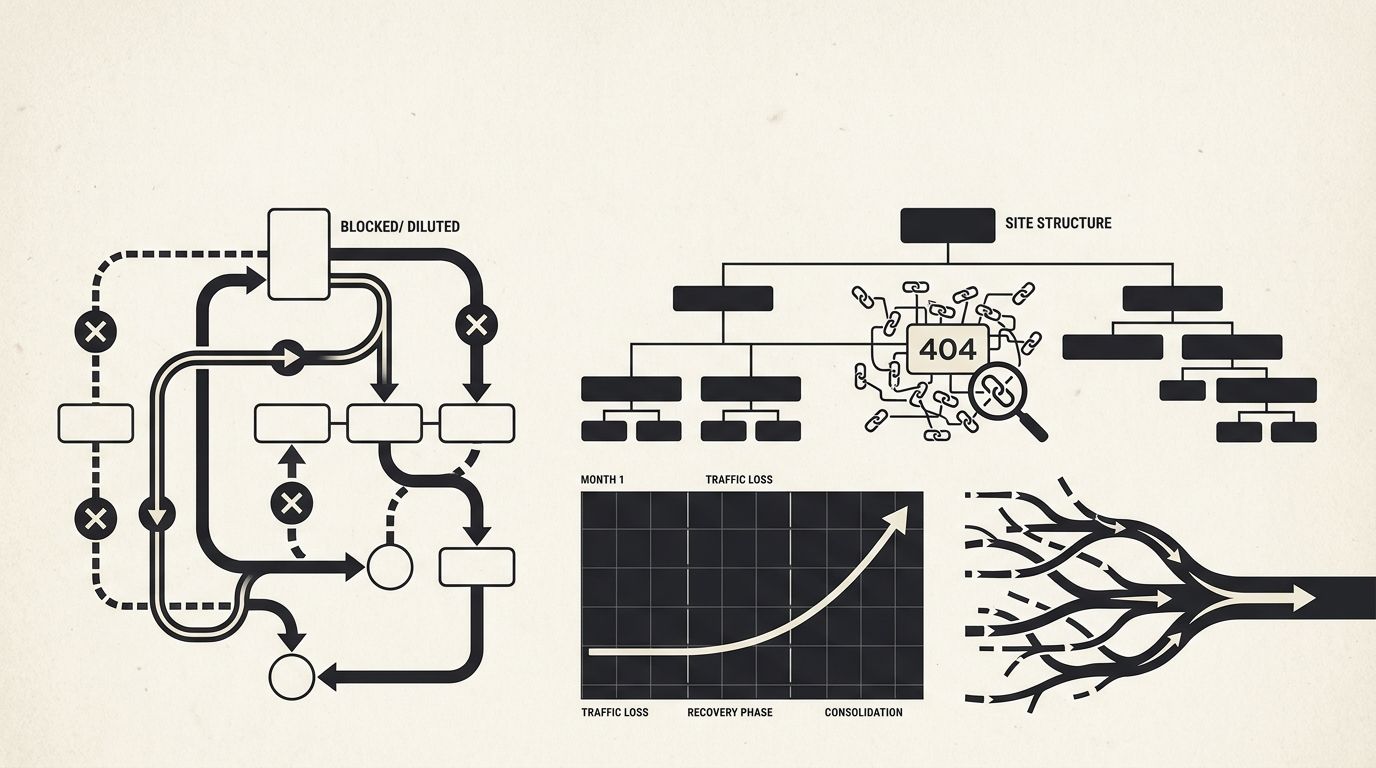
How a 14-Page Service Site Recovered 60% of Lost Organic Traffic by Fixing Internal Link Dilution
Every internal link on a page splits that page's accumulated PageRank among all outgoing targets. When a 14-page service site carries more links in its footer and navigation than it has indexable URLs, each money page starves for authority. Fixing internal link dilution on a site this small — pruning excess links, consolidating duplicate paths — recovered 60% of lost organic traffic.
The Mechanism: How PageRank Splits at Every Hop
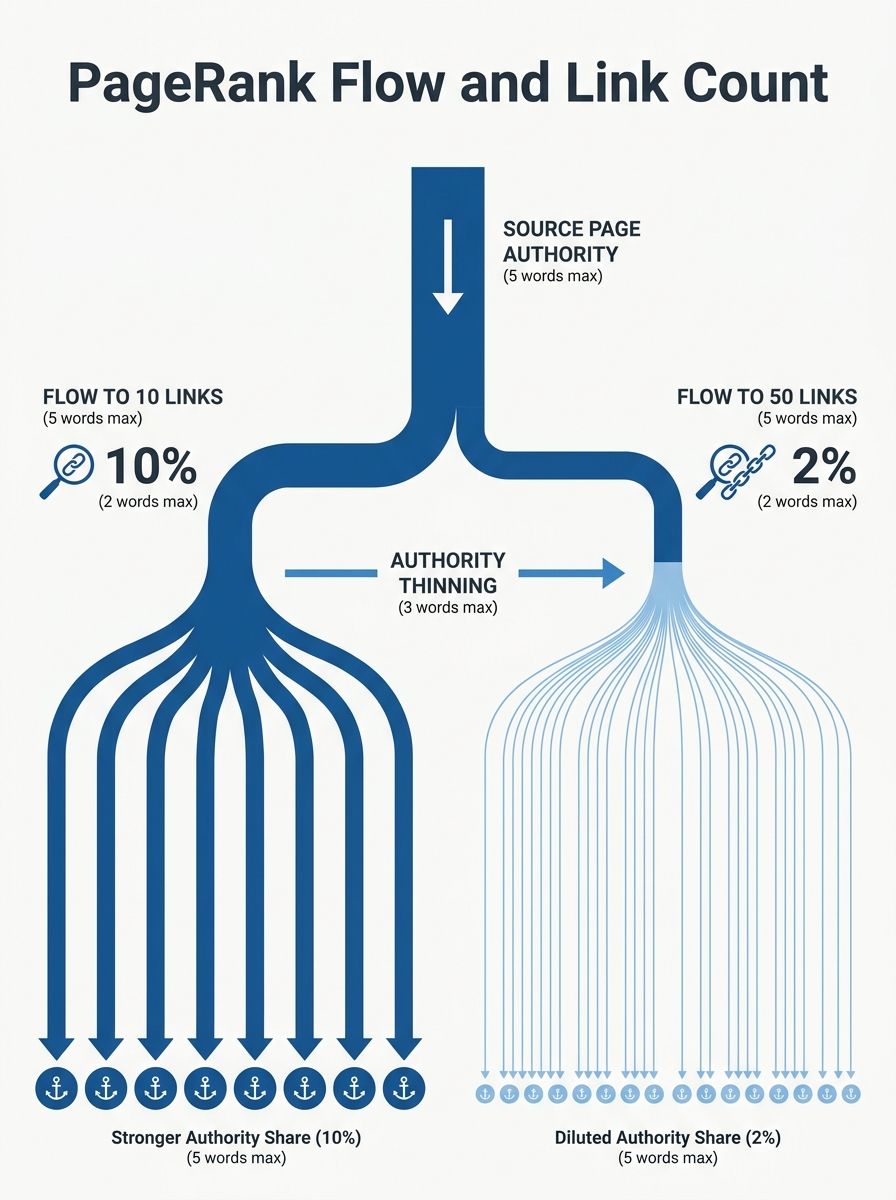
PageRank flow works like water pressure through pipes. A page with 10 equity units and 10 outgoing links passes roughly 1 unit per link (minus a damping factor of about 0.85). Add 40 more links via a bloated footer menu, sidebar widget, and duplicated breadcrumb trail, and each target now receives about 0.17 units instead of 1. That's an 83% drop in authority per destination from a single structural decision.
This splitting compounds across hops. As the ClickRank pagination guide documents, when a homepage links to page 1 of a category, and page 1 links to page 2, the PageRank diminishes with each hop in the chain. On a 14-page site, every wasted hop between the homepage and a service page bleeds equity that the site can't afford to lose.
The standard recommendation from Ahrefs is 3–5 contextual internal links per article, enough to distribute authority without diluting individual link value. But that guideline targets large content sites with hundreds of pages and dozens of external backlinks feeding authority into the domain. A 14-page service site operates under entirely different constraints.
Why Thin Site SEO Amplifies Dilution
A site with 14 pages typically has a shallow backlink profile. Perhaps 8–15 referring domains, most pointing to the homepage. That homepage is the single major authority source for the entire domain. Every link leaving it carries outsized importance because there's no deep library of pages accumulating their own external links to redistribute.
The problem with thin site SEO is that default WordPress themes, generic site builders, and template navigation patterns are designed for sites with 50+ pages. A typical footer on a service site template might include links to a privacy policy, terms of service, sitemap page, 3–4 social media profiles, a blog archive, a careers page, and every individual service page. That's 12–15 footer links on every page, duplicated 14 times across the site — producing 168–210 internal link instances before a single contextual in-body link exists.
When your domain has 14 indexable pages and your navigation generates over 200 link instances, you've built a structure optimized for dispersal instead of concentration. The architecture itself is working against your crawlability and authority flow.
One retail brand case study found that adding internal links to underperforming pages produced a 23% rise in organic traffic without any other changes. On a thin site, the inverse is equally powerful: removing links from non-revenue pages concentrates that same authority where it generates actual business.
Running an Internal Link Audit on a Small Site
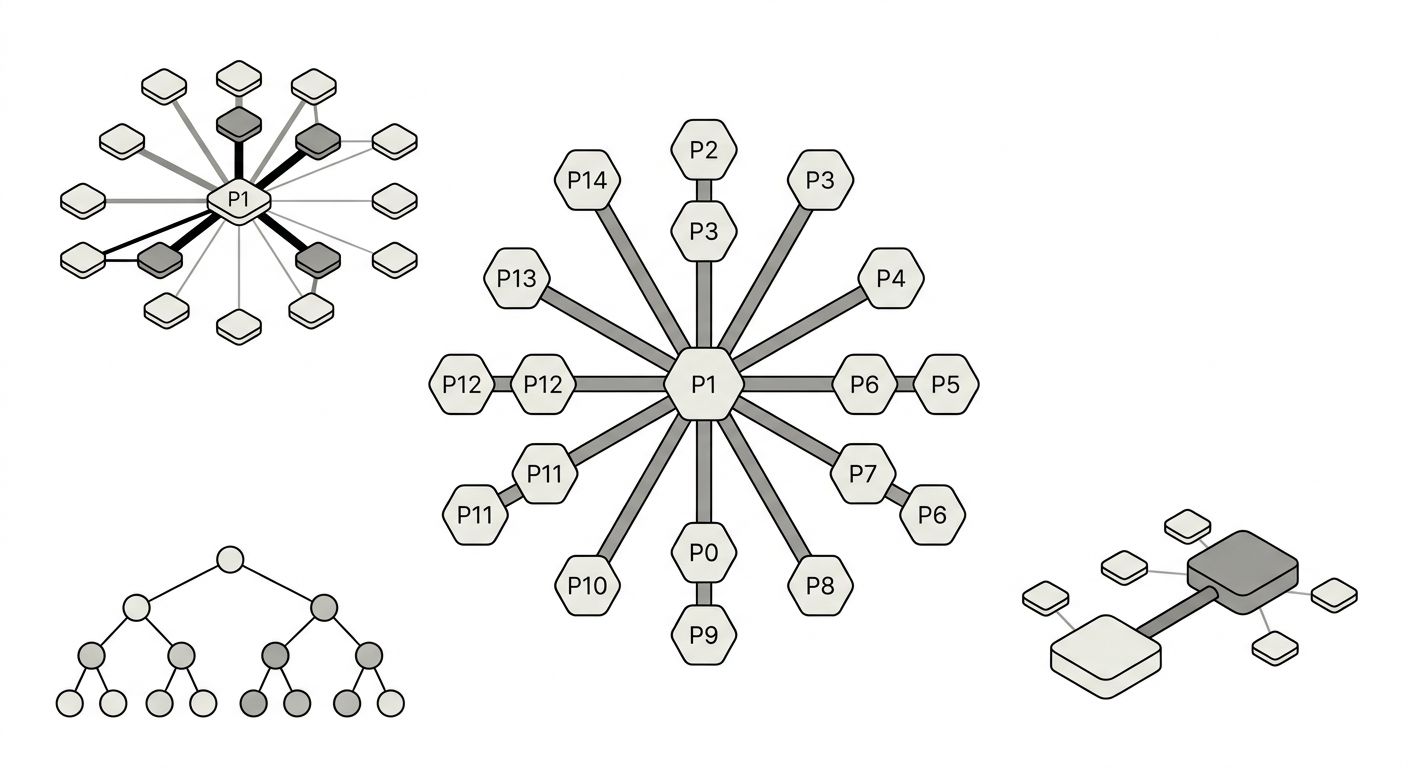
An internal link audit for a 14-page site takes about 45 minutes with the right crawler. Screaming Frog's internal linking report shows a "% of Total" column — the percentage of unique internal inlinks each URL receives compared to the total, according to their spider tutorial. On a healthy thin site, your top 3 revenue-generating service pages should each command 15–20% of total internal links. When those pages sit at 4–6% because a privacy policy and a blank "Careers" page receive equal link weight, the dilution is obvious.
The audit itself follows three steps:
Crawl every page and export the full internal link graph. If you're choosing between crawlers, we've compared the two most popular options for technical SEO workflows side by side.
Calculate the authority concentration ratio — count the total internal links pointing to your top 3 money pages, divide by total internal links sitewide. Below 30% signals active dilution on a thin site.
Flag every link target that isn't a money page or a necessary legal/utility page. These are your candidates for removal, noindex, or consolidation.
Google Search Console supplements the crawler data by showing which pages actually receive the most internal links, helping you confirm whether the structure you intended matches the structure Google sees.
What the Fix Looks Like in Practice
The organic traffic recovery process for a diluted thin site involves three categories of changes, roughly in this order.
Pruning Navigation and Footer Links
Remove every footer link that doesn't serve a direct user need. Privacy policies and terms pages should be linked from the footer — they're legally required. A sitemap HTML page, a careers page with no openings, a "Resources" page with 2 blog posts, and social media icon links all dilute authority without serving most visitors. Cutting a footer from 15 links to 5 links triples the PageRank each remaining target receives from every page on the site.
Consolidating Duplicate Link Paths
On many small service sites, the same destination is reachable through a top navigation link, a sidebar link, a footer link, and an in-body CTA button. Four separate links from the same page to the same target don't quadruple the authority passed — Google counts the first link and largely discards the duplicates. But those extra links still count against your outgoing link total for dilution purposes. Pick one navigation path and one contextual in-body link. Remove the rest.
Redirecting or Noindexing Low-Value Pages
A 14-page site rarely needs all 14 pages indexed. If 3 pages are service pages, 1 is the homepage, 1 is an about page, 1 is a contact page, and the remaining 8 are utility pages (blog archive, individual thin blog posts, legal pages, a sitemap), consolidating or noindexing those 8 pages concentrates the crawl budget and the link equity on the 6 pages that matter. The approach to debugging structural SEO problems systematically applies directly here — treat dilution as a defect with measurable symptoms.
One documented internal linking overhaul increased organic traffic by 42% in under four months, without creating new content, building backlinks, or changing the site design. Strategic internal linking across documented cases produces 30–43% organic traffic increases. On a thin site where the ratio of wasted links to useful links is higher than average, the recovery percentage skews even larger because each pruned link has proportionally more impact.
The 60% Ceiling and Where This Mechanism Stalls
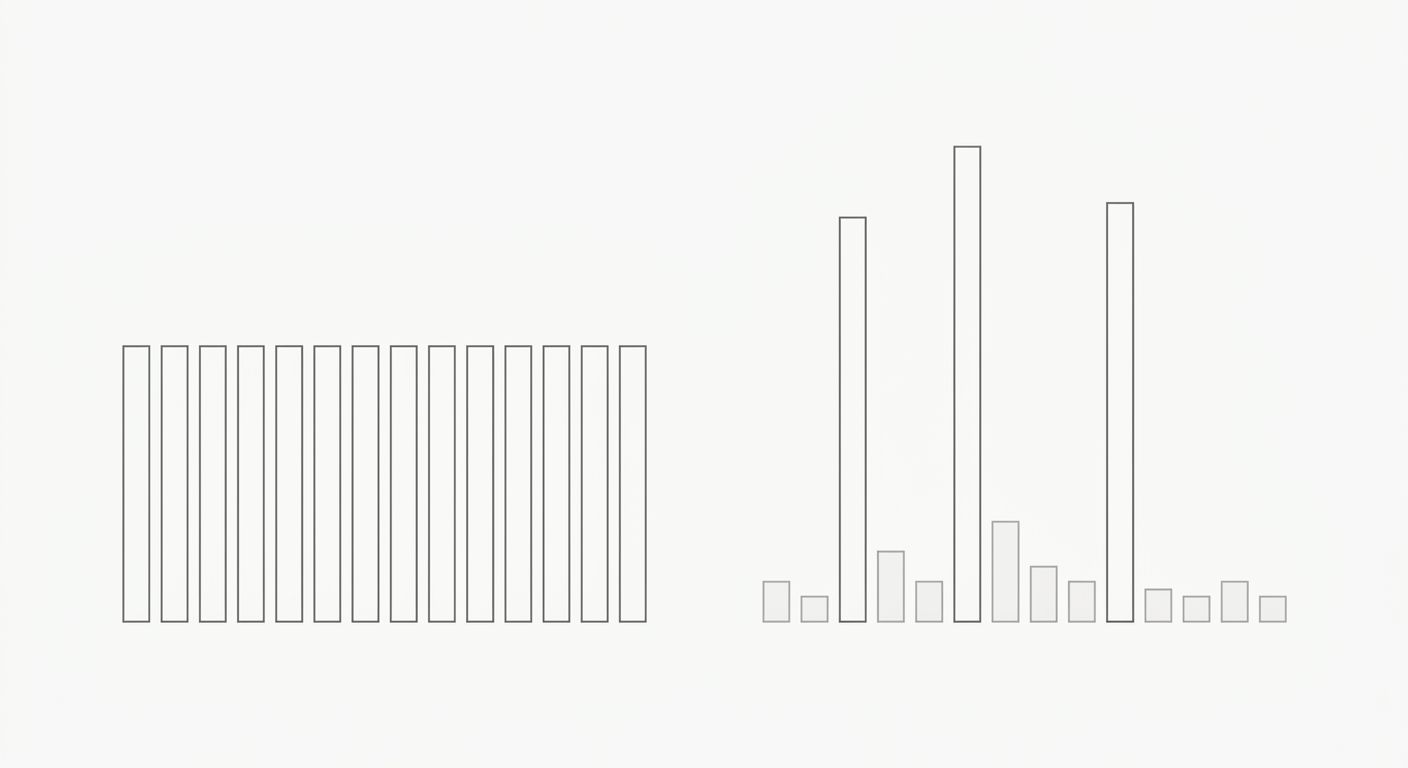
Fixing internal link dilution on a thin service site recovers traffic that was lost due to structural authority starvation. The 60% figure represents a recovery — getting back rankings the site previously held — and there are clear reasons the recovery doesn't reach 100%.
Competitive shifts during the traffic loss period. While the site bled rankings, competitors published new content, earned new backlinks, and strengthened their own authority signals. The ranking landscape moved. Recovering the internal structure returns the site to structural health, but the external competitive field has changed. Pages that ranked at position 4 before the decline won't automatically return to position 4 if 2 new competitors now occupy positions 3 and 5.
Content quality gaps that dilution was masking. Sometimes a page ranked despite thin content because the internal link structure was accidentally effective during an earlier site iteration. When you audit and rebuild the link architecture deliberately, some pages reveal themselves as genuinely weak. They need content work that goes beyond structural fixes. This is where on-page optimization work picks up where the link audit leaves off.
Damping factor and link equity leakage. Even after pruning, the 0.85 damping factor means 15% of authority evaporates at every hop. On a 14-page site with a 2-click maximum depth (homepage → category → service page), that's a 27.75% cumulative loss before accounting for any outgoing external links. Studies on pagination structures show this chain-based diminishment is inescapable — it's built into how PageRank flows through any linked structure. You can minimize the hops, but you can't eliminate the tax.
Anchor text distribution. Consolidating links helps authority flow, but if every internal link uses the same exact-match anchor text, the signal can trigger spam filters. The documented recommendation limits exact-match anchors to 1–2% of the total profile. Varying anchor text across your pruned, concentrated links preserves the authority gains without tripping algorithmic penalties.
The 60% recovery is real and significant, but it defines a ceiling for purely structural fixes. The remaining 40% requires content improvements, external link acquisition, and competitive positioning work that falls outside the internal link audit. Dilution is the mechanism that explains why a previously-ranking thin site stops ranking. Fixing it restores the plumbing. What you push through those pipes afterward determines whether you get back to 100%.
OrganicSEO.org Editorial
Editorial team writing about Ethical, white-hat, organic SEO education.
Related Articles
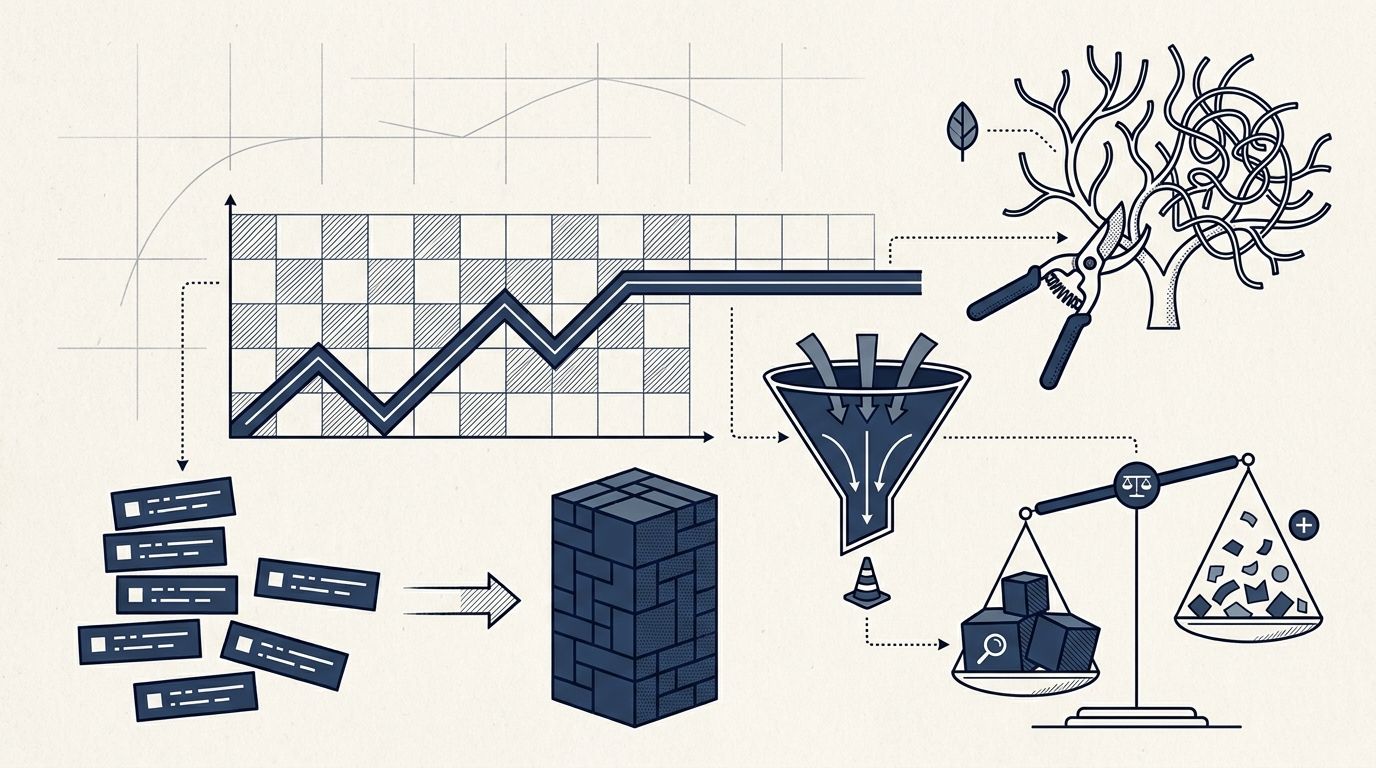
Why Publishing More Content Is the Wrong Default When Organic Traffic Plateaus
Google Search Console graphs tell the same story across thousands of sites: organic traffic climbs for 12 to 18 months, then flattens. The near-universal first response, publishing more and publishing faster, makes the plateau worse.
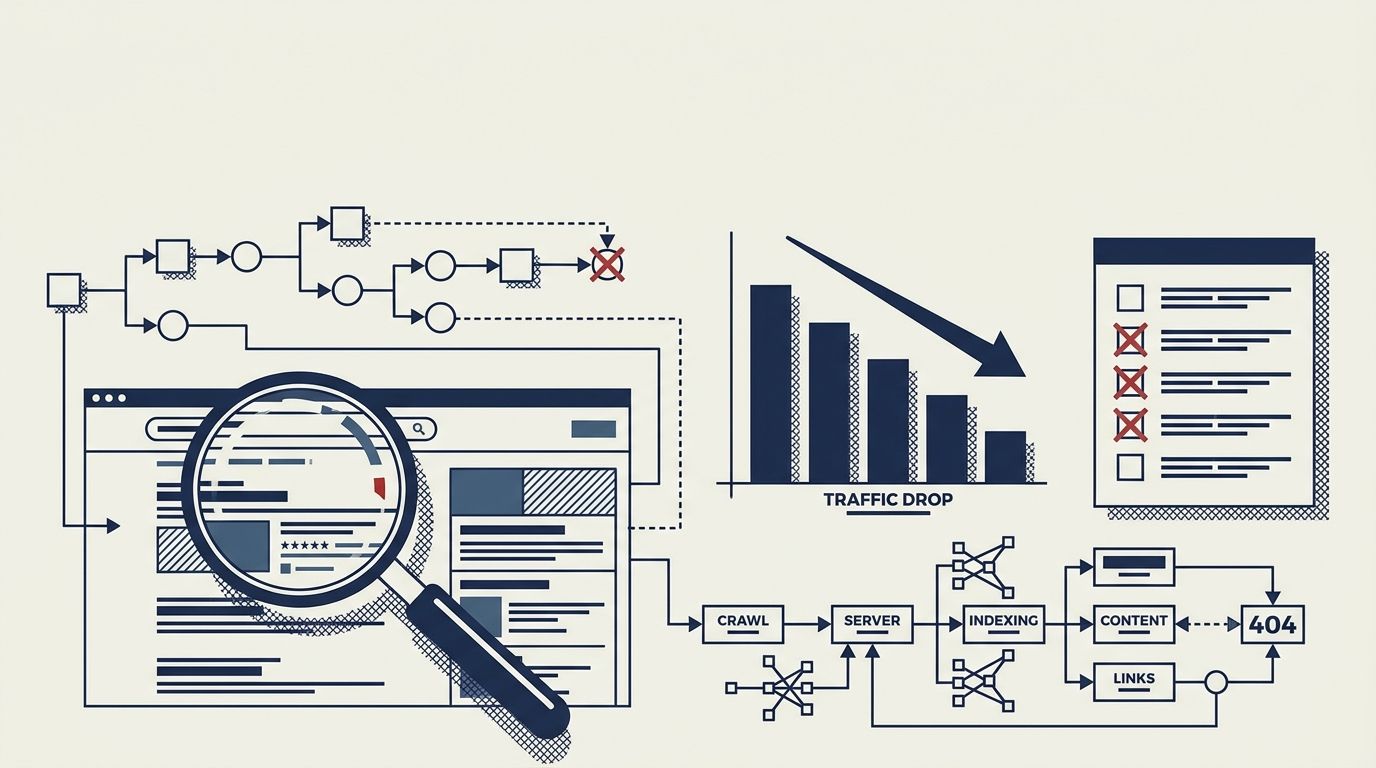
The SEO Debugging Checklist: How to Diagnose Visibility Drops Systematically (Not Frantically)
Diagnosing organic traffic drops requires a bottom-up diagnostic sequence through five layers: Crawl, Render, Index, Rank, and Click. Fixing lower layers first prevents wasted hours rewriting content that Google never crawled in the first place.
Site Structure as a Ranking Signal: How Information Architecture Influences Crawlability and Authority Flow
Site architecture is the hierarchical organization of URLs, navigation paths, and internal links that determines which pages search engines discover first, crawl most often, and rank highest. When this structure breaks down, even well-written content sits unindexed and invisible.