Pages ranking on page one for target keywords convert at roughly 3% on average, but pages with strong keyword intent alignment push past 5%, per Grow and Convert's conversion data. The gap between those numbers is where intent mismatch hides, and three detection methods exist to find it.
Keyword Insights shipped a Claude skill that clusters keywords using live SERP overlap data, which means keywords grouped together actually share ranking URLs in Google's index.
Ahrefs charges $129/month at its entry tier. Semrush starts at $139.95/month. Running both alongside a content optimization tool pushes monthly spend past $350 before you factor in annual commitments.
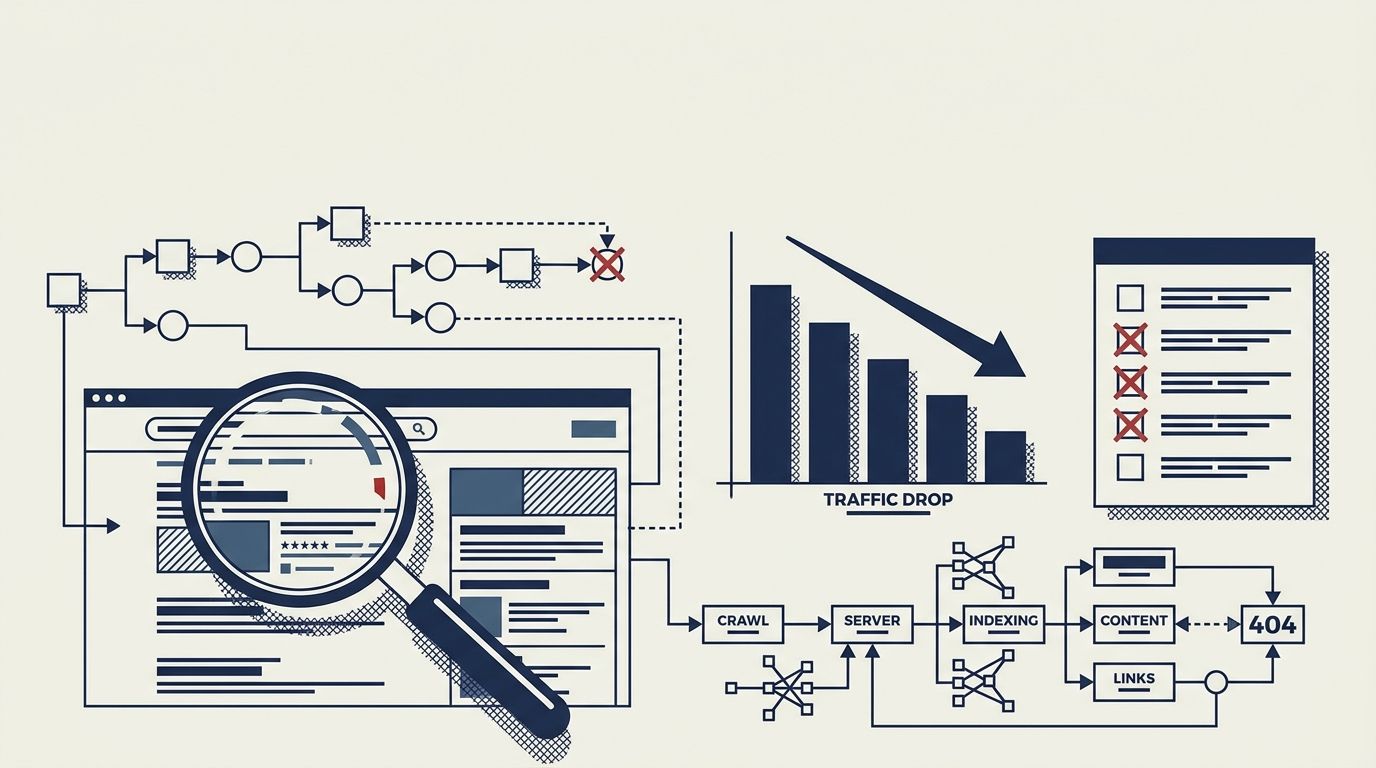
Diagnosing organic traffic drops requires a bottom-up diagnostic sequence through five layers: Crawl, Render, Index, Rank, and Click. Fixing lower layers first prevents wasted hours rewriting content that Google never crawled in the first place.
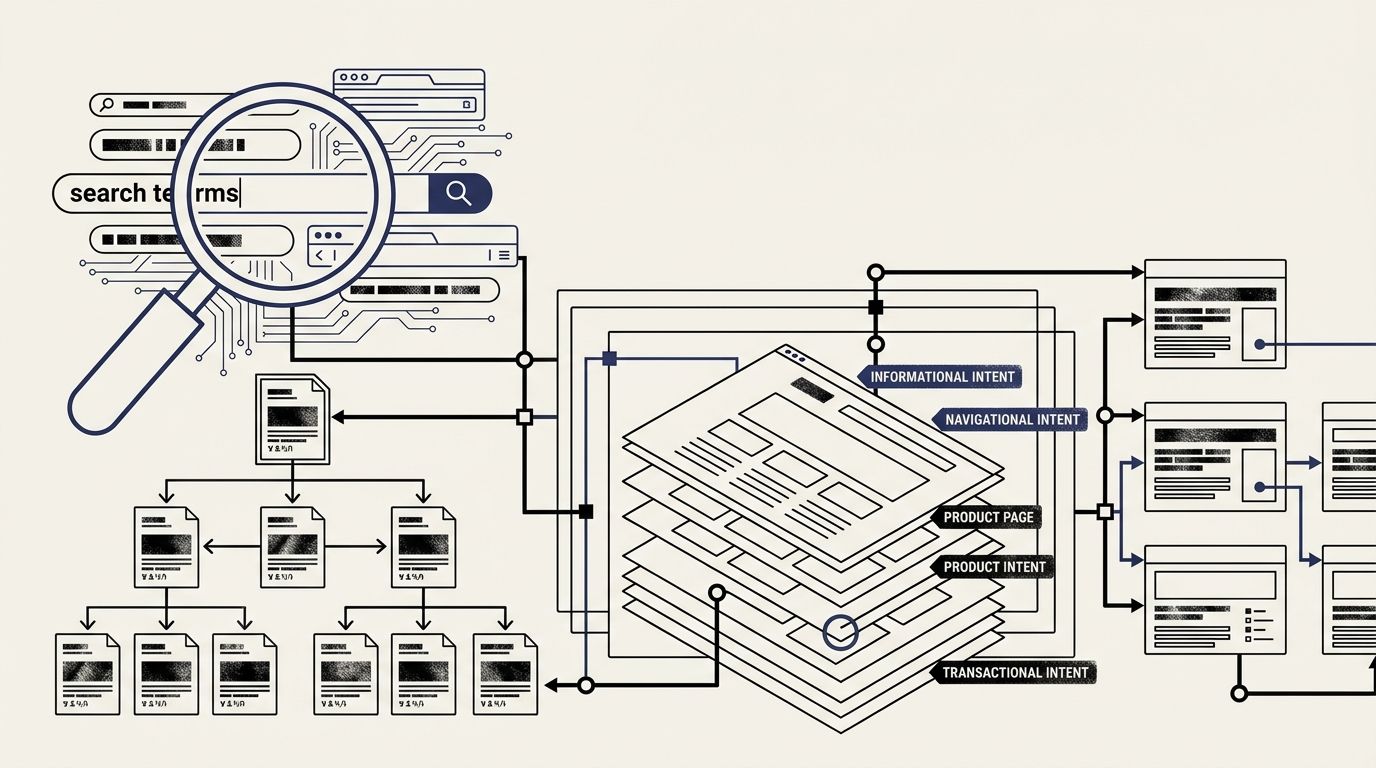
Three methods dominate pre-launch keyword strategy for information architecture: SERP-driven intent mapping, topic cluster modeling, and user-task taxonomy. Each one produces a different site hierarchy, and 96.
Every keyword tool on the market outputs the same four columns: search volume, keyword difficulty (a score from 0 to 100), CPC, and a one-word intent label.
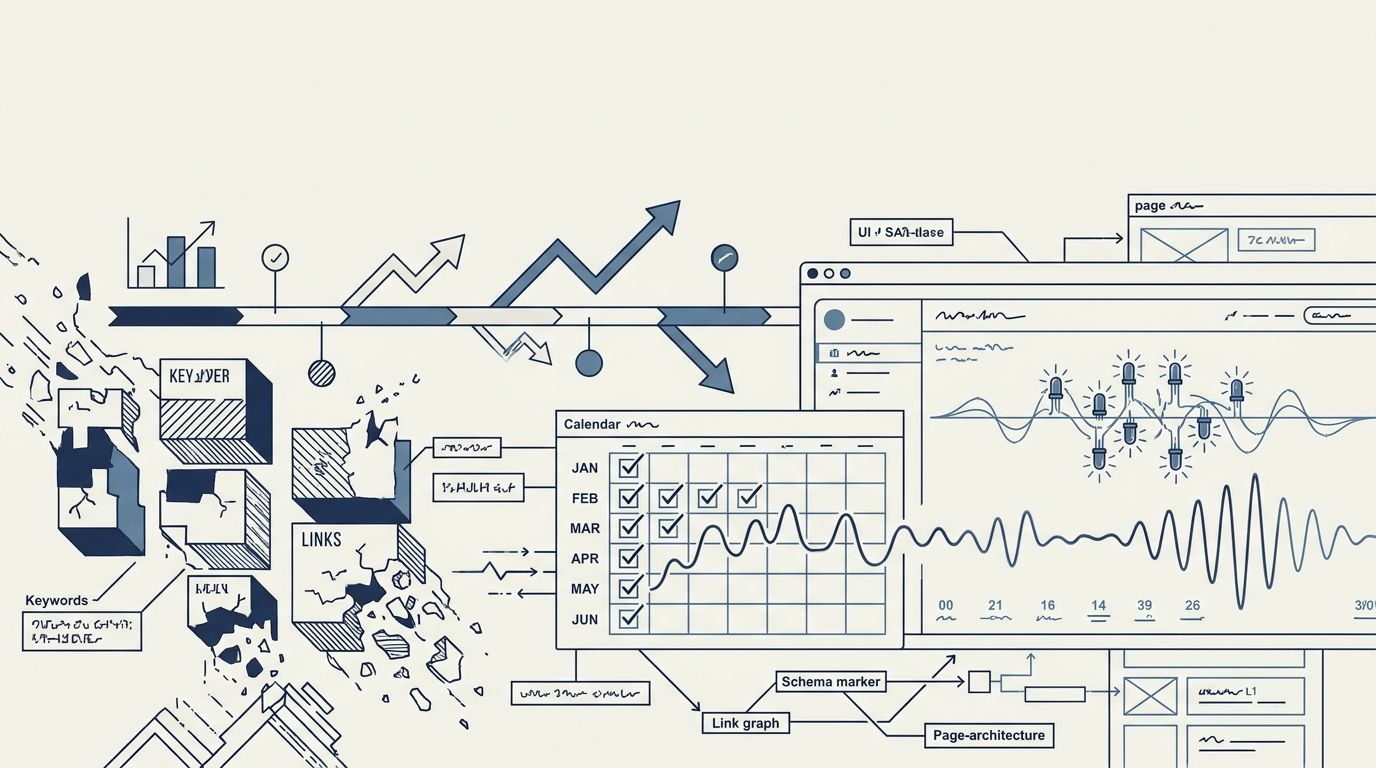
Quarterly keyword audits leave a 90-day blind spot where ranking positions erode, search intent shifts, and competitors claim territory unchecked. Continuous keyword monitoring SEO workflows detect drift within days, giving teams time to respond before traffic loss compounds.
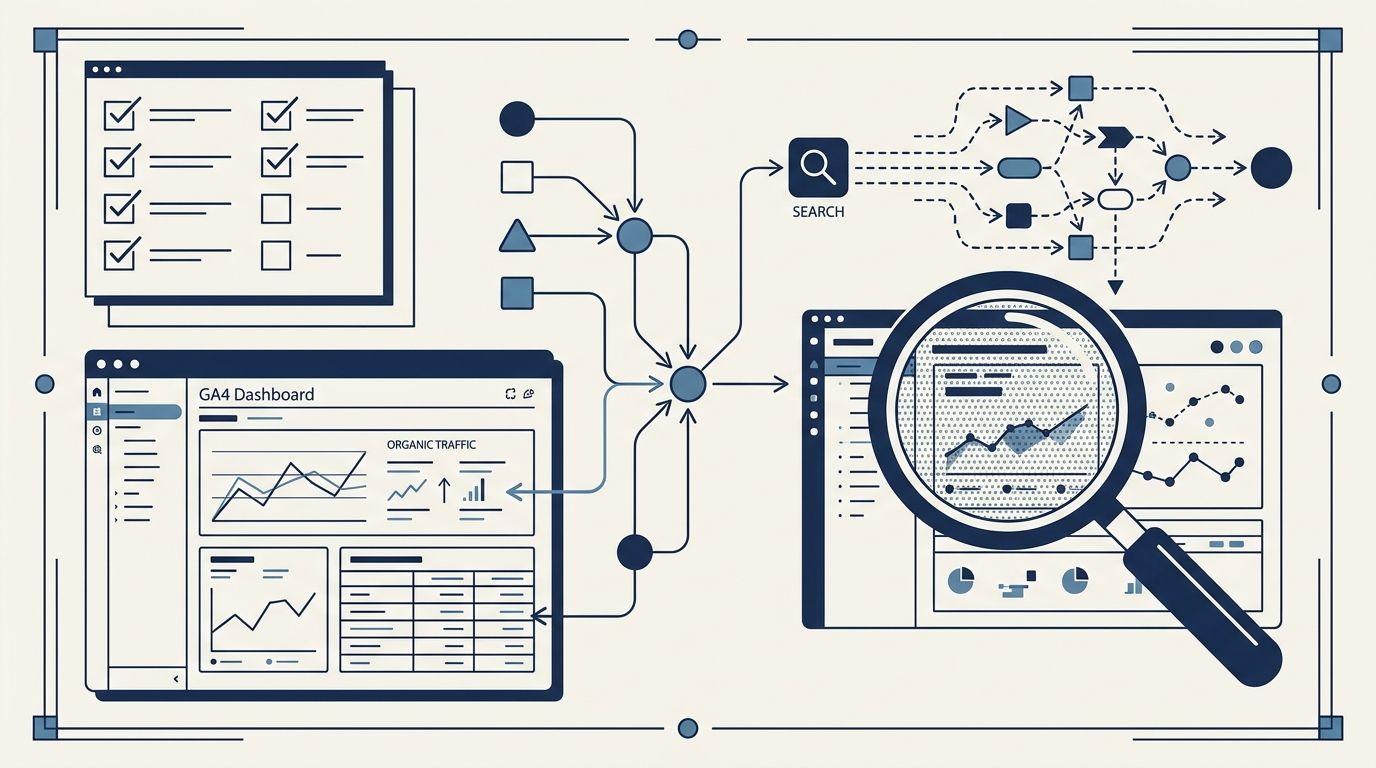
GA4's default organic channel grouping misclassifies a measurable portion of search traffic as "Direct" or "Unassigned," inflating direct numbers and undercounting organic by 30–50% compared to position-based models.
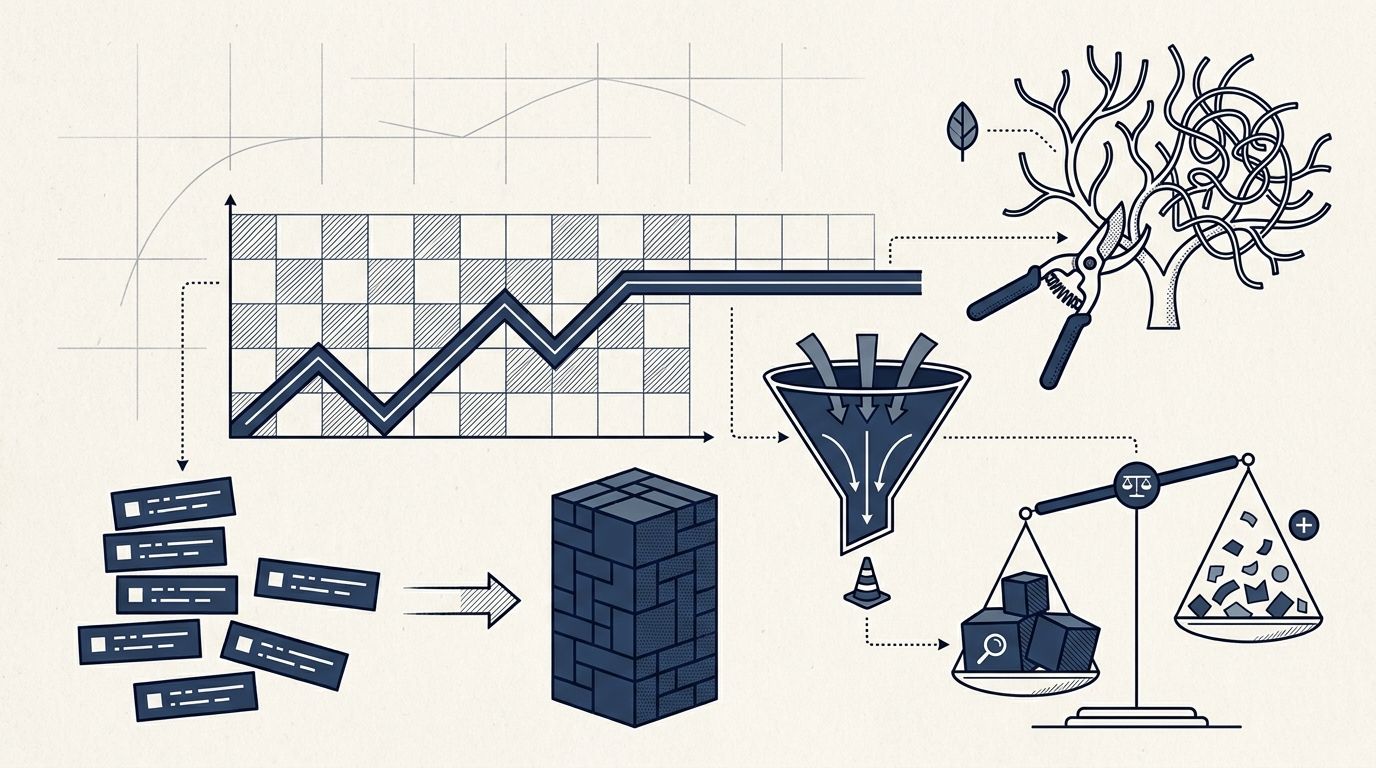
Google Search Console graphs tell the same story across thousands of sites: organic traffic climbs for 12 to 18 months, then flattens. The near-universal first response, publishing more and publishing faster, makes the plateau worse.